As we go through school we will learn to do increasingly complicate calculations with time. So we need to be able to efficiently convert between seconds, minutes, hours, days, weeks and years. Do you know how many seconds there are in a year?
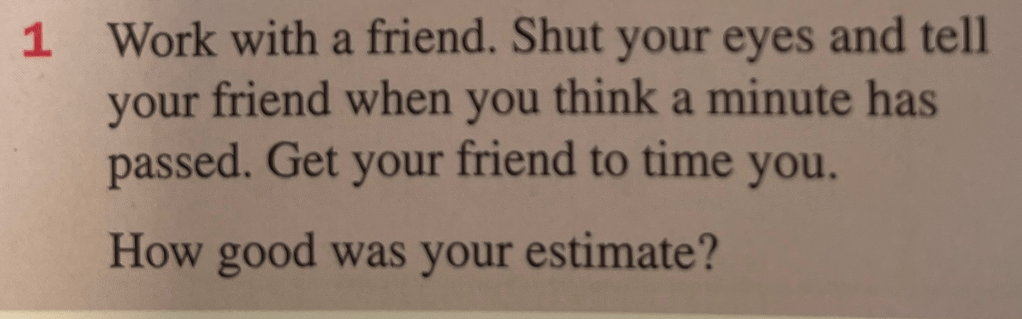
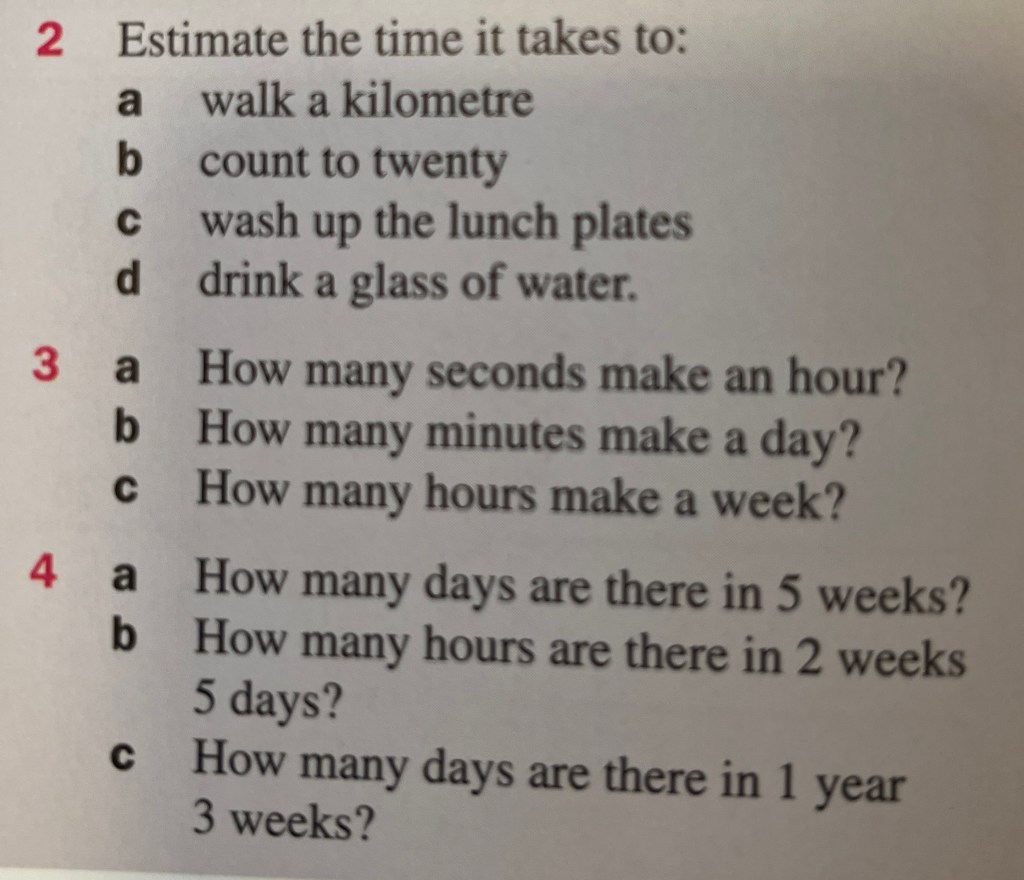
Let’s do this exercise to improve our skills in estimating and calculating time
Exercise 1
12-hour and 24-hour clock
Time is sometimes given using a 12-hour clock (also called am/pm time). Using this system the time 4.30 happens twice every day, once in the morning and once in the afternoon. To distinguish them we write am after the morning one and pm for all times from midday onwards (midnight is officially am again).
With the 24 hour clock, each time only happens once a day, so the second 4.30 is called 16:30 instead of 4.30pm. How can we calculate the 16:30 if we want to convert from 12-hour time to 24-hour time?
With the 24 hour clock we don’t write am or pm and if the hours number is less than 10 we start with a zero. Let’s practice this.
Worked Example
Write 8.15pm using 24-hour clock time.
Write 02:54 using am/pm time
Exercise 2

Intervals of time
It is much easier to calculate how much time has passed within a day using the 24-hour clock than it is with the 12-hour clock, as we can simply subtract the two numbers.
Worked Examples
1.) A football match kicked off at 15:45 and ended at 17:25. How long did the game last?
2.) How long is it from 21:30 on Tuesday to 03:15 on Wednesday?
Exercise 3


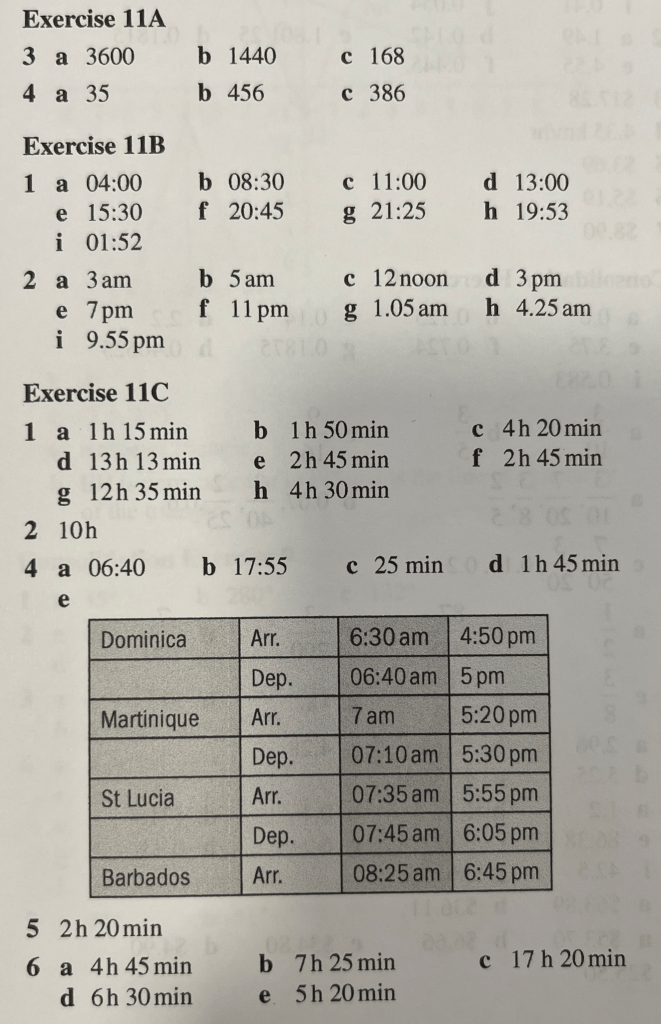
Answers

 Maths with David