Probability is a special branch of mathematics that deals with uncertainty.
When we assign a probability to an event, we are assigning a number to it based on how likely it will happen. The smallest possible probability is zero, which means that an event definitely won’t happen. So the probability of Mr Swanson playing as striker for Barcelona next year is zero.
The greatest possible probability is one, which means that an event definitely will happen. The probability of getting a number less than ten when you roll a dice is one.
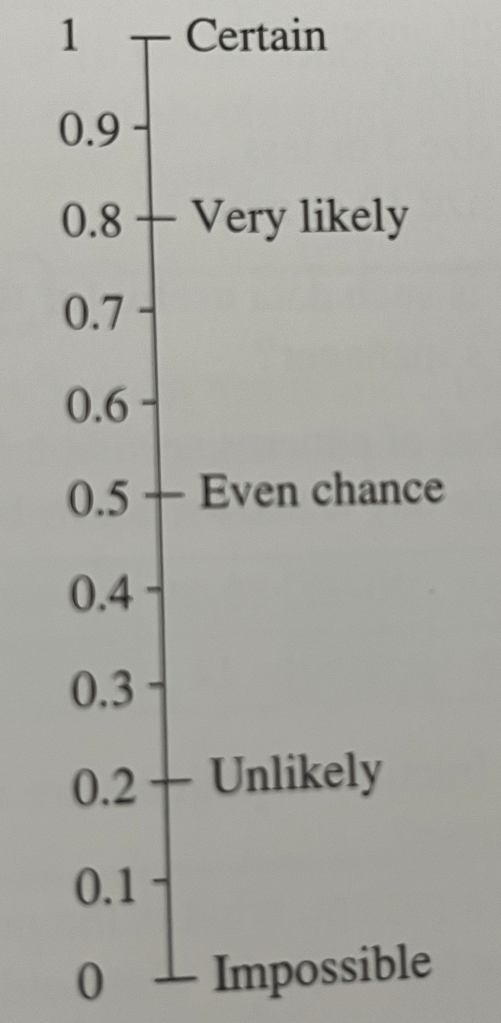
In between zero and one there are different likelihood events, as indicated in the diagram below:
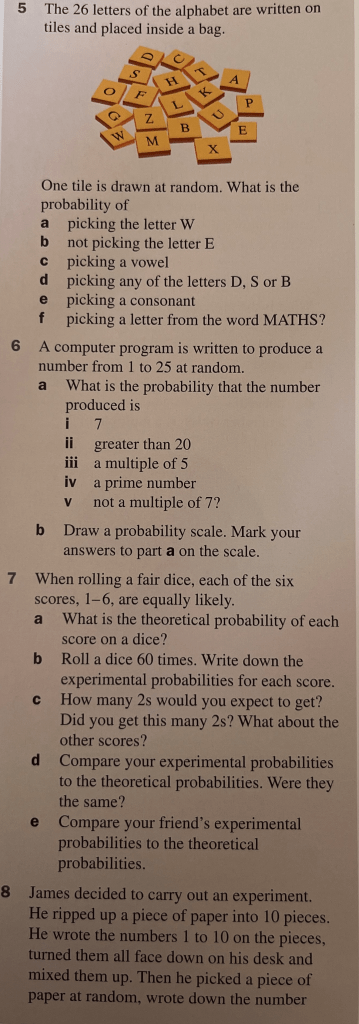
Exercise 1

Experimental Probability
We can try to find the probability of something happening by doing an experiment.
For instance, if we wanted to know the probability that a car driving past the school was white, we could watch the cars passing by the school and measure how many of them are red. If 25 out of 100 cars that passed were white, we could calculate the probability of a car passing the school as being 25/100 = 1/4. How confident are you that one in every four cars passing the school in the future would be white based on this experiment?
Worked Example
The table below shows the number of pins in 30 boxes.
| Number of pins | 46 | 47 | 48 | 49 | 50 | 51 |
| Number of boxes | 2 | 4 | 10 | 8 | 4 | 2 |
- What is the probability that a box holds:
- 48 pins?
- More than 49 pins?
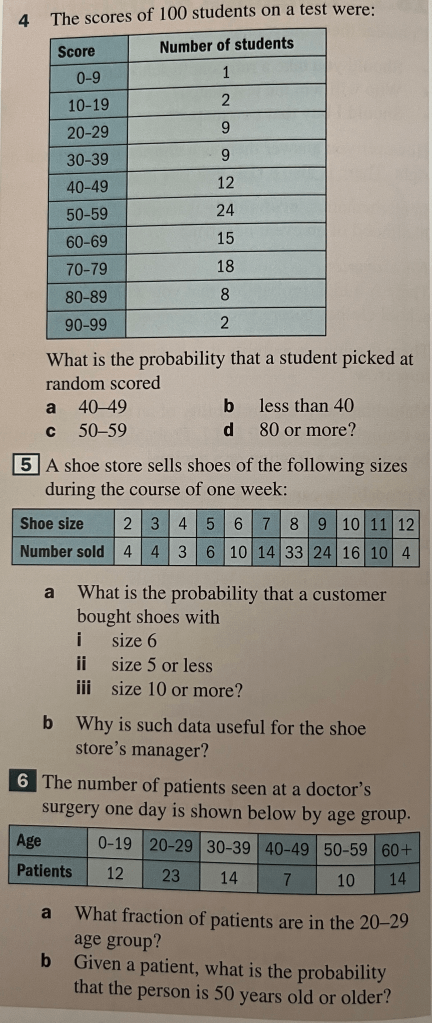
Exercise 2
You need a coin and a dice to fully complete this exercise

Theoretical Probability
If we know that there are exactly 5 red balls in a bag out of 10 balls in total, we don’t need to do an experiment to say that the probability of picking a red ball is 5/10 or 1/2. We simply divided the number of successes by the number of possible outcomes. Note that this only works if all of the outcomes are equally likely.
Worked Example
A bag contains 3 white beads and 2 black beads. What is the probability that a bead randomly picked from the bag is black?
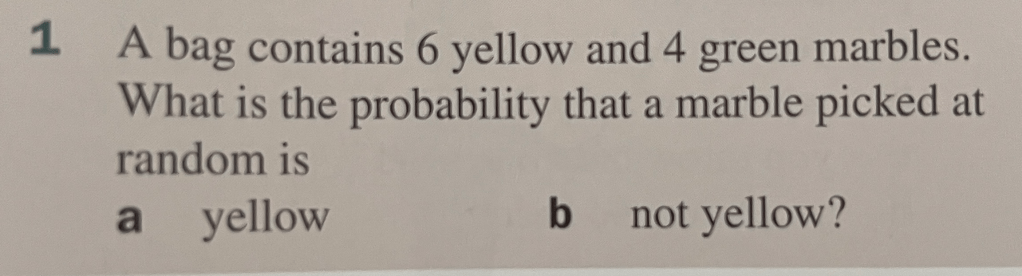
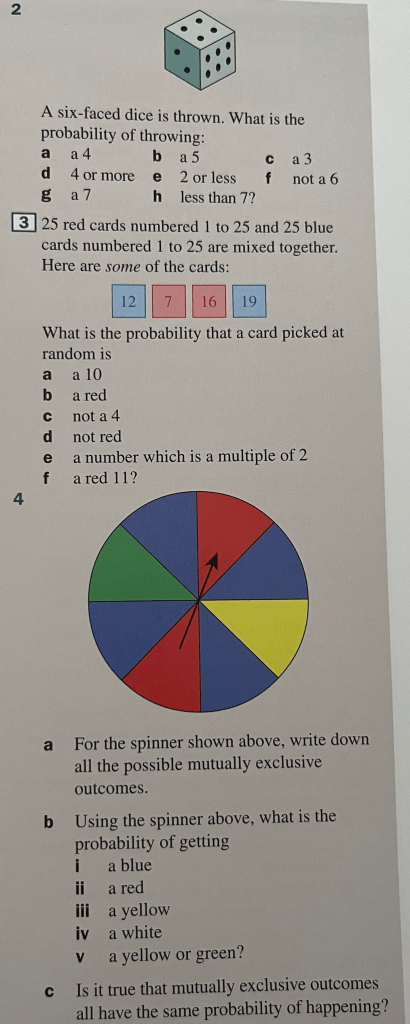
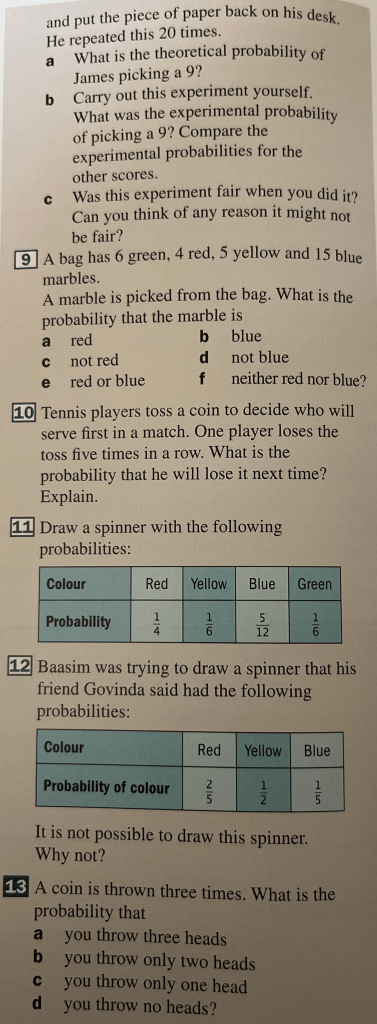
Exercise 3
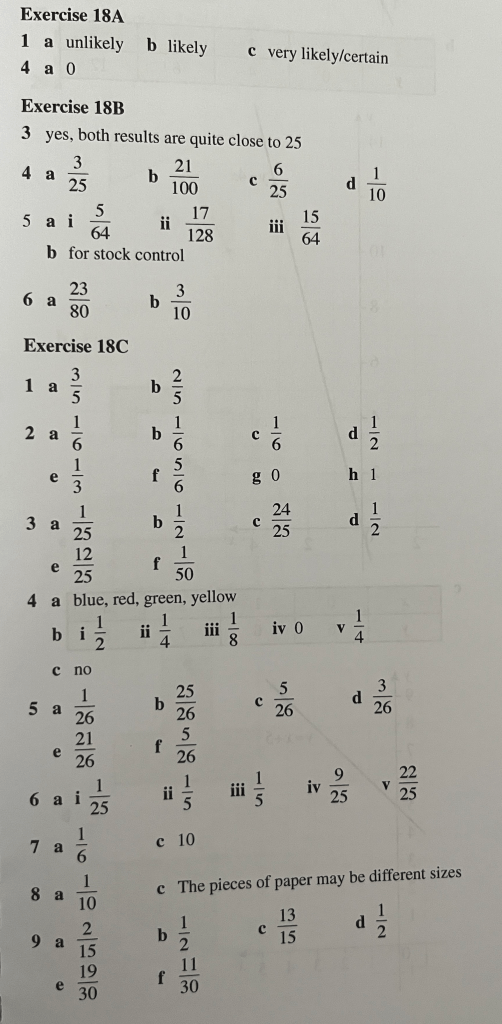
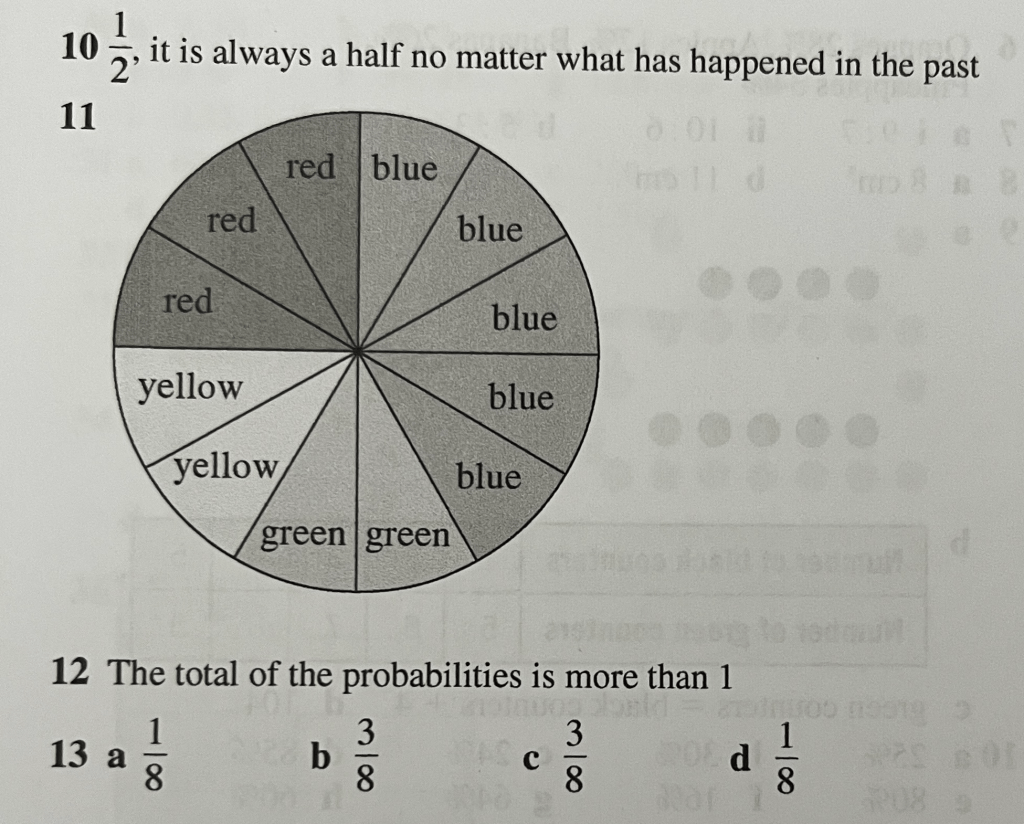
Answers to all 3 exercises
 Maths with David