Throughout history different cultures have used different units to measure things, from feet and inches in the former British Empire through to the сажень in the former Russian Empire.
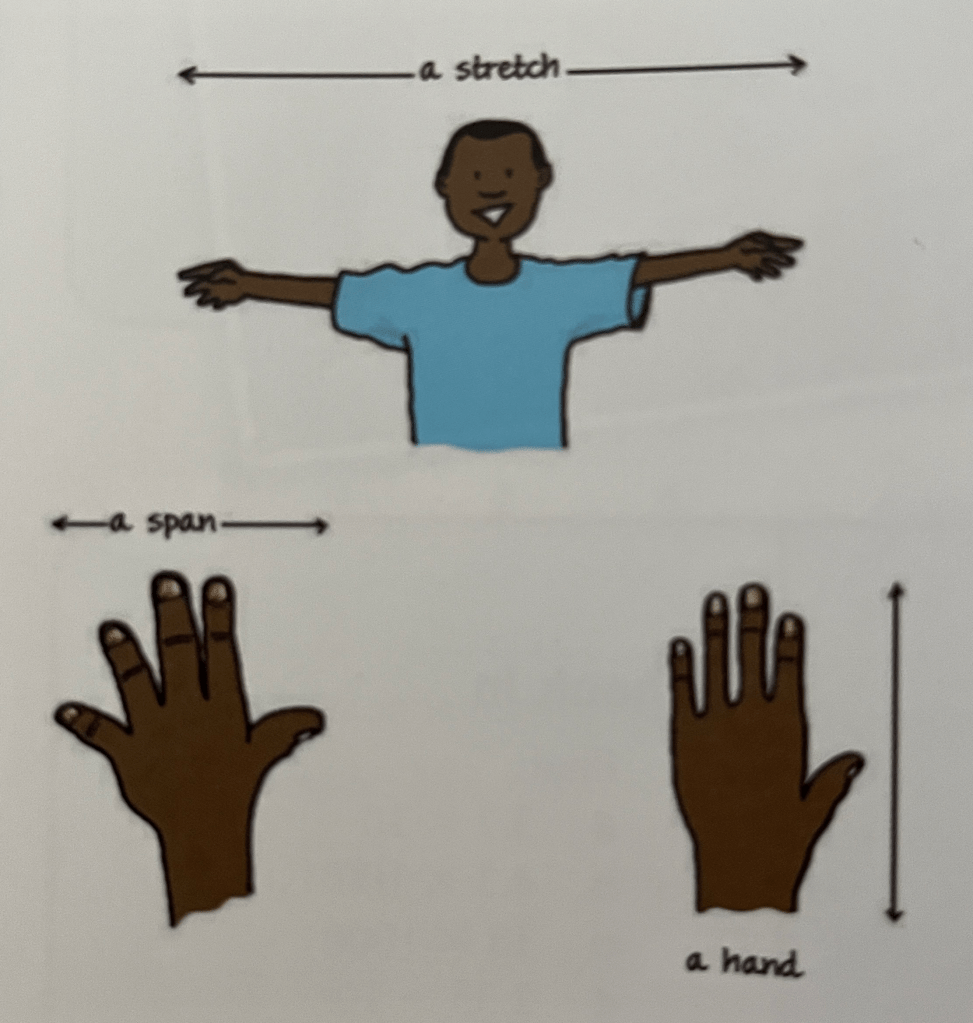
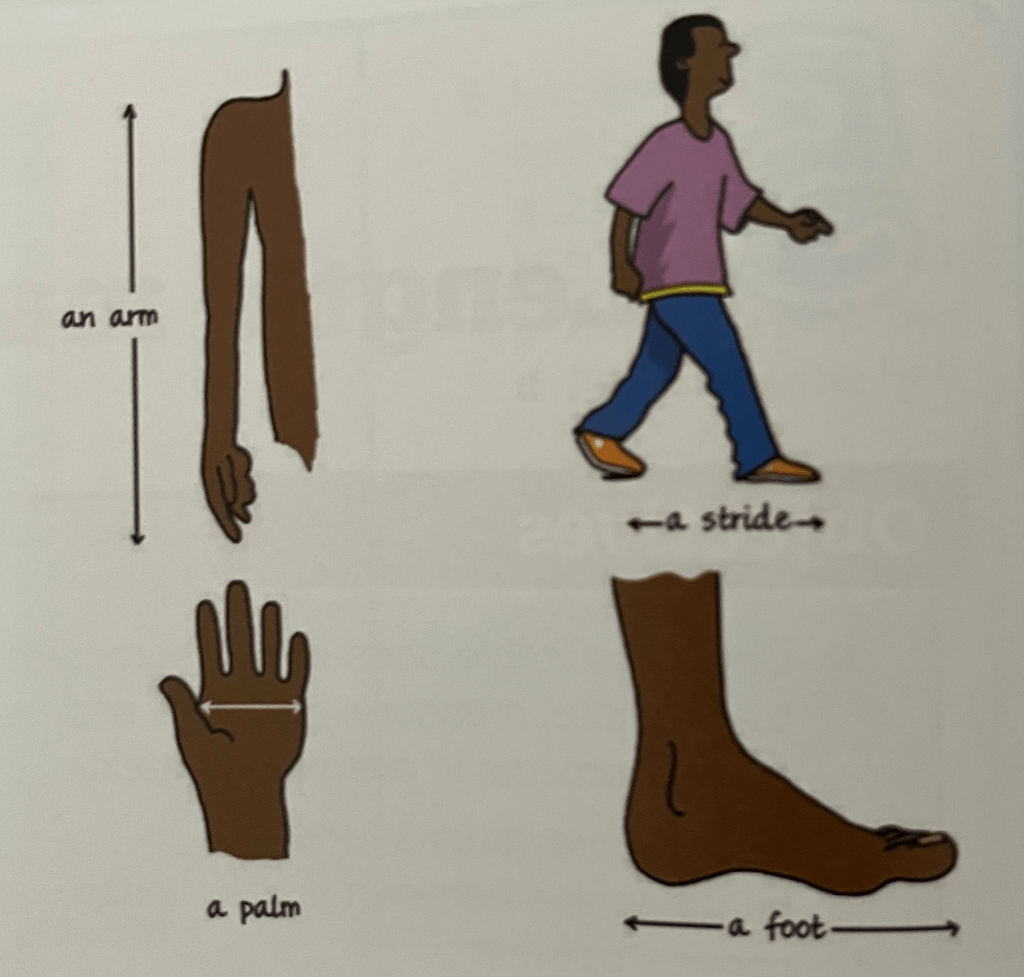
Below are some “standard” units people have used to measure distance.
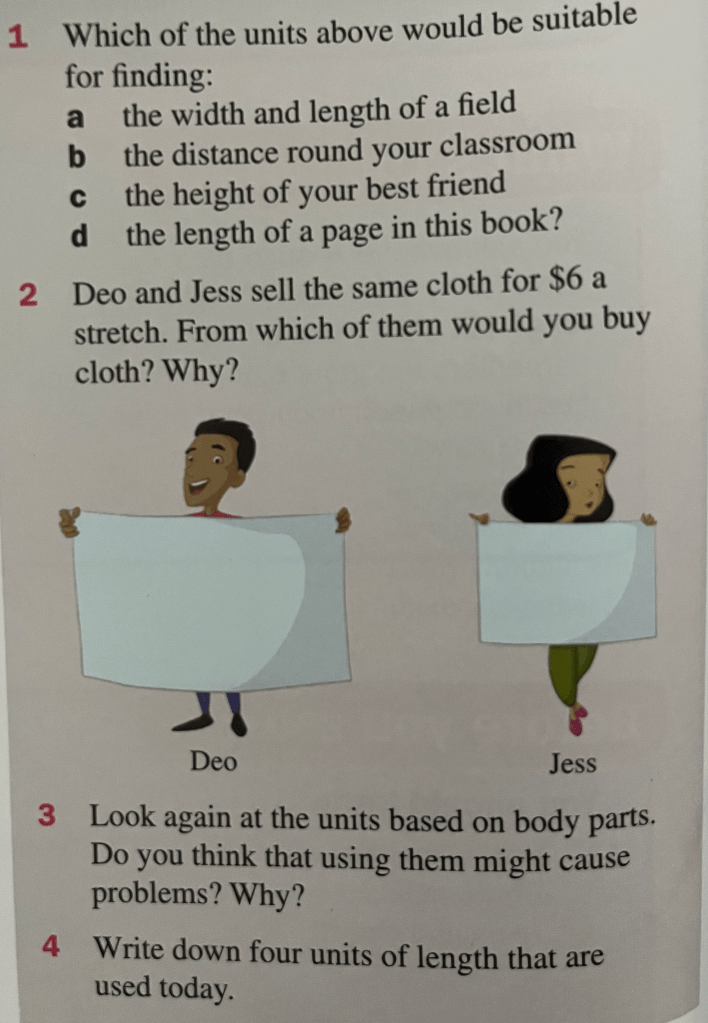
What do you think they might have used each of the different ones to measure?
Exercise
Standardised Units
During the period of history called the Enlightenment an effort was made to standardise measurement units. Many countries adopted the metric system, which is now known as SI units (Systeme international). This is now used by most countries in the world and is used by all modern scientists.
Metre
The standard unit for length in the SI system is the metre. One metre is about the length of one stride. Ask the teacher to use the metre rule in the class to measure some objects in the class. Se if you can guess the length before he measures them.
Centimetre and millimetre
The prefix cent- in the english language refers to 100, e.g. century, centurion, centipede. The prefix milli- refers to 1000, e.g. millenium, millipede.
When we use these prefixes before the word metre, we mean the hundredth part, or the thousandth part.
So 1mm is 1/1000 of a metre, and
1 cm is 1/100 of a metre.
Based on this can you see what part of a centimetre a millimetre is?
A centimetre is about the width of a small fingure.
Exercise
N.B. For question 2, make a rough copy of each of the lines and use that copy to answer the questions.

Kilometre
If we use metres to measure large distances, the numbers get very big very quickly, so we normally use the kilometre. The kilometre is 1000 times bigger than the metre. It is about the distance covered if you walk for 15 minutes.
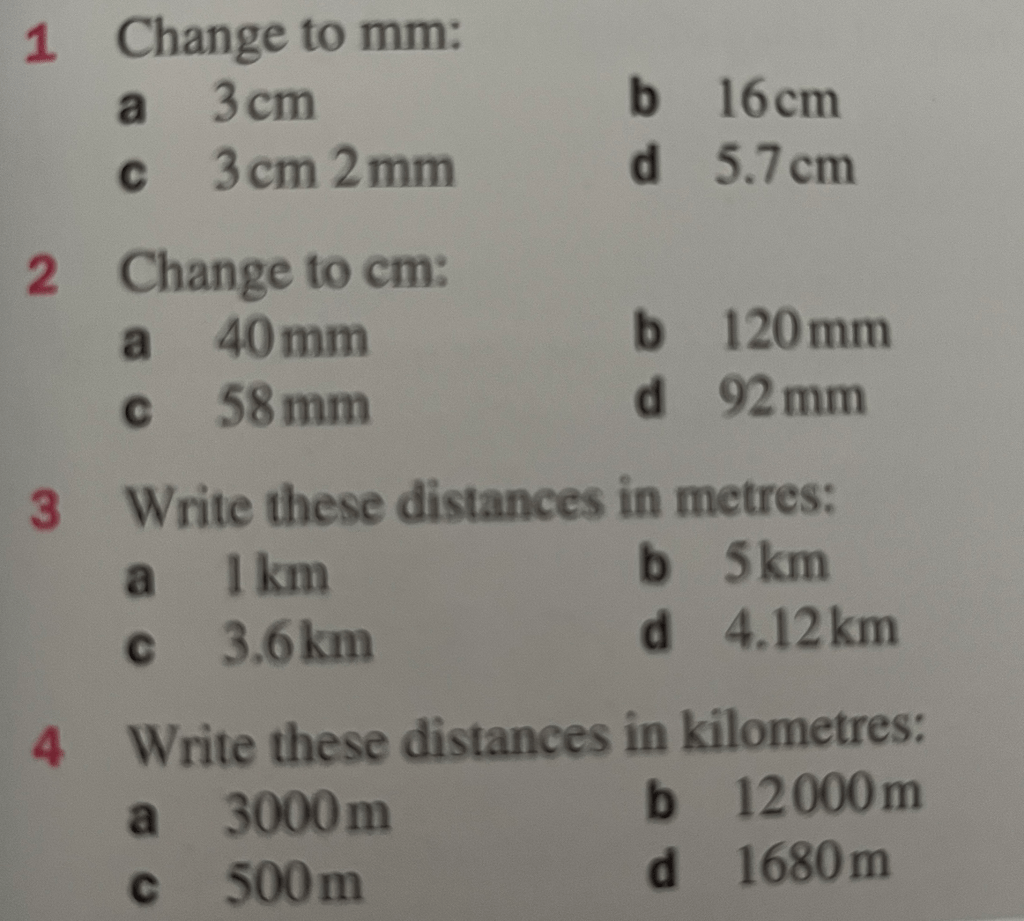
We need to be able to convert between millimetres, centimetres, metres and kilometres, and do that backwards.
In general, if the unit is bigger then the number will be smaller, which is a hint that we should divide, e.g. when changing from centimetres to kilometres.
Conversely, if the unit is smaller then the number will be bigger, which is a hint that we should multiply, eg. when changing from metres to millimetres.
Our conversions will always involve multiplying or dividing by 10, 100, 1000, 10 000, 100 000 or 1 000 000.
Worked Examples
1.) Convert 6cm and 5mm into m
2.) Convert 5.6km into metres
3.) Convert 6314m into km.
Exercise
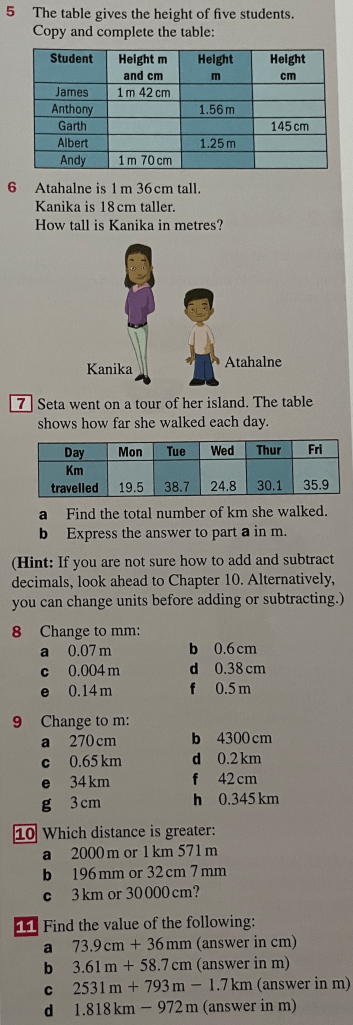

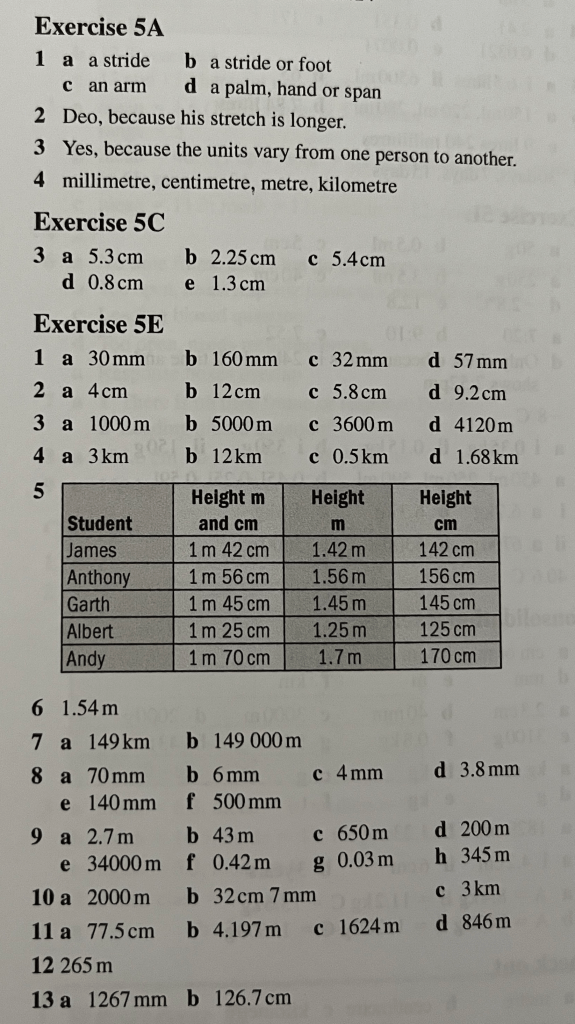
Answers to all three exercises
 Maths with David