3D shapes have faces, edges and vertices. Let’s look at some to identify what each of these are.
Cube
All of the faces of a cube are squares
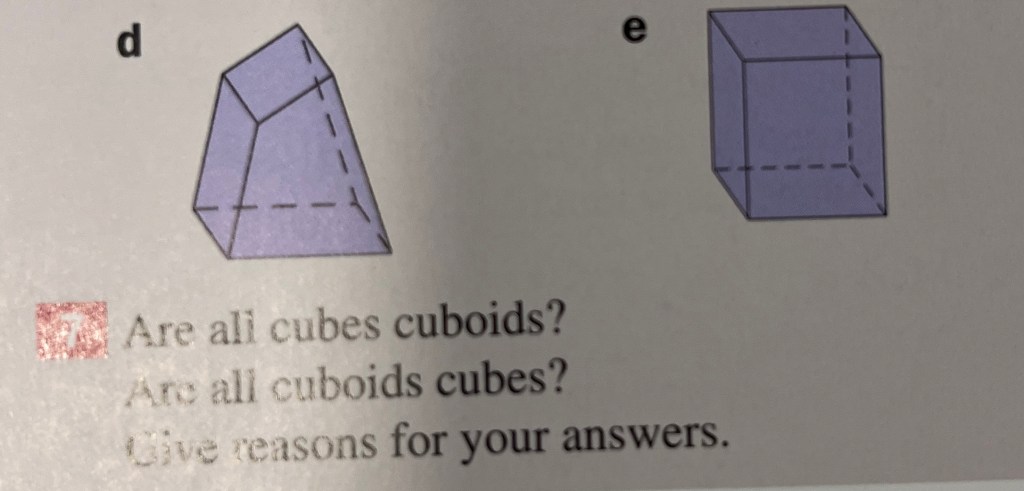
Cuboid
All of the faces of a cuboid are rectangles.
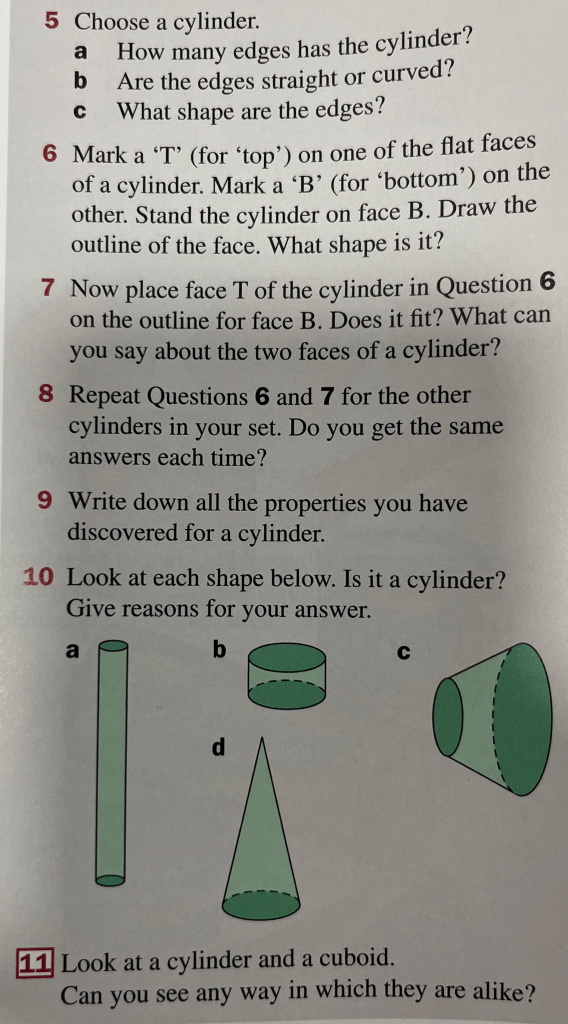
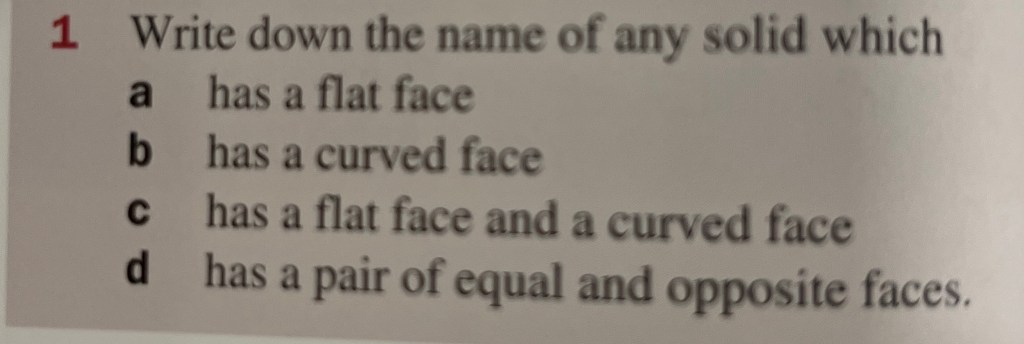
Exercise 1
(You don’t have to do question 4)

Cylinders
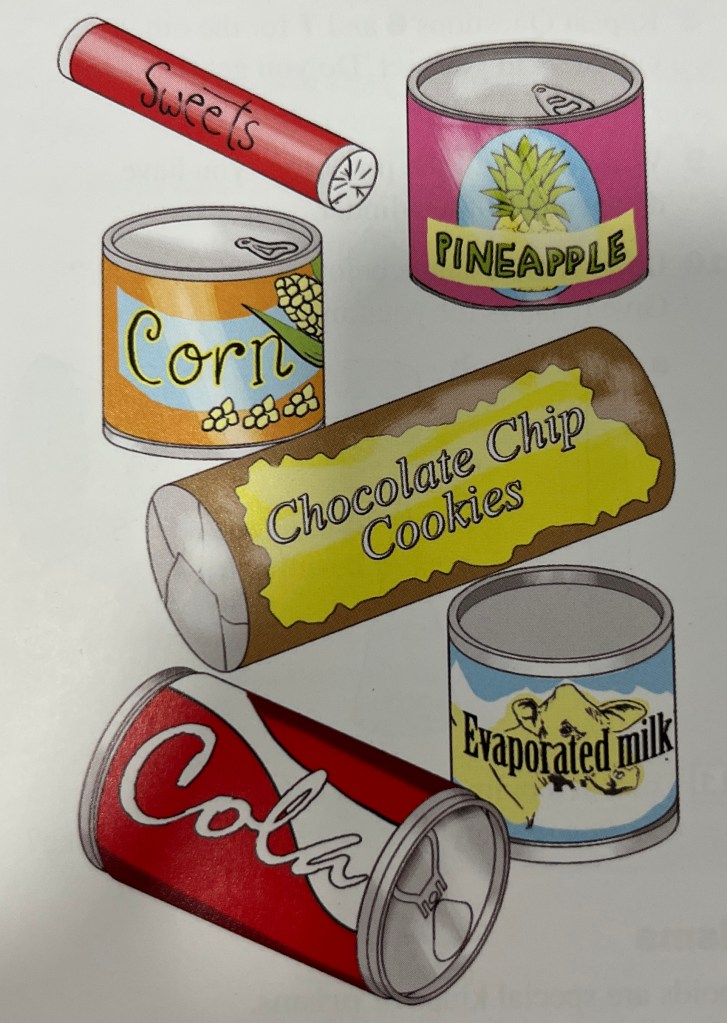
Below are examples of various cylinders:
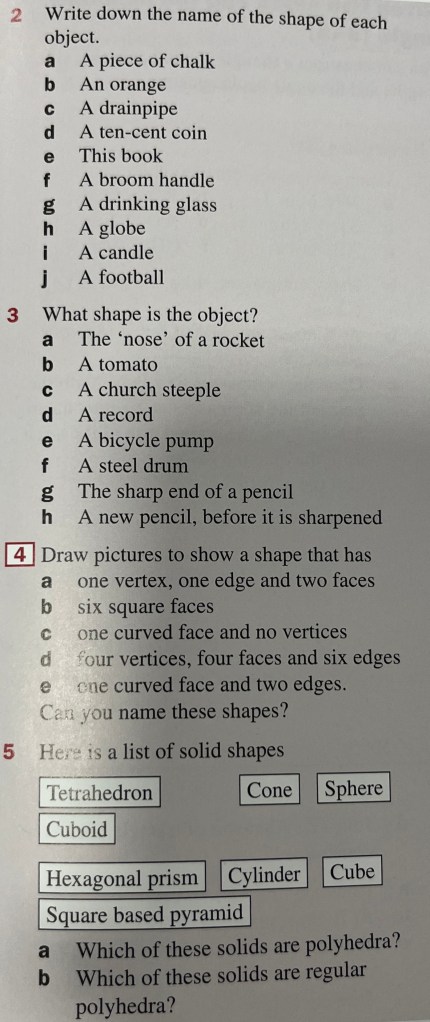
Exercise 2
You don’t have to do questions 6 to 8

Prisms
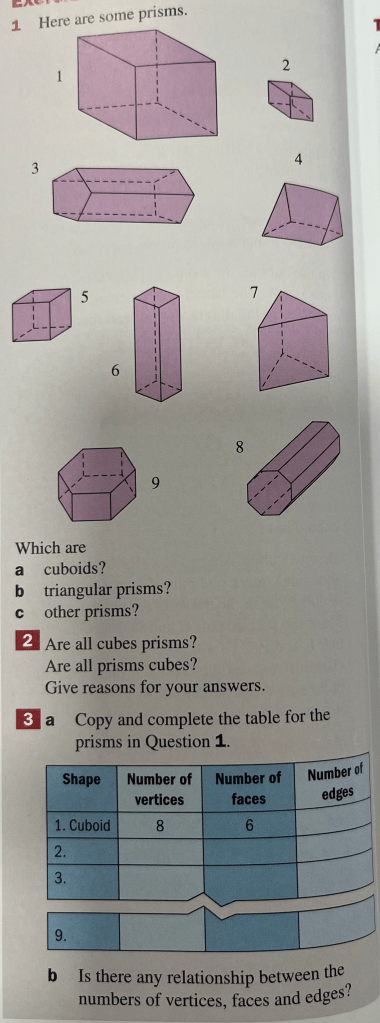
A cuboid is a special type of prism but there are others. Every shape whose cross-section is the same throughout is a prism. Lets’s look at some.
Exercise 3
Cones
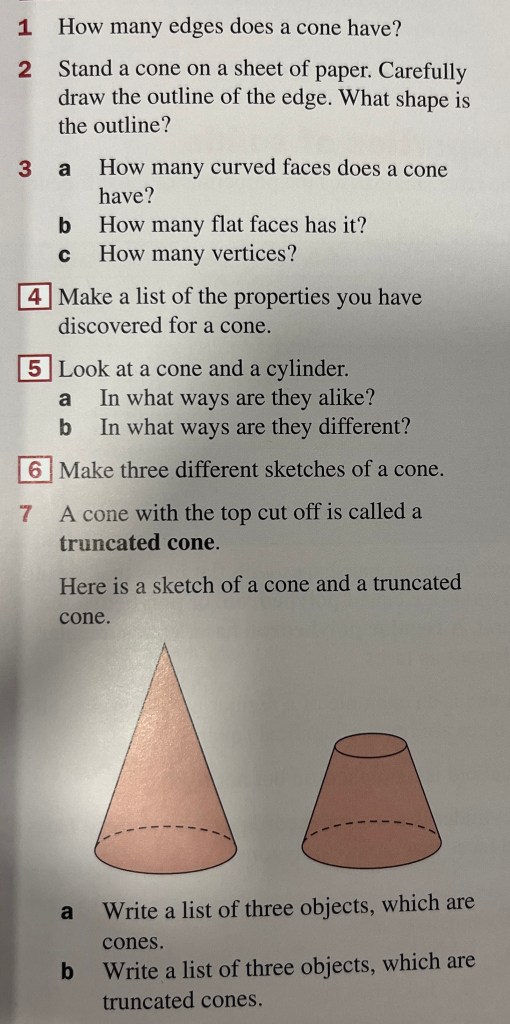
A cone is like a cylinder, except that instead of the cross section remaining the same throughout, it comes to a point.
Exercise 4
Pyramid
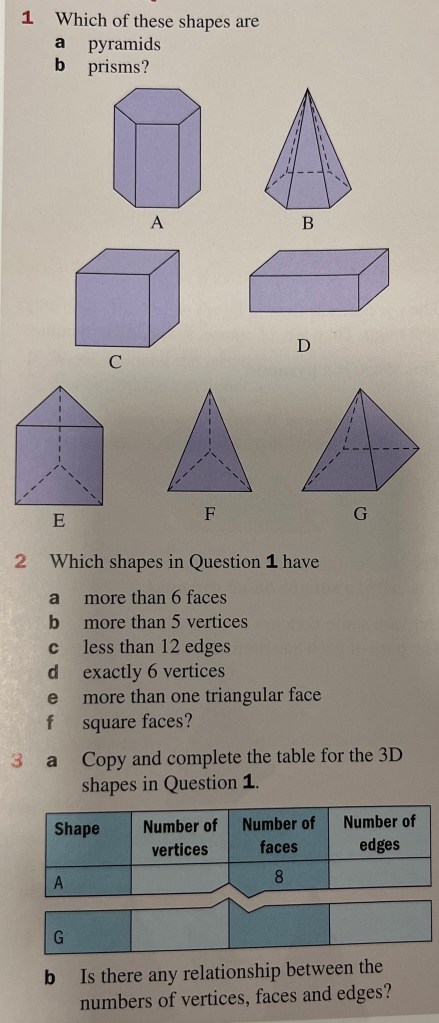
Similar to a cone, a pyramid “comes to a point”. But its base is not a circle. Its based can be any polygon. We can name the pyramid according on its base (e.g. a square-based pyramid).
Exercise 5
Sphere
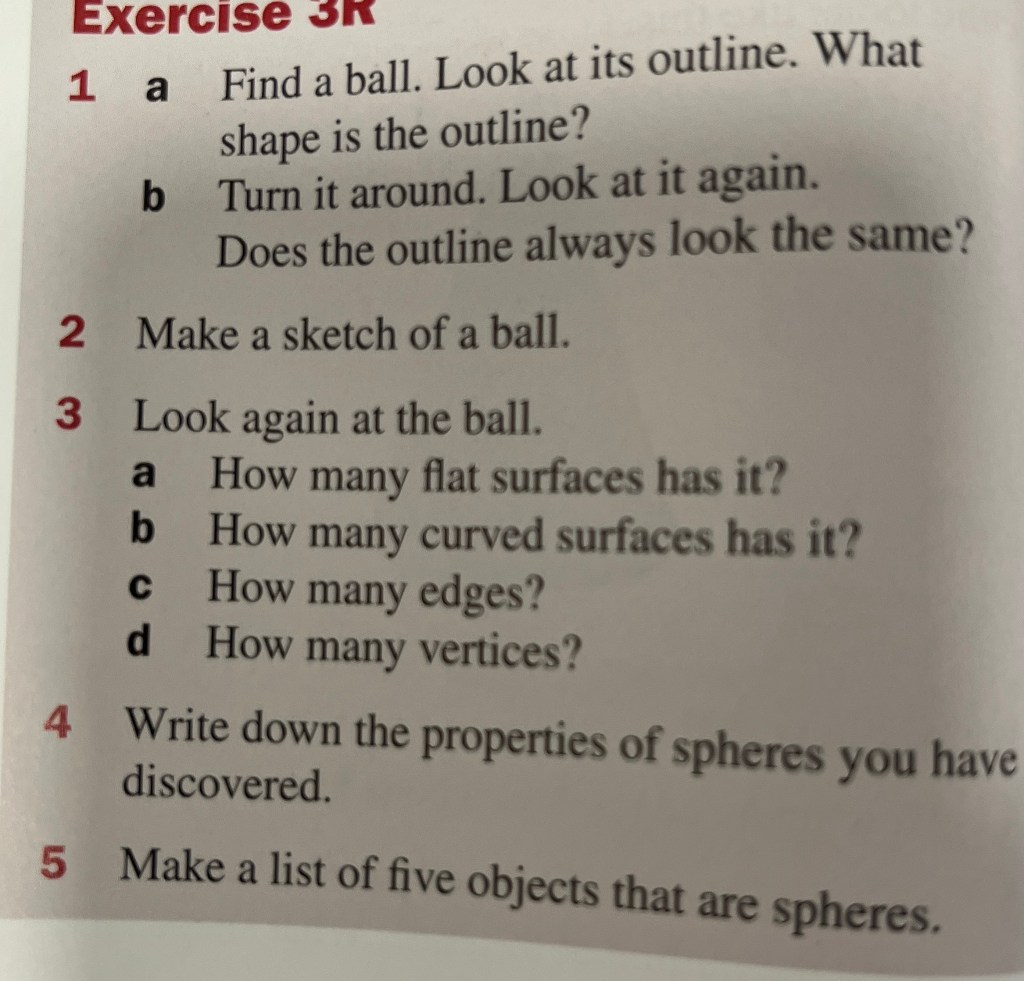
A sphere looks like a ball.
Exercise 6
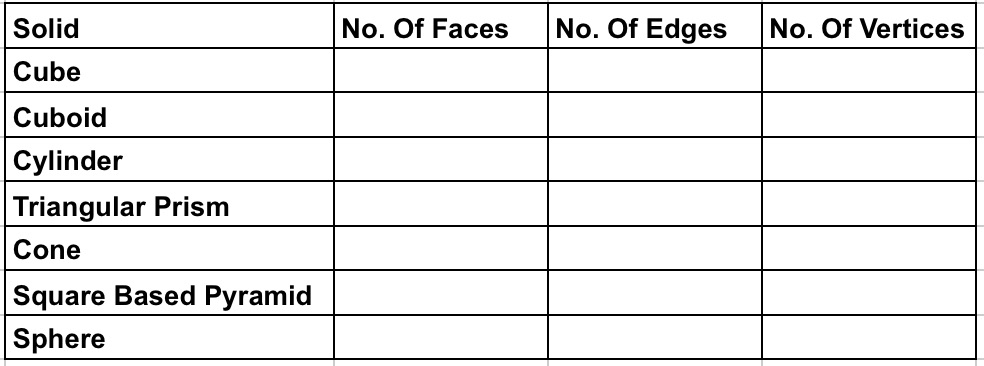
Properties of solids
Here is a useful table that you can complete to summarise the properties of some of the different 3D shapes:
3D shapes whose faces are all flat polygons can be called polyhedra (one is a polyhedron).
A regular polyhedron has all faces identical, e.g. a cube.
Cylinders are not polyhedra.
Exercise 7
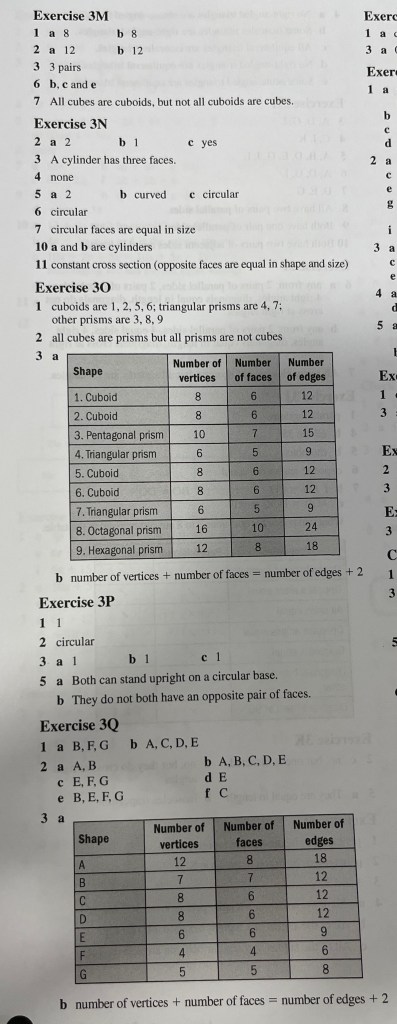
Answers

 Maths with David