When we want to add or subtract numbers together we don’t need to remember any special rules, but we should make use of a number line:

With each question, the first number tells us the original position on the number line, and the operation combined with the second number tells us which way we will move.
Let’s try this with a few examples – we’ll start by either subtracting positive numbers or adding both positive and negative numbers
As we are now in year 9, we can’t expect that all of our calculations will be with whole number (integers), so let’s try some more examples with decimals below:

Exercise
Let’s complete questions 2 to 5 from exercise 4A on pages 60 and 61 of the textbook:
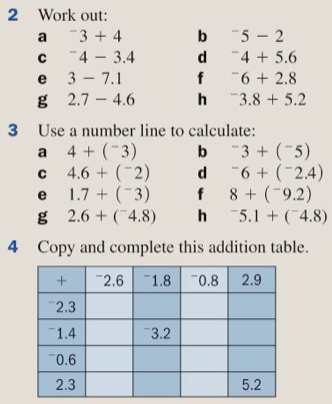
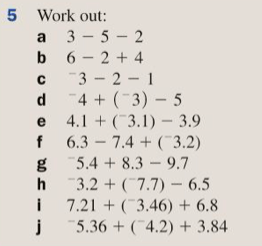
The answers are below:

Now let’s consider subtracting negative numbers (using our number line). Subtracting negative numbers is an example of an inverse operation, so effective the subtraction and the “negativeness” of the number cancel each other out, meaning that subtracting the negative number is the same as adding a positive number of the same value. Using the number line above, let’s try a few examples of these.
Exercise
Let’s complete exercise 4B from page 61:
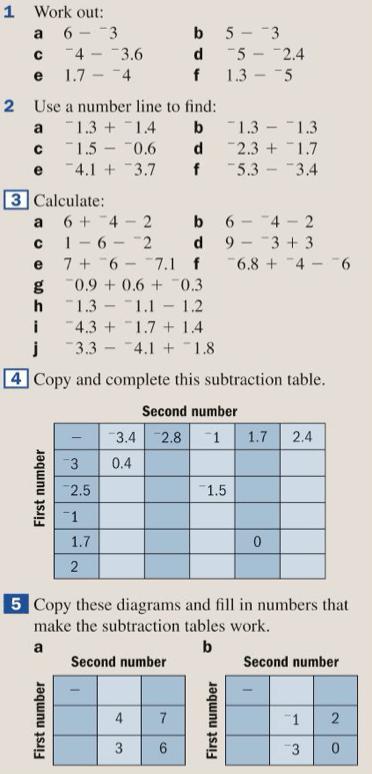
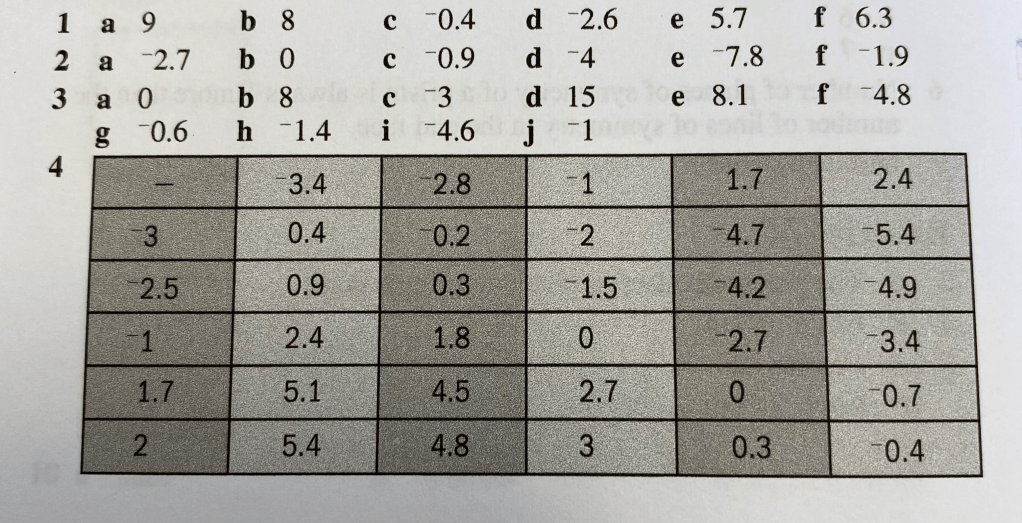
The answers are below:
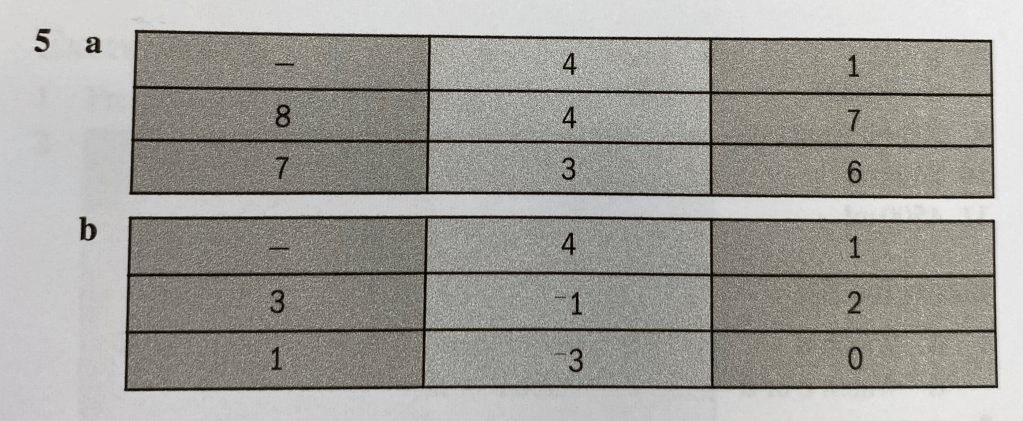
Multiplying and dividing with negative numbers
When it comes to multiplying and dividing with negative numbers, it is best to remember a rule, and this rule is that if the signs on both of the numbers are the same, then the result will be positive. If, however, the signs on both of the numbers are different, then the result will be negative. Please copy down this rule in your notebook, and the table below to remind you:

Let’s try a few examples to help us remember this idea.
Exercise
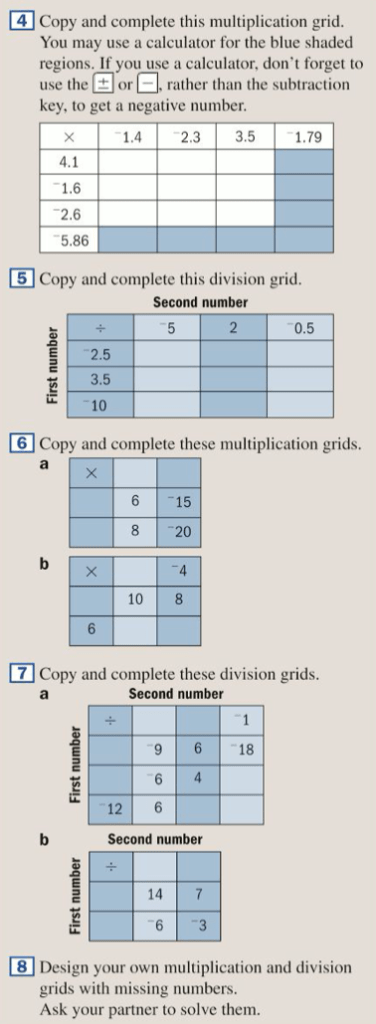
Let’s complete exercise 4C from page 62 of the textbook:

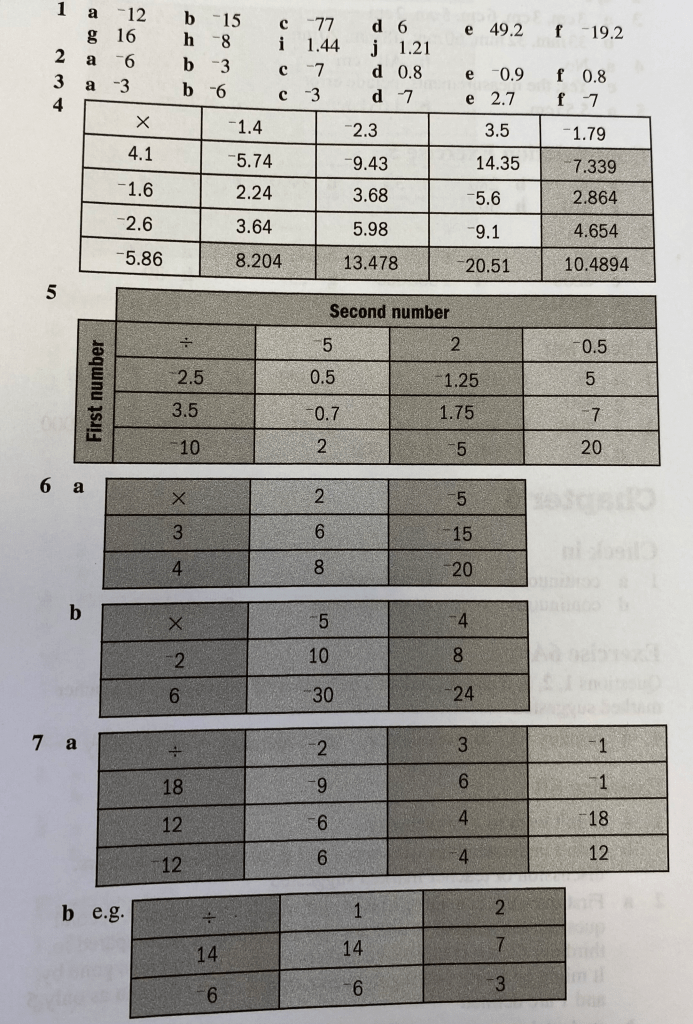
The answers are below:
 Maths with David