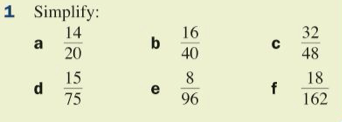
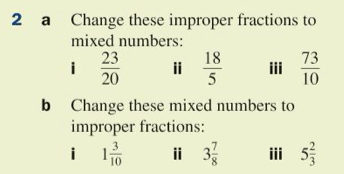
We should already be confident about simplifying fractions and converting between improper fractions and mixed numbers. Let’s start by checking that we can do these things:
Adding and Subtracting Fractions
In order to add or subtract fractions, we need them to have the same denominator. If they don’t already have the same denominator, we need to find equivalent fractions that do have the same denominator.
Examples
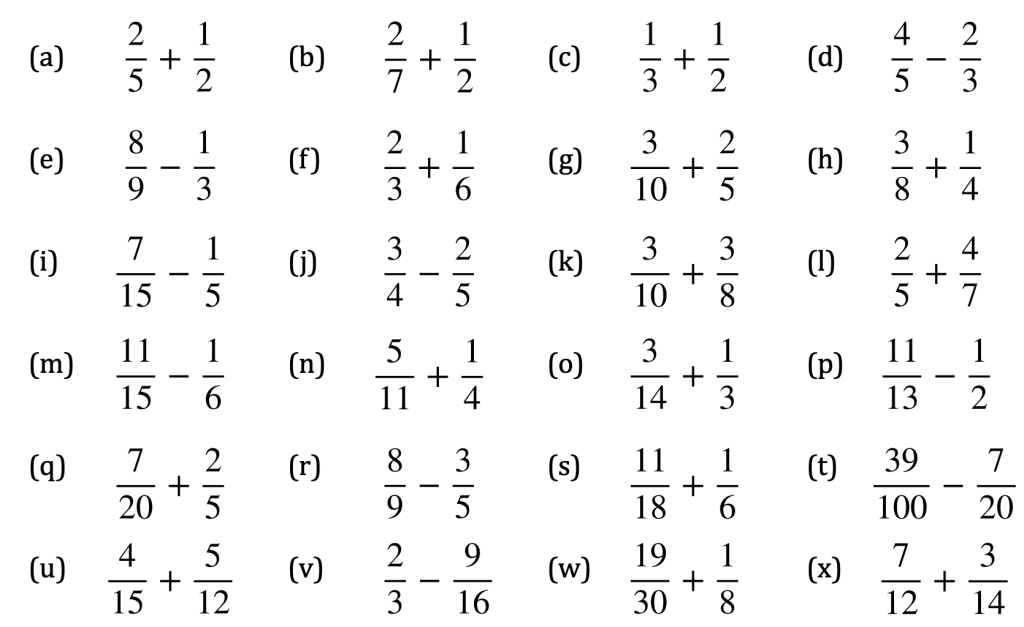
Exercise
Let’s complete exercise 1A from page 9 of the textbook:
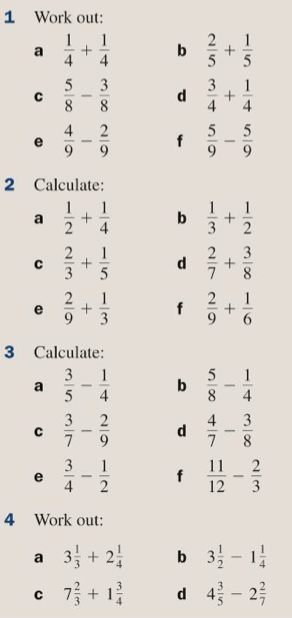

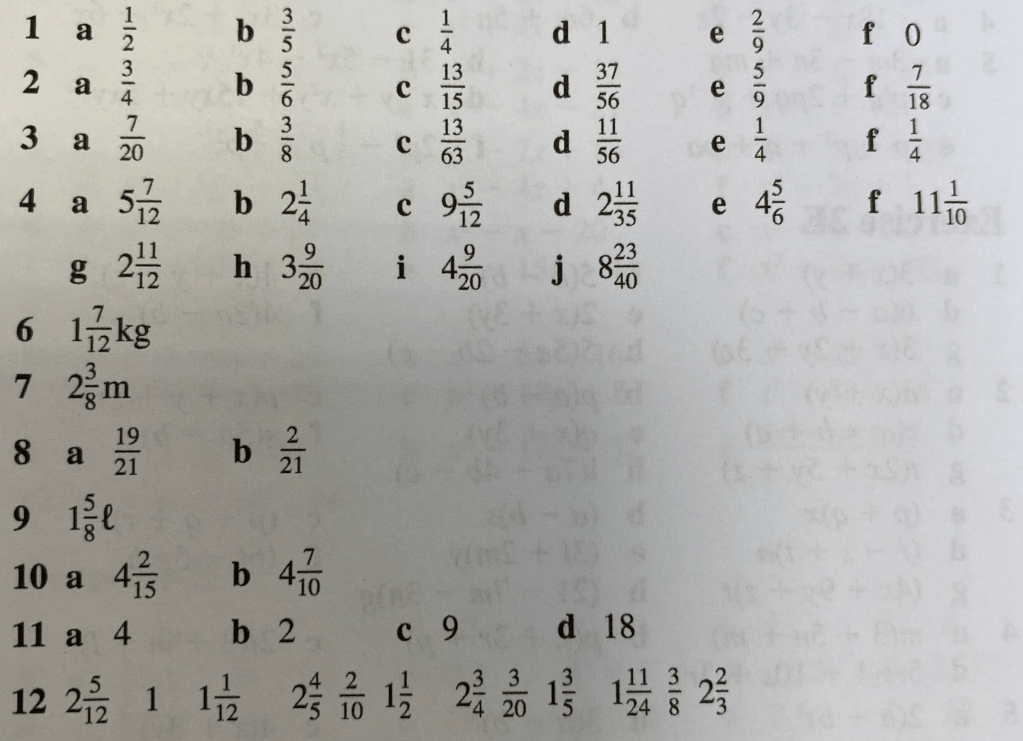
The answers are below:
Multiplying and Dividing Fractions
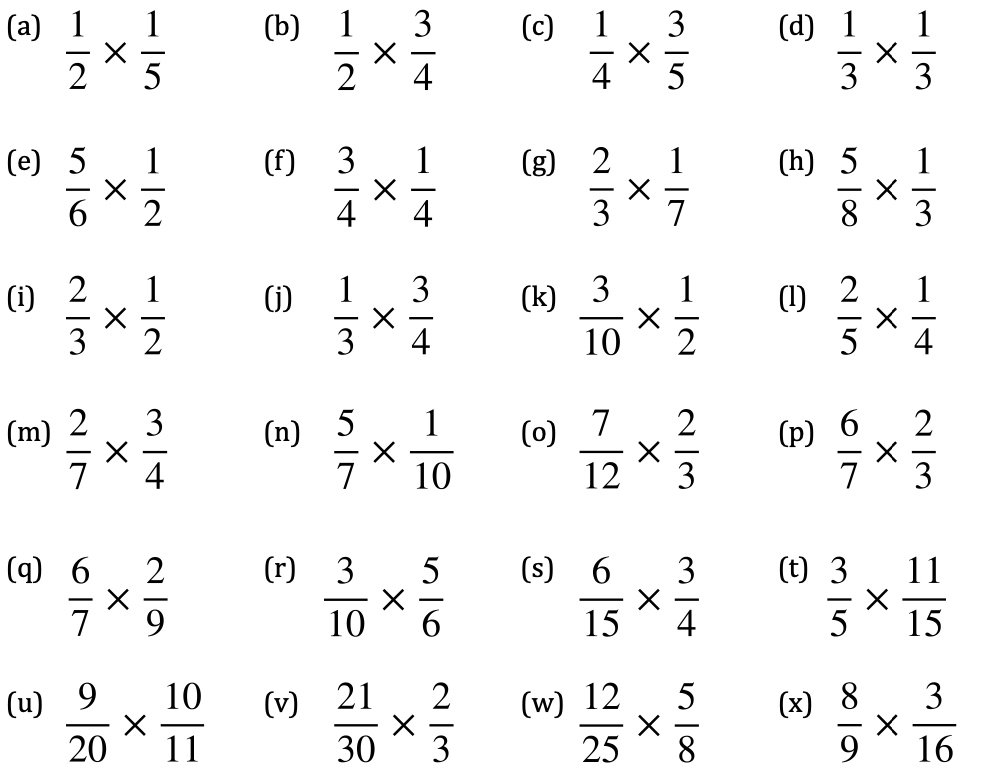
Multiplying fractions is actually easier than adding and subtracting fractions, because we just multiply the numerators to get the result numerator and multiply the denominators to get the result denominator. If we have a mixed number, we must start by rewriting it as an improper fraction. If one of the things being multiplied is an integer (i.e. a whole number), we can start by rewriting it as a fraction with a denominator of 1 (i.e. 3 = 3/1)
Example
Dividing Fractions
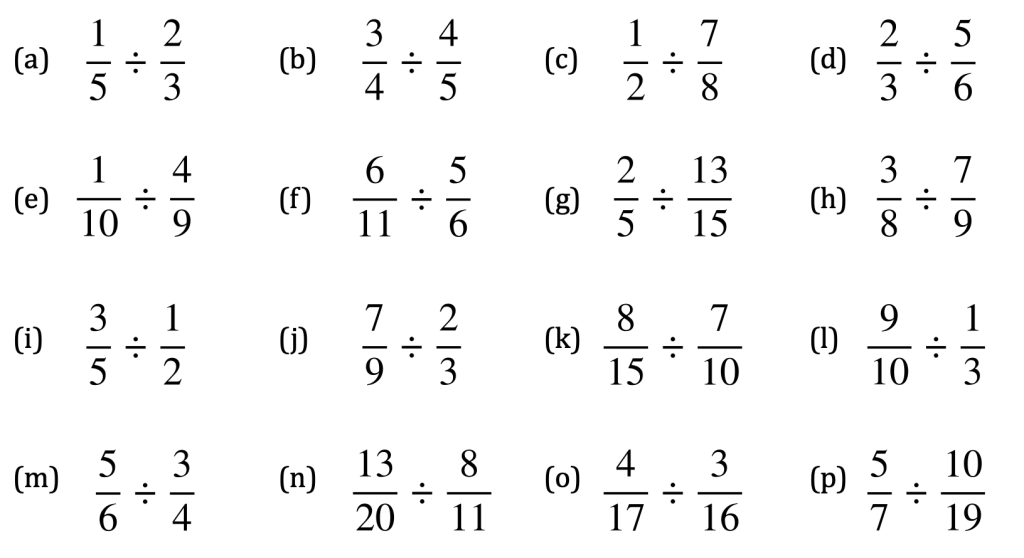
Dividing fractions is very similar to multiplying fractions, except to divide we must multiply by the reciprocal. This works because multiplying and dividing are inverse operations.
Examples

Exercise
Let’s complete exercise 1B from pages 11 to 13 of the textbook:
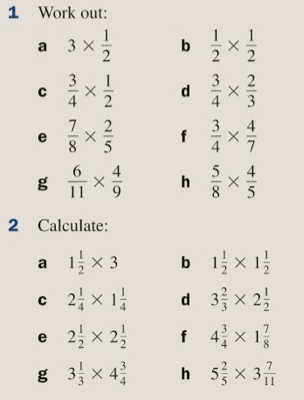
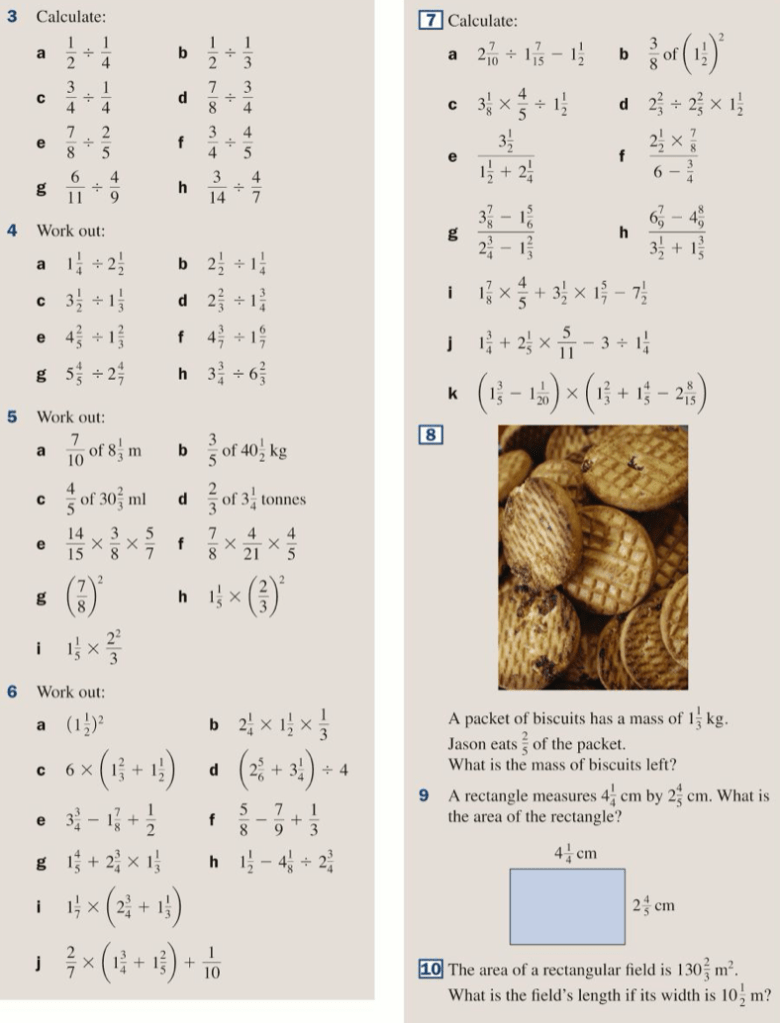
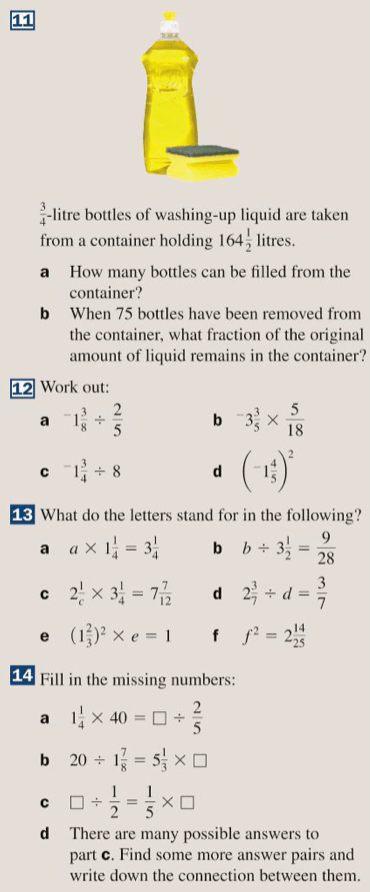
The answers are below:

 Maths with David