We often talk in probability about the addition rule and the multiplication rule.
If events are mutually exclusive, the addition rule states that the probability of one or the other occurring is the sum of their probabilities.
Events are called independent if the probability of one occurring is not affected by the occurrence of the other (e.g. the probability of an earthquake in Japan and the probability of Barcelona wining the Spanish football league).
If events are independent, the multiplication rule states that the probability of one and the other occurring is the product of their probabilities.
Examples


Exercise
Let’s complete exercise 3 from page 373 of the extended textbook:
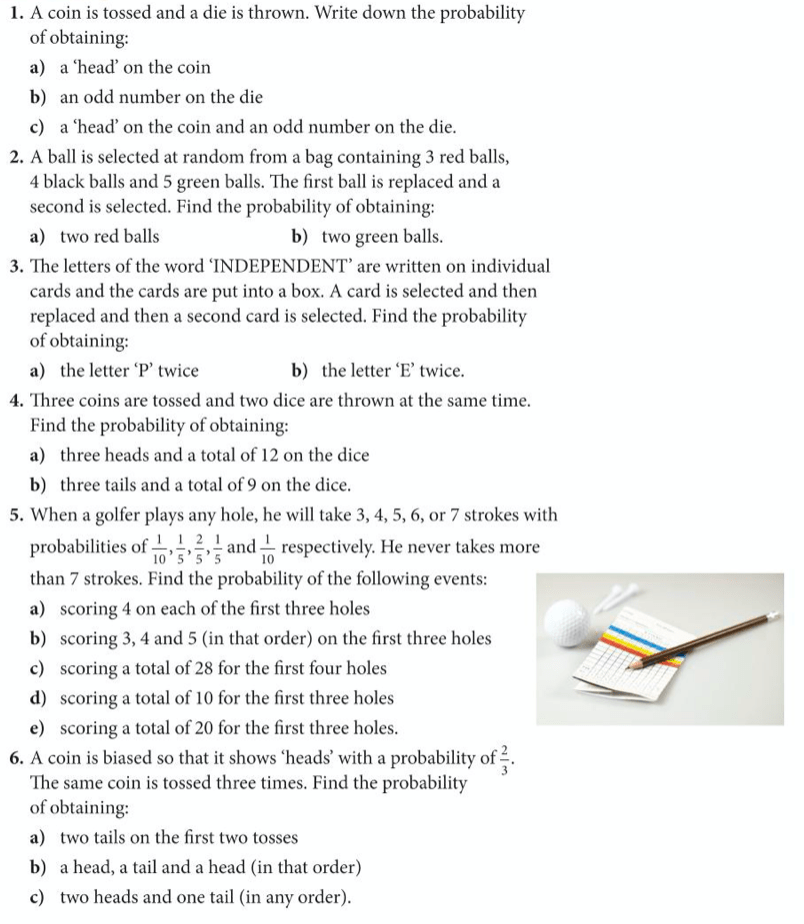
The answers are below:


 Maths with David