Ratio problems can be presented in different ways.
One of the easiest ways is if we are told a ratio in the form 1:n or n:1 (for instance 1:3, 1:7, 8:1 or 13:1).
If the ratio is given this way, for instance if we are told that the ratio of boys to girls is 1:6, then we can solve problems simply by multiplying or dividing by 6 (e.g. if we are told that there are 5 boys, we can calculate that there are 30 girls, or if we are told that there are 42 girls we can calculate that there are 7 boys.
Slightly more difficult is if the ratio is in the more general for m:n. In this case, we need to start by finding what “1 part” represents.
For instance, if we are told that the ratio of boys to girls is 2:5, and the there are 12 boys, then first we have to divide by 2 to find that “1 part” represents 6 boys. We can then proceed as before and multiply by 5 to conclude that here are 30 girls.
How would you apply this logic if you were told that there were 25 girls and wanted to know how many boys there were?
Worked Example 1
The ratio of girls to boys in a class is 1:3
(a.) If there are 9 girls in the class, how many boys are there?
(b.) If there are 9 boys in the class, how many girls are there?
Worked Example 2
Purple paint is made by mixing red paint and blue paint in the ratio 2:3
(a.) How much red paint do you need to mix with 12 litres of blue paint?
(b.) How much blue paint do you need to mix with 12 litres of red paint?
Exercise 1
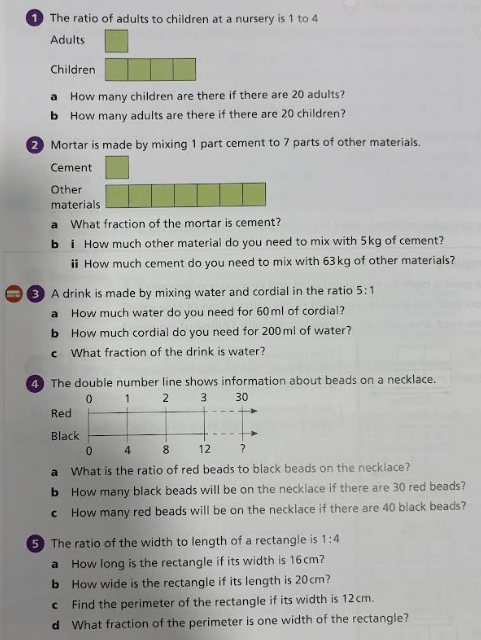
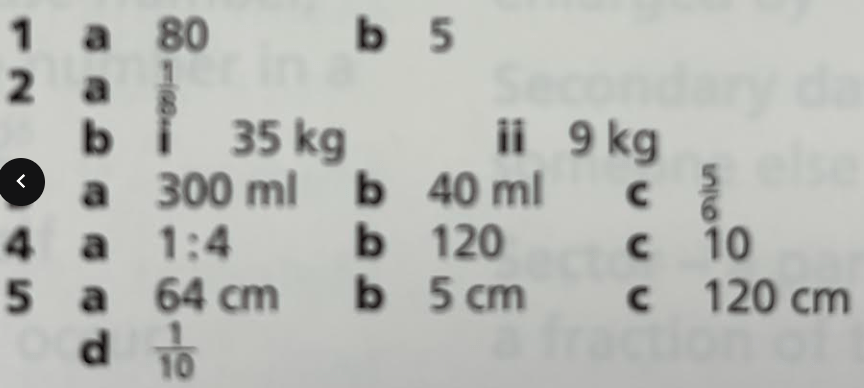
Exercise 1 – Answer
Exercise 2
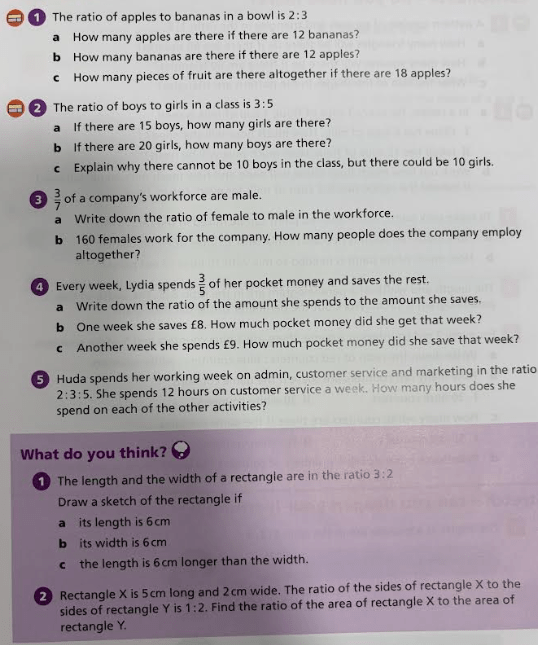
Exercise 2 – Answers
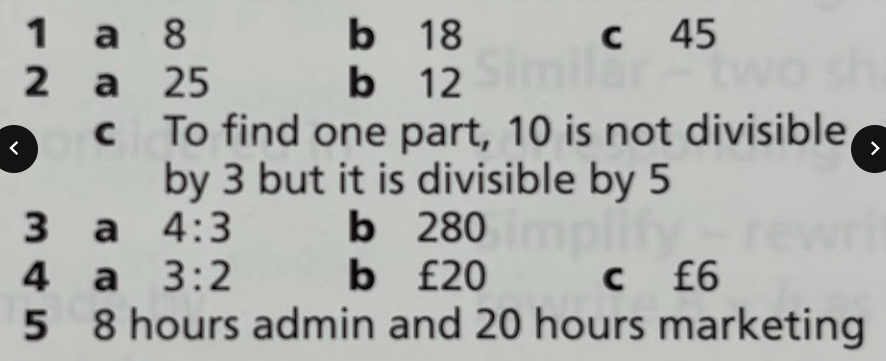
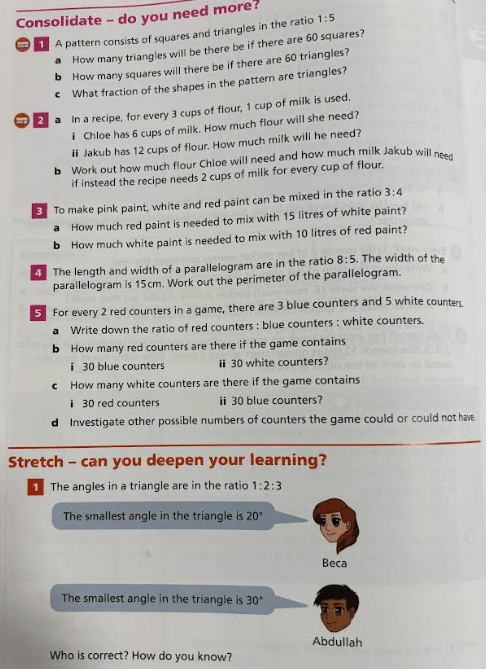
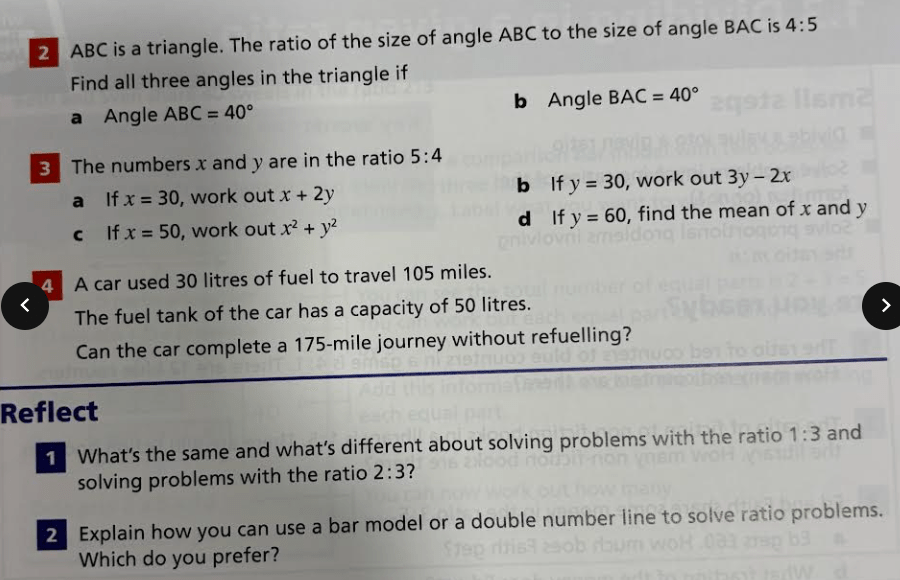
Exercise 3
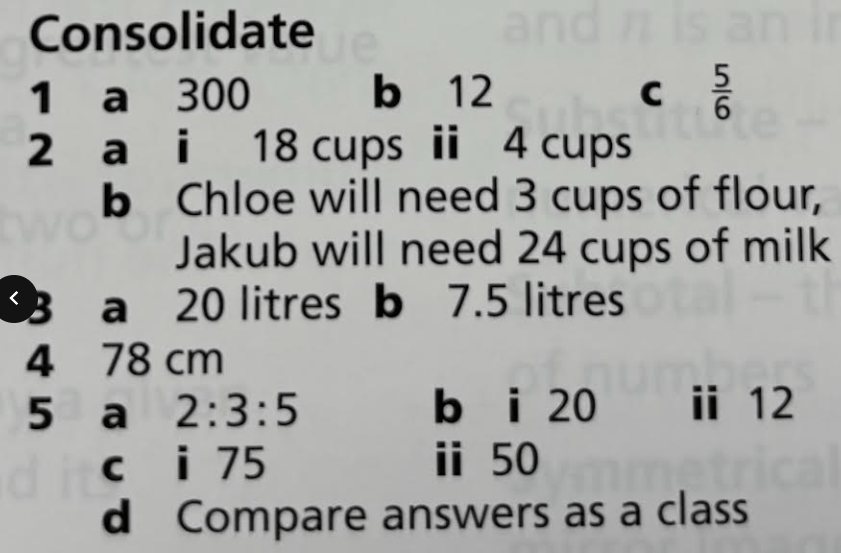
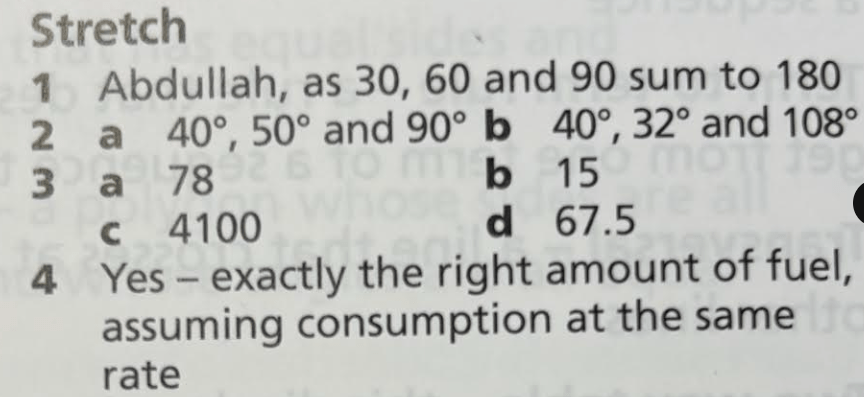
Exercise 3 – Answers
Alternative Question Set


The answers are below:

The answers are below:
 Maths with David