Geometrically, we can interpret the differential equation 
The table below shows the gradients for each integer coordinate pair within ![x,y \in [-2,2]](https://s0.wp.com/latex.php?latex=x%2Cy+%5Cin+%5B-2%2C2%5D+&bg=ffffff&fg=000&s=0&c=20201002)
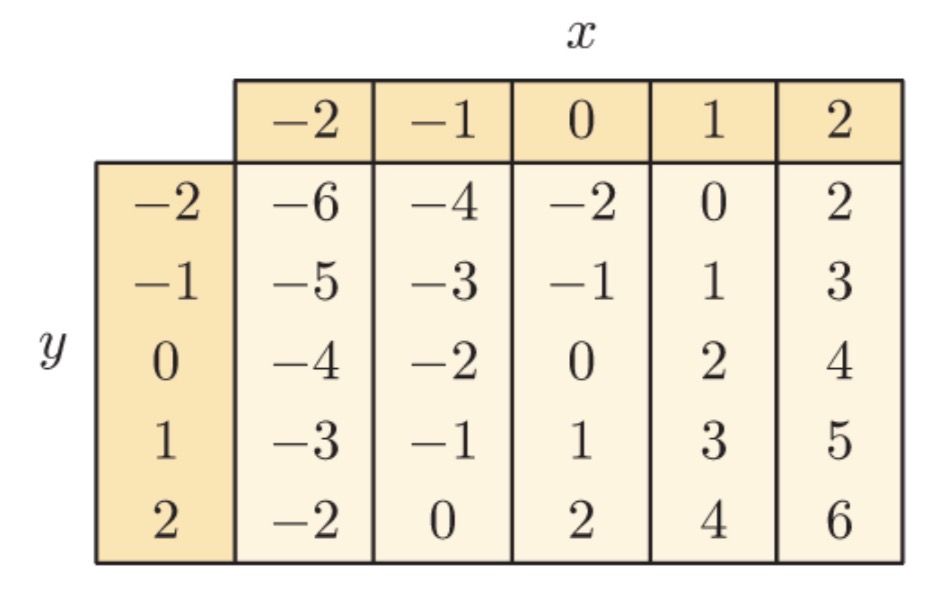
Using short line segments to represent the gradient at each coordinate point gives a slope field of the tangents to the solution curves. Such a slope field is shown below, including three possible solution curves:
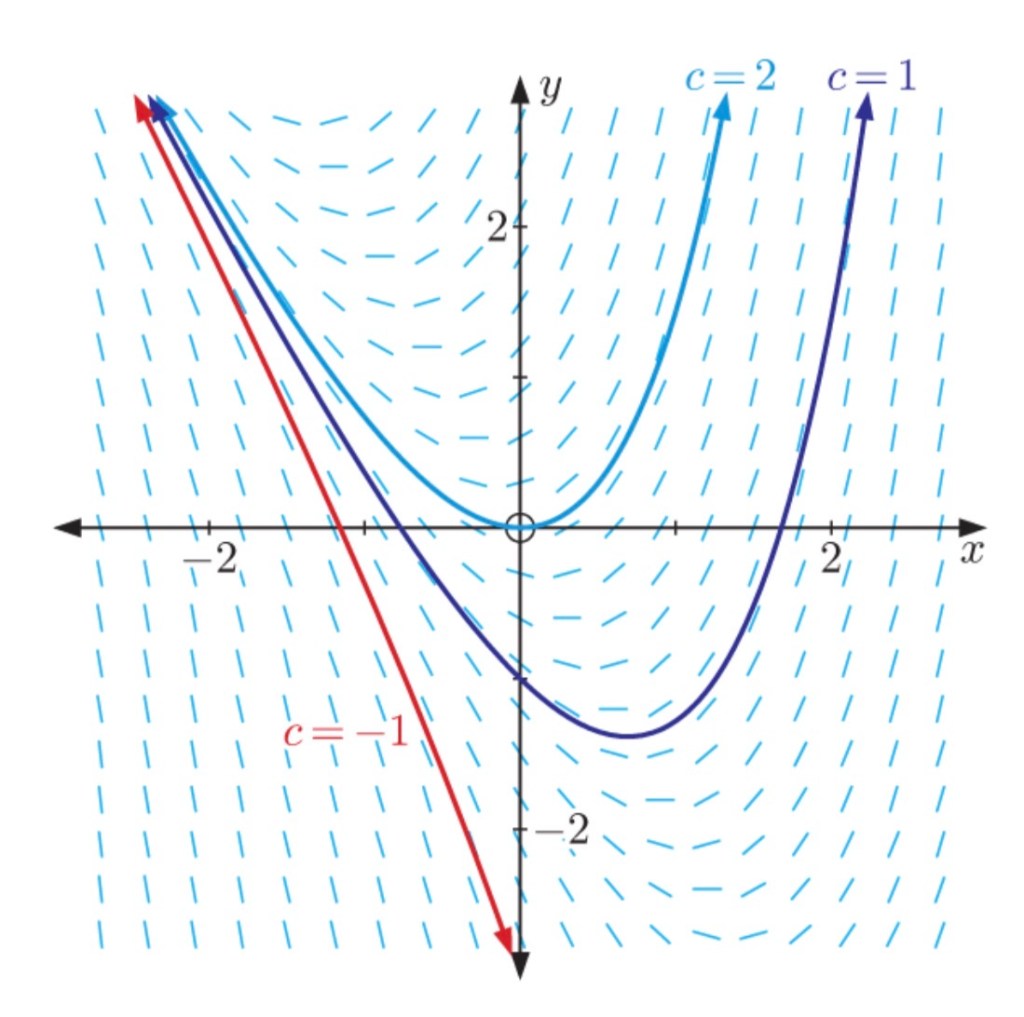
Worked Example 1
The slope field for 
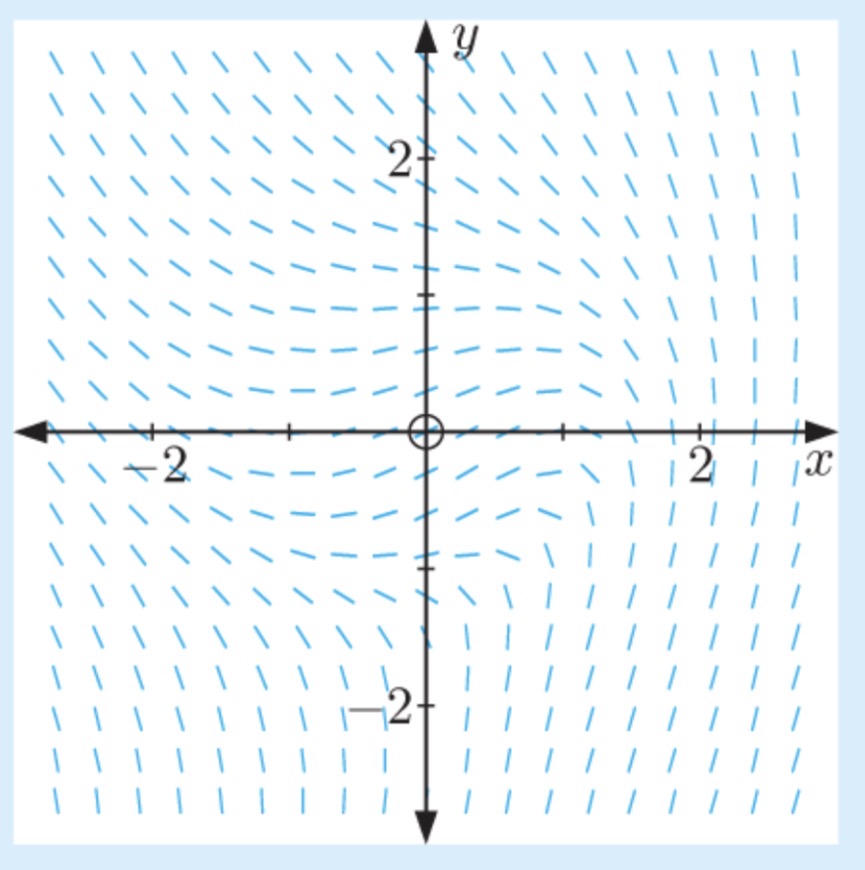
- a) Find the gradient of the tangent to the solution curves at (1,1)
- b) Sketch the solution curves which passes through (1,1)
Worked Example 2
Consider the differential equation 

a) Find the particular solution which passes through (0,-1)
b) Construct the slope field for the differential equation using the integer grid points for
Exercise
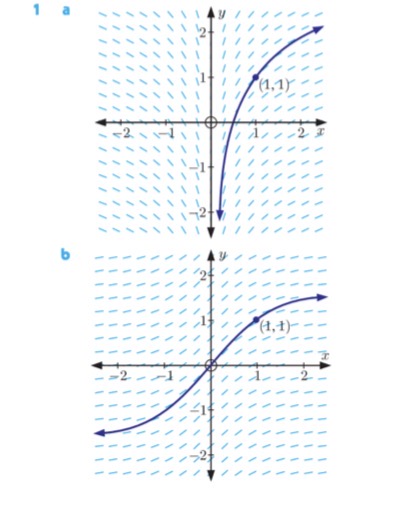
1.) Use the slope field to graph the solution curve passing through (1,1):
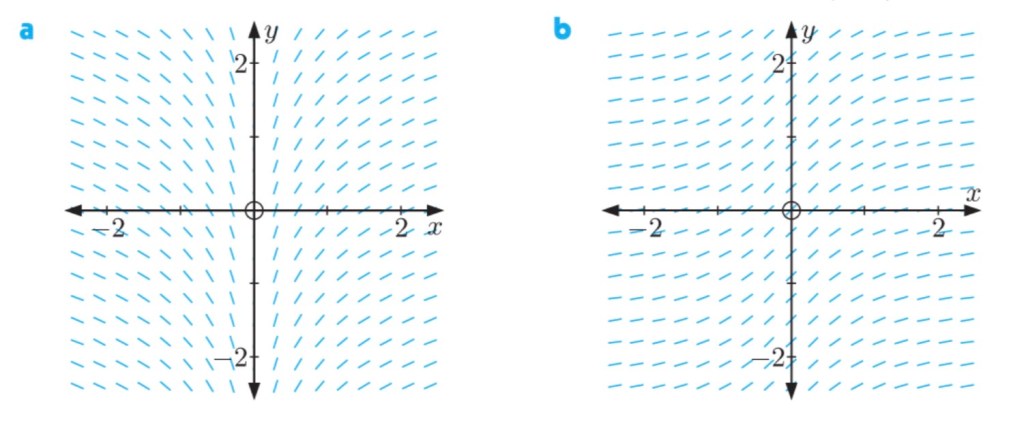
2.) The slope field for the differential equation 
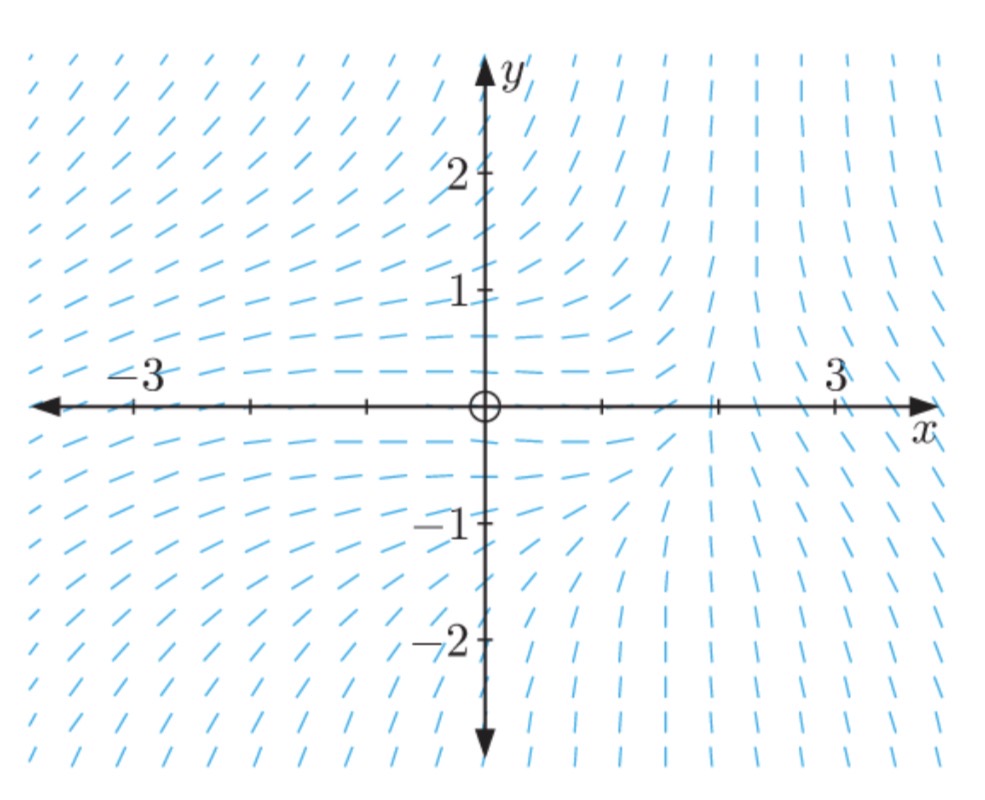
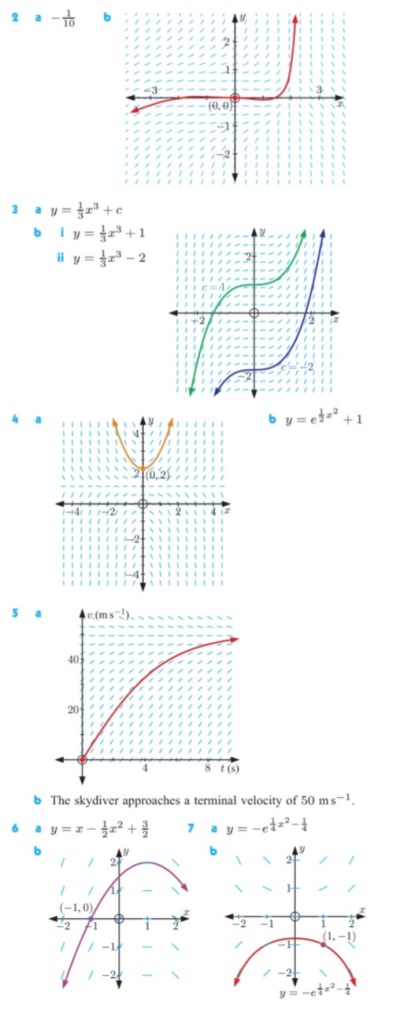
- a) Find the gradient of the tangent to the solution curve at the origin
- b) Sketch the particular solution passing through the origin.
3.) The slope field for 
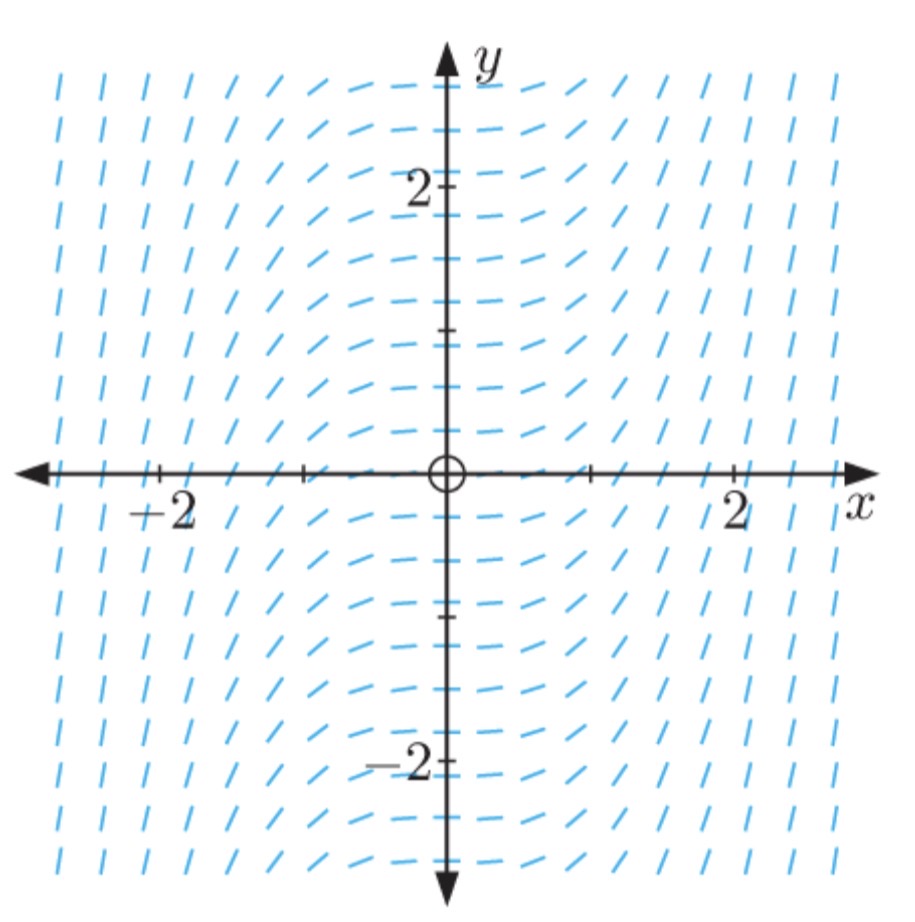
- a) Find the general solution to the differential equation
- b) Find the particular solution for:
- (i) c = 1
- (ii) c = -2
- Sketch these solutions on the slope field.
4.) The slope field for the differential equation 
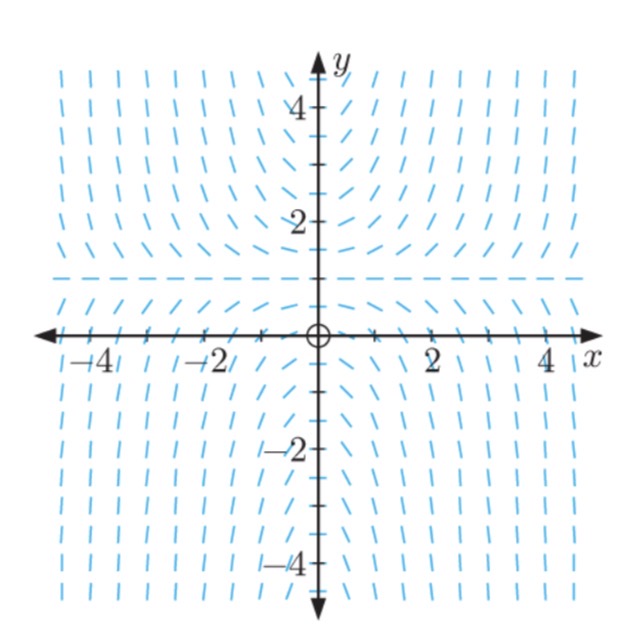
- a) Sketch the solution curves which which passes through (0,2)
- b) Find the equation of the solution curves drawn in part (a)
5.) The velocity v ms-1 of a skydiver t seconds after she jumps from a helicopter satisfies the differential equation: 

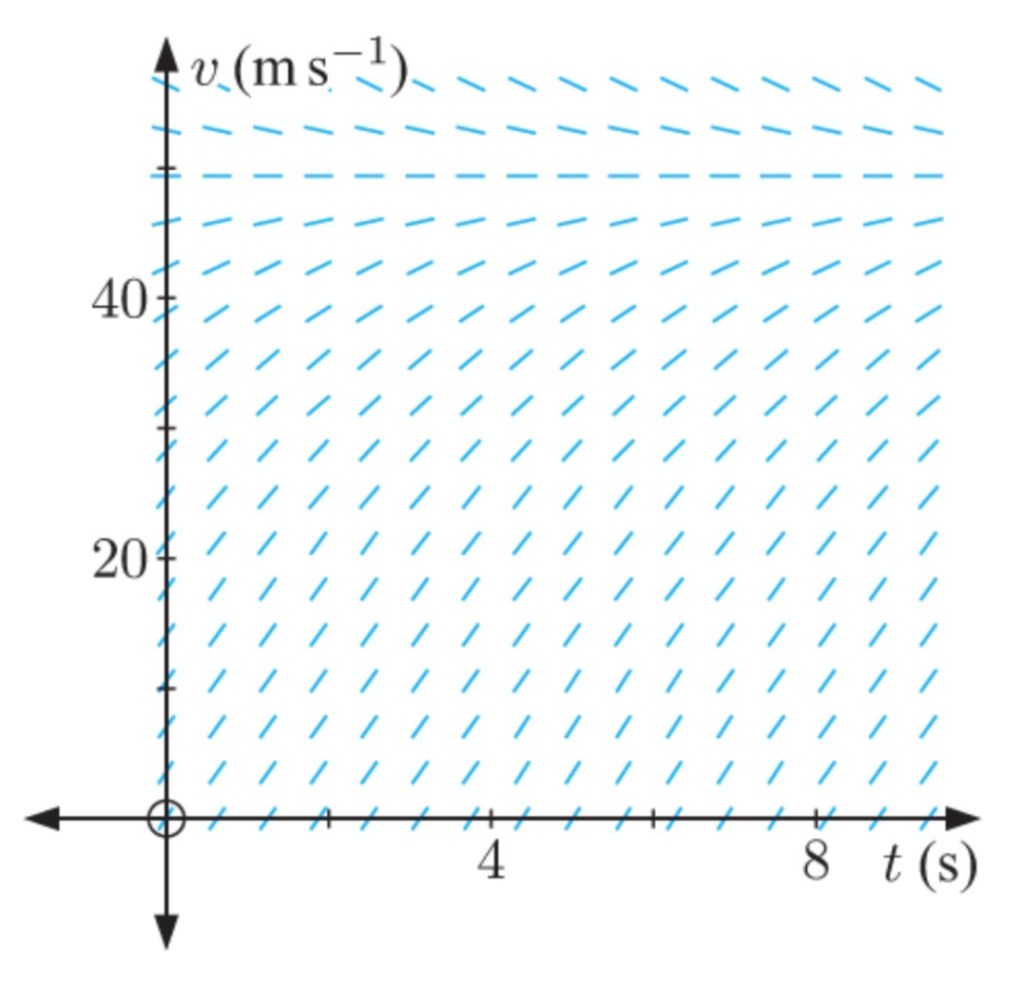
- a) Given that the skydiver initially has velocity 0ms-1, sketch the particular solution curve.
- b) Describe what happens to the velocity of the skydiver as she falls.
6.) Consider the differential equation 

- a) Find the particular solution which passes through (-1,0)
- b) Construct the slope field for the differential equation using the integer grid points for
7.) Consider the differential equation

- a) Find the particular solution which passes through (1,-1)
- b) Construct the slope field for the differential equation using the integer grid points for
Answers
 Maths with David