Any transaction involves a buyer and a seller. The buyer chooses how much to demand and the seller chooses how much to supply.
We use the word firm to refer to any organisation that brings together factors of production in order to produce output. There are many different ways that firms can be organised, such as sole traders, partnerships, limited companies and public companies.
A competitive market is a market in which individual firms cannot influence the price of the good or service that they are selling, because of competition from other firms.
In a competitive market, the higher the price is, the more goods that firms will be willing to supply (this is called the law of supply). Because of this supply curves increase from left to right.
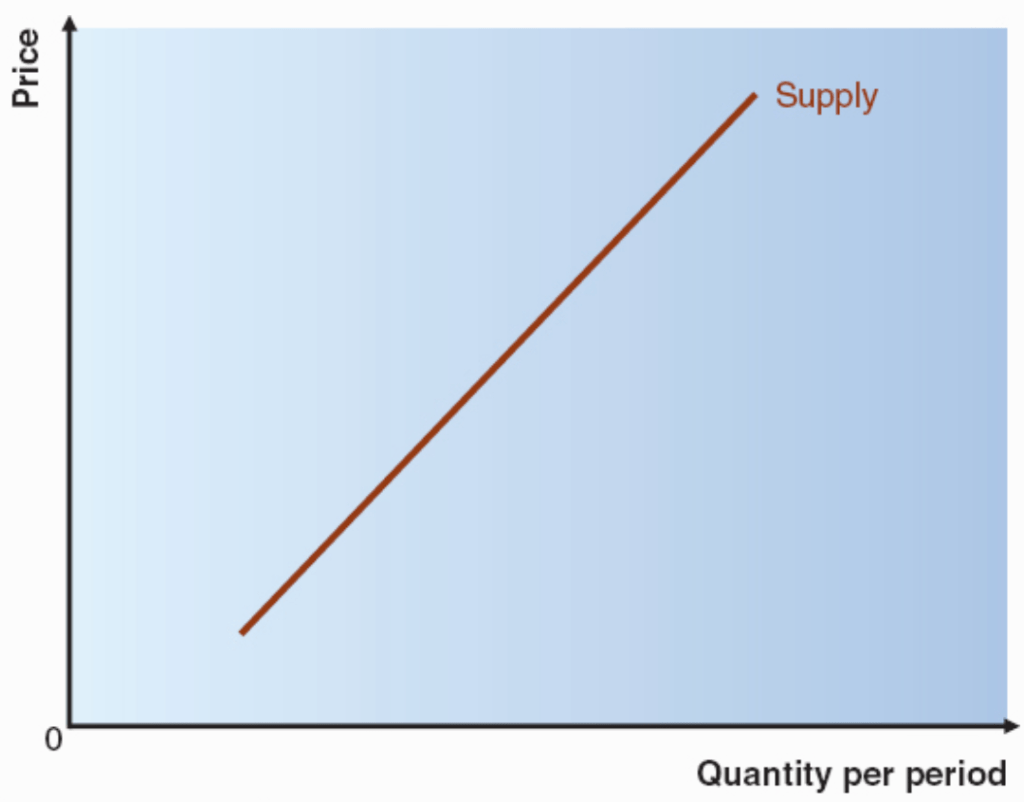
Task 1 – Reading from a Supply Curve
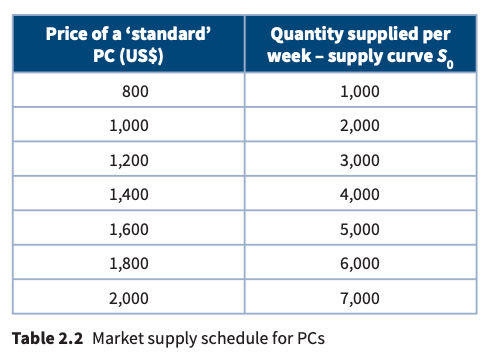
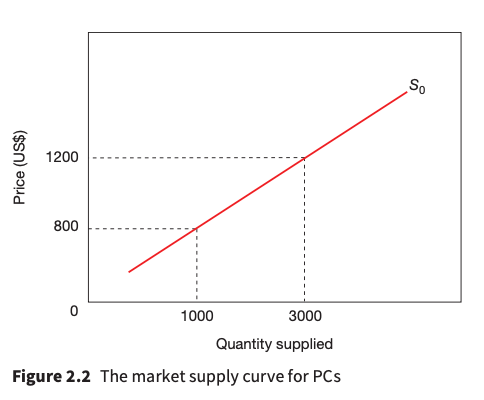
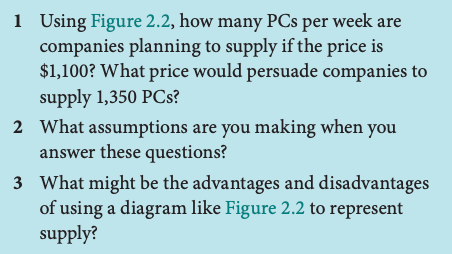
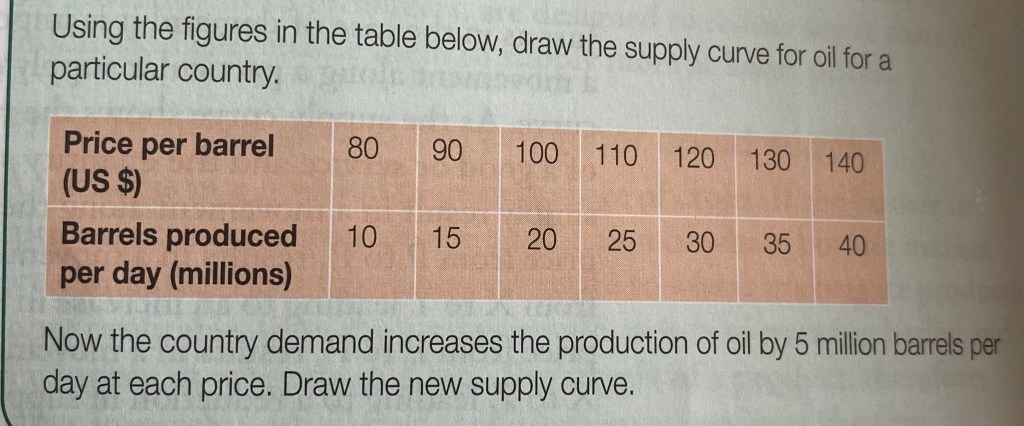
Task 2 – Constructing a Supply Curve
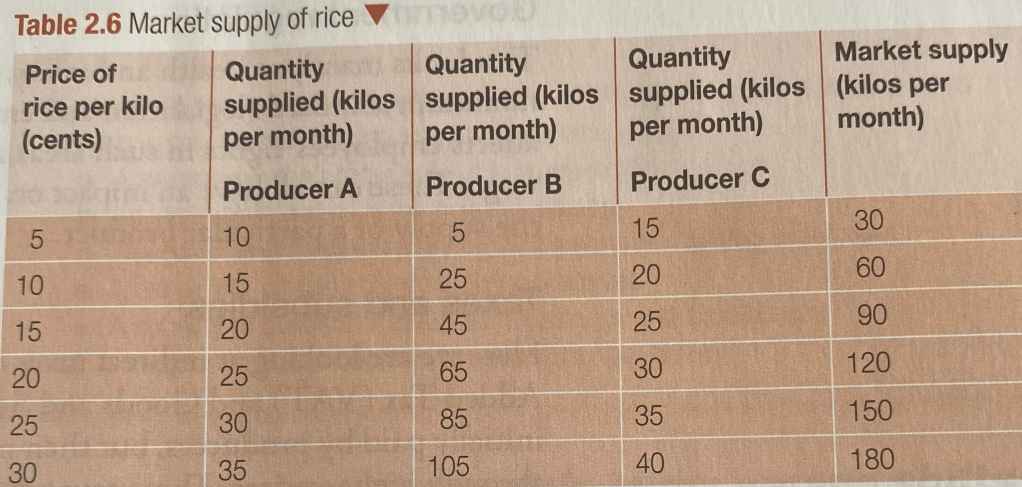
Market supply is established by adding together the quantity offered by each producer at each price. Below is data showing the quantity of rice that three different suppliers are willing to offer at each given price. On the same diagram, draw a supply curve for each different supplier (label them SA, SB and SC), and another supply curve showing the market supply of rice.
Shift of supply curve vs. movement along supply curve
As with the demand curve, the supply curve relates quantity and price and a change in price causes a movement along the curve. Other influences on supply shift the demand curve right or left. What kind of things do you think would cause a shift in a demand curve? (Try to give answers based on the country you are specialising in.
Task
Movement of supply curve:
Determinants of supply
- There are five key determinants on the quantity that firms will supply to the market at any given price:
- Production costs;
- Production technologies;
- Taxes and subsidies;
- Price of related goods;
- Expectation of future prices.
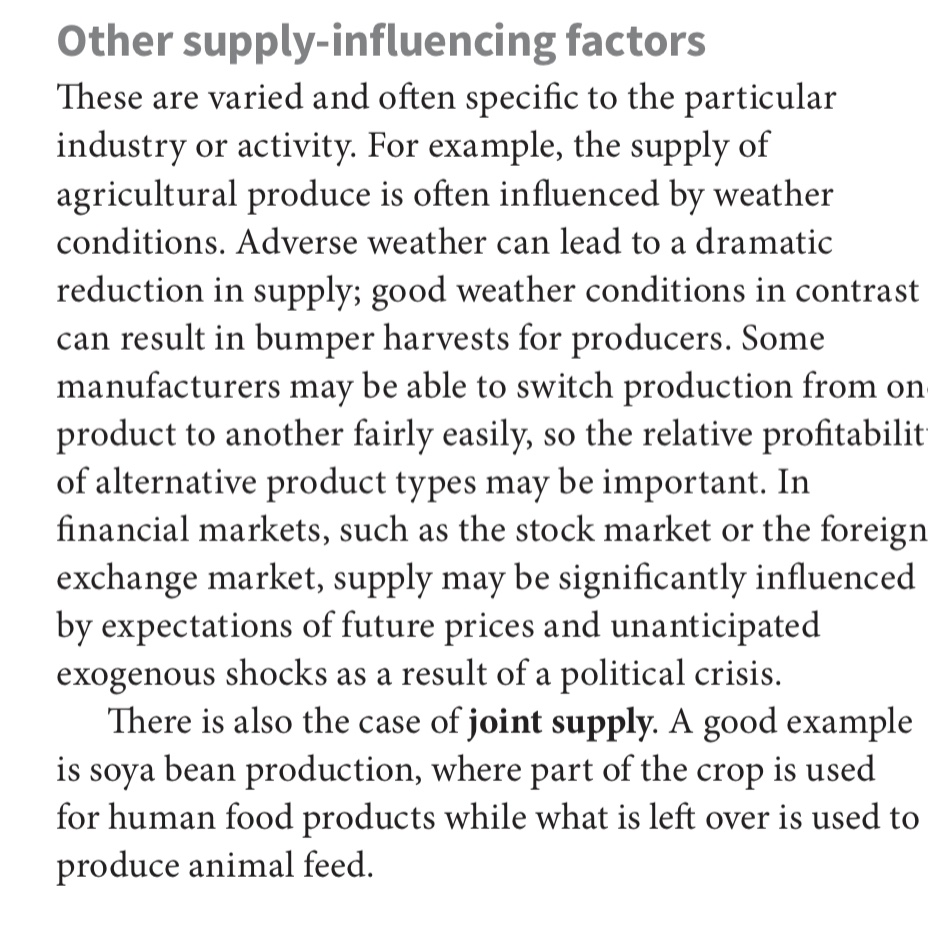
Other factors such as government regulation and the climate can also have an impact.
Task – Impact on Supply
Write an article, in which you go through each of the following factors and consider what sort of change in that factor will cause and increase in supply and what sort of change in that factor will cause a decrease in supply (and why):
- Wage rates;
- Worker productivity;
- Raw material prices;
- Energy costs;
- Maintenance costs;
- Transport costs;
- State of technology.
Production costs and technologies
Each of a firm’s factors of production, land, capital, labour, etc. have a cost. If these costs increase, a firm can supply less output at a given price.
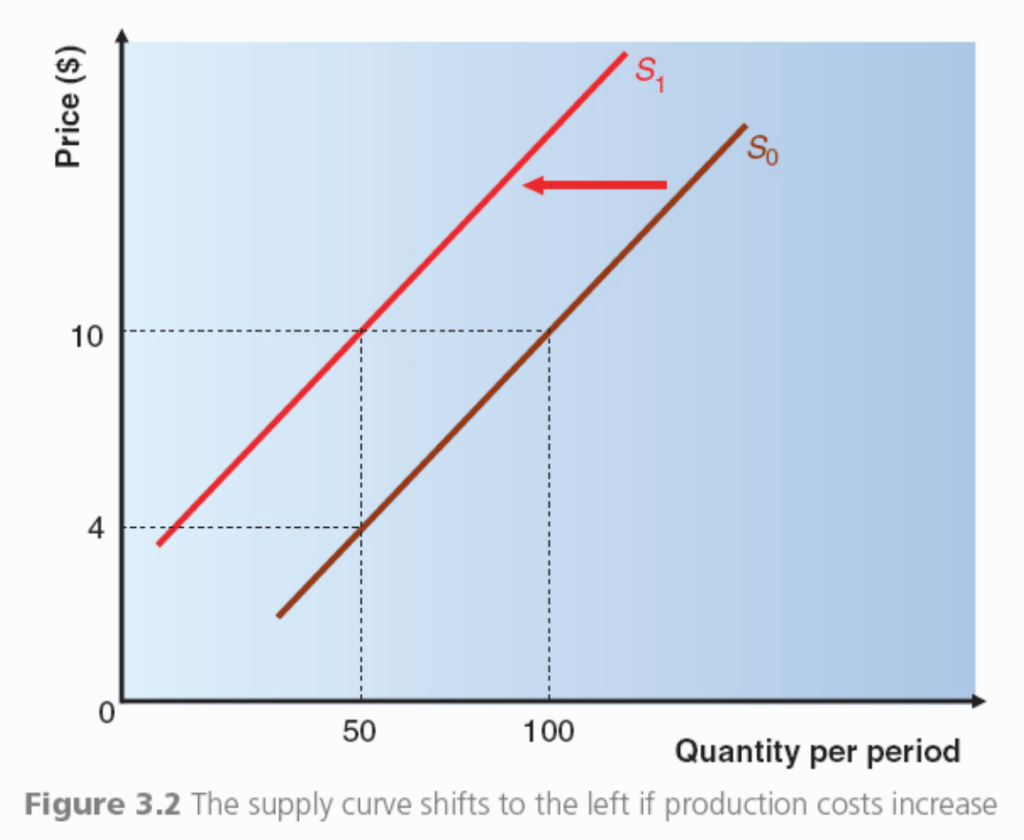
Notice that the vertical distance between S0 and S1 is the amount of the change in the cost per unit. Obviously a drop in the costs of the factors of production causes the supply curve to move right instead of left.
Taxes and subsidies
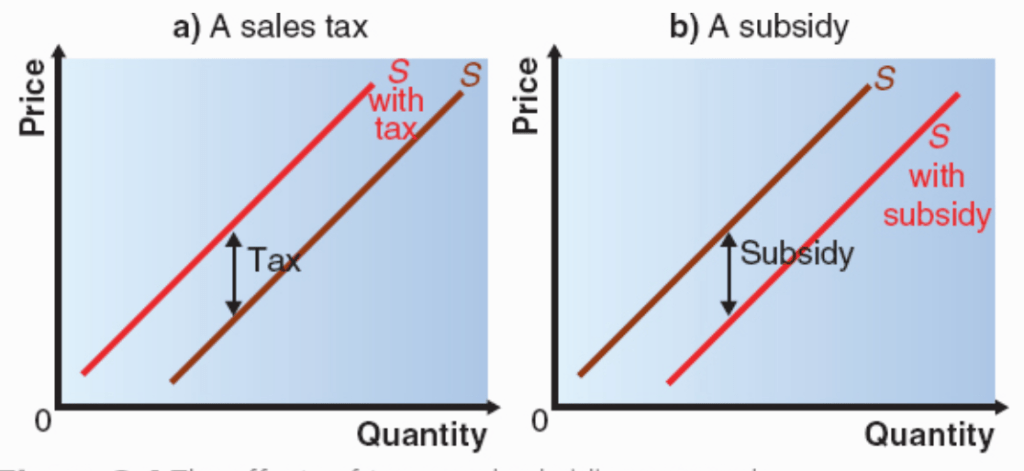
A sales tax, such as VAT, will mean that the amount received by the firm is less than the price paid by the customer, which will shift a supply curve to the left. Conversely, a subsidy will mean that the amount received by the firm is more that the price paid by the customer, shifting a supply curve to the right. (We will look at these in much more detail when we look at government microeconomic intervention).
Prices of related goods
We showed above that substitute and complementary goods can have an impact on demand. They can also have an impact on supply, causing a firm to stop producing one good and start producing another good, even if this incurs costs. Some goods are also by-products of other goods, meaning that the demand for one of these goods could lead to increased supply of the other.
Price expectation
Goods can take time to produce (e.g. fruit production requires plantation of trees), so firms often have to estimate what the price of the goods will be at a given time in the future, in order to plan its supply strategy.
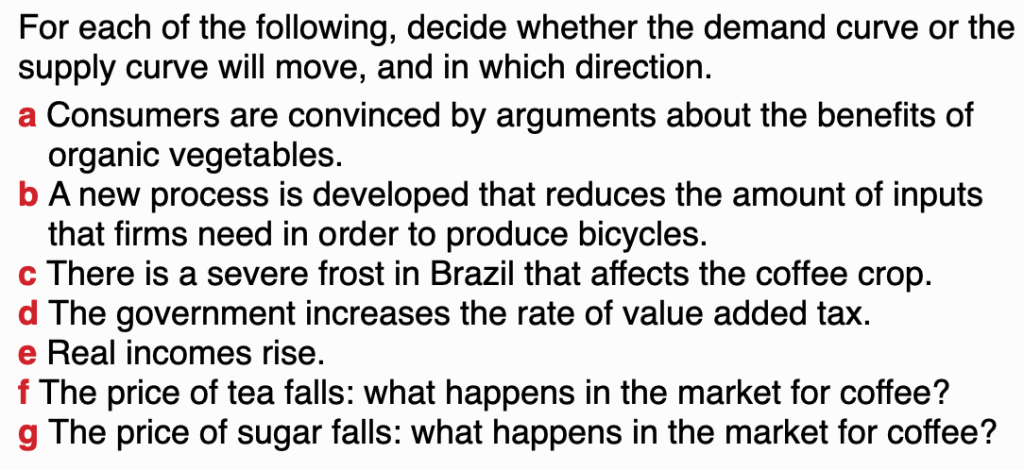
Exercise
 Maths with David