Elasticity
Elasticity is a very important concept in economics, and is a measure of the sensitivity of one variable to changes in another variable.
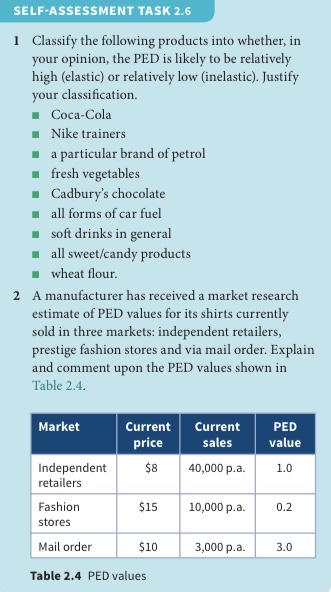
We will consider first the Price Elasticity of Demand (PED), which is a measure of the sensitivity of quantity demanded to a change in the price of a good or a service. It is measured as the percentage change in the quantity demanded divided by the percentage change in price.
A percentage change of any quantity is calculated by dividing the change in the amount by the original amount.
If you think about the calculation, because an increase in price would normally cause a decrease in quantity sold, PED is typically negative. In practice the absolute value of PED is often stated.
Task 1 – introducing elasticity
Task 2 – introducing elasticity (case study)

The curve below is a demand curve for pencils. As indicated, at a price of 40c a drop in the price by 5c causes an increase of 10 in quantity demanded. At this point the elasticity is (10/20) ÷ (-5/40) = -4, and so the demand is highly price elastic (any absolute value greater than 1 is considered to be highly elastic).

But if we look further down the curve, we see that at a price of 10c a drop in price by 1c causes an increase of 2 in quantity demanded. At this point the elasticity is (2/80) ÷ (-1/10) = -0.25, and so the demand is now price inelastic.
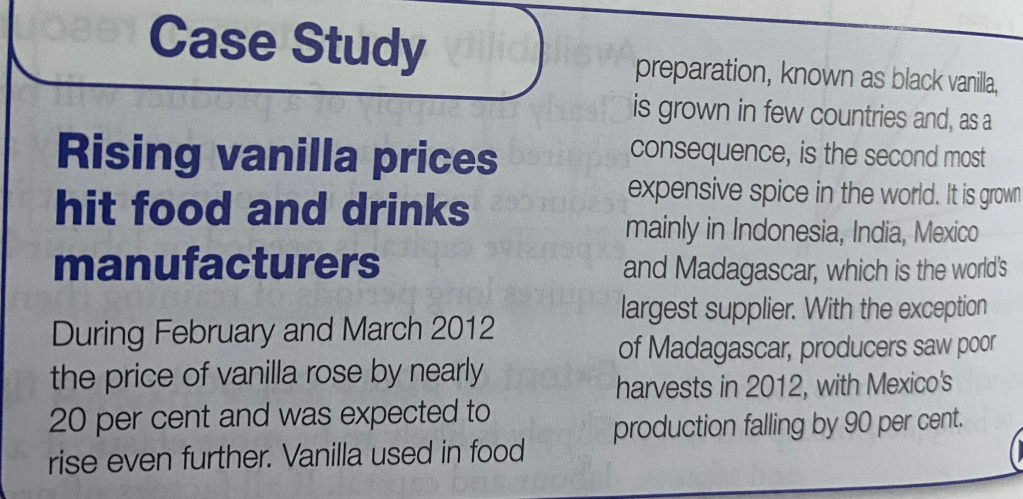
If the elasticity has an absolute value of 1 we see the the demand has unit elasticity.
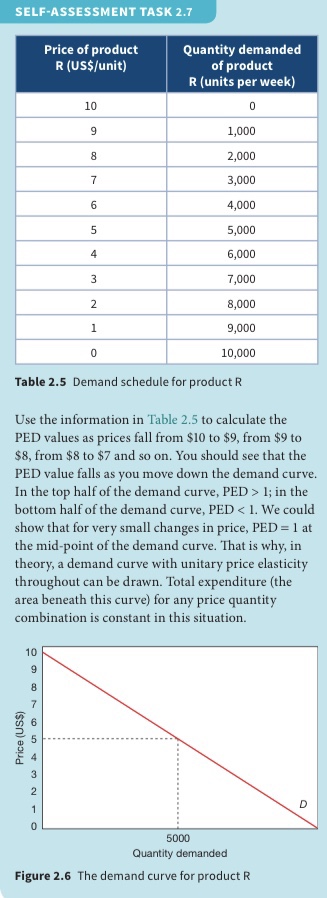
Task – Price elasticity at different points on the demand curve

Task – Elasticity

Relationship between price elasticity of demand and total revenue
It is important for firms to predict the price elasticity of demand, and this will affect the quantity sold and so will impact overall revenue. In the below diagram, a change in price from P0 to P1 causes the revenue to change from the area of the rectangle on base 0Q0 to the area of the rectangle on base OQ1.
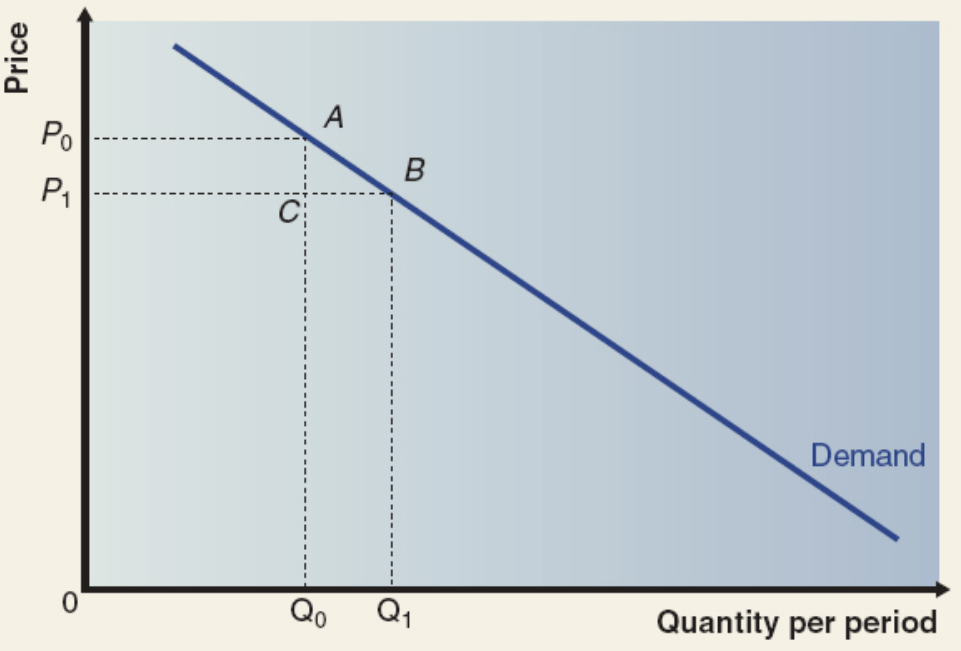
In general, reducing price at the elastic part of a demand curve will increase revenue, whereas reducing price at the inelastic part of a demand curve will decrease revenue, as illustrated below:

A perfectly inelastic demand is where change in the price of a good will not impact the demand for it, whereas a perfectly elastic demand is where any increase in the price of the good will cause demand to drop to zero.
Influences on price elasticity of demand
- The following are the main factors affecting the price elasticity of demand. Have a think about each one and write a few sentences to explain in what way this could impact PED:
- Time period;
- Number of substitutes;
- Degree of necessity;
- Durability;
- Proportion of income.
Task 1 – Calculate PED
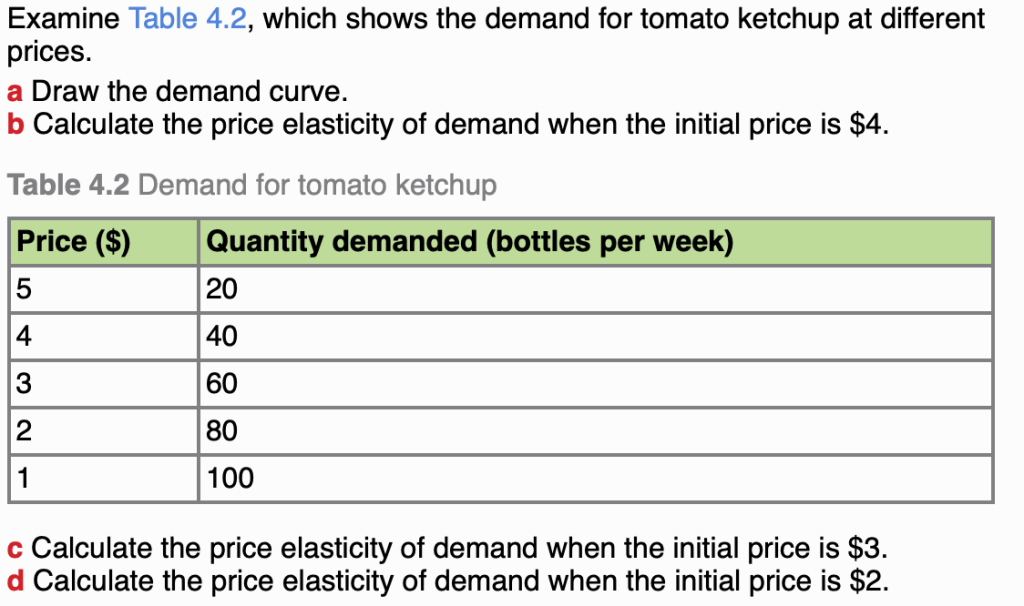
Task 2 – PED and decision making (sales taxes)

Income elasticity of demand
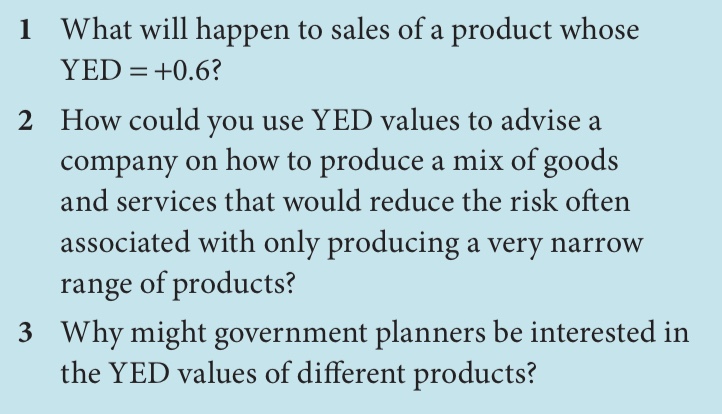
Income elasticity of demand (YED) is a measure of the sensitivity of quantity demanded to a change in consumer incomes, calculated as: (change in quantity demanded) ÷ (change in consumer income).
Unlike with PED, YED can be positive or negative. For normal goods it will be positive, whereas for inferior goods it will be negative.
An example is if the YED of magazines is 0.7, this means that a 10% increase in consumer incomes will least to a 10 x 0.7 = 7% increase in demand for magazines. Conversely, if the YED of bus travel is -0.3, then a 10% increase in consumer incomes will lead to a 3% decrease in demand for coach travel. Luxury goods (defined as goods with YED > 1) often have strongly positive elasticity. For instance, digital cameras could have a YED of 2, meaning a 10% increase in consumer incomes will lead to a 20% increase in demand. This is because an increase in income can lead to people dedicating a greater proportion of their income towards luxury goods.
An Engels curve, as illustrated below, shows the typical relationship between changes in income and the change in quantity demanded:

Task – YED
Cross Elasticity of Demand
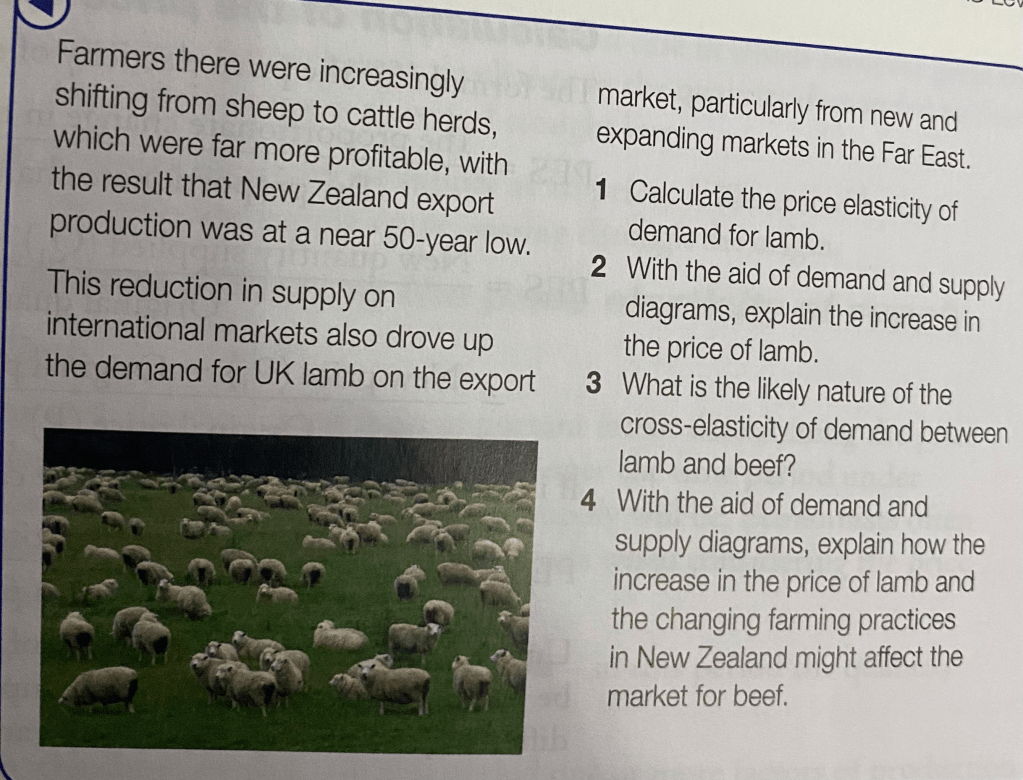
Cross Elasticity of Demand (XED) is a measure of the sensitivity of quantity demanded of a good or service to a change in the price of some other good or service, calculated as (change in quantity demanded of good X) ÷ (change in price of good Y).
For instance, an increase in the price of apples may lead to an increase in the demand for pears (a substitute good). A high XED suggest that two goods are very close substitutes (this can be used to help a company identify its close competitors).
Task 1 – XED
The owner of a local golf course loans out equipment to non-members who want to play occasional rounds. He estimates that in June and July, if he lowers the prices of clubs by 10%, the number of non-members playing will increase by 25%.
Calculate and comment on the XED.
What other factors should the owner consider if he wants to increase demand from non-members?
Task 2 – XED Case Study

Price Elasticity of Supply
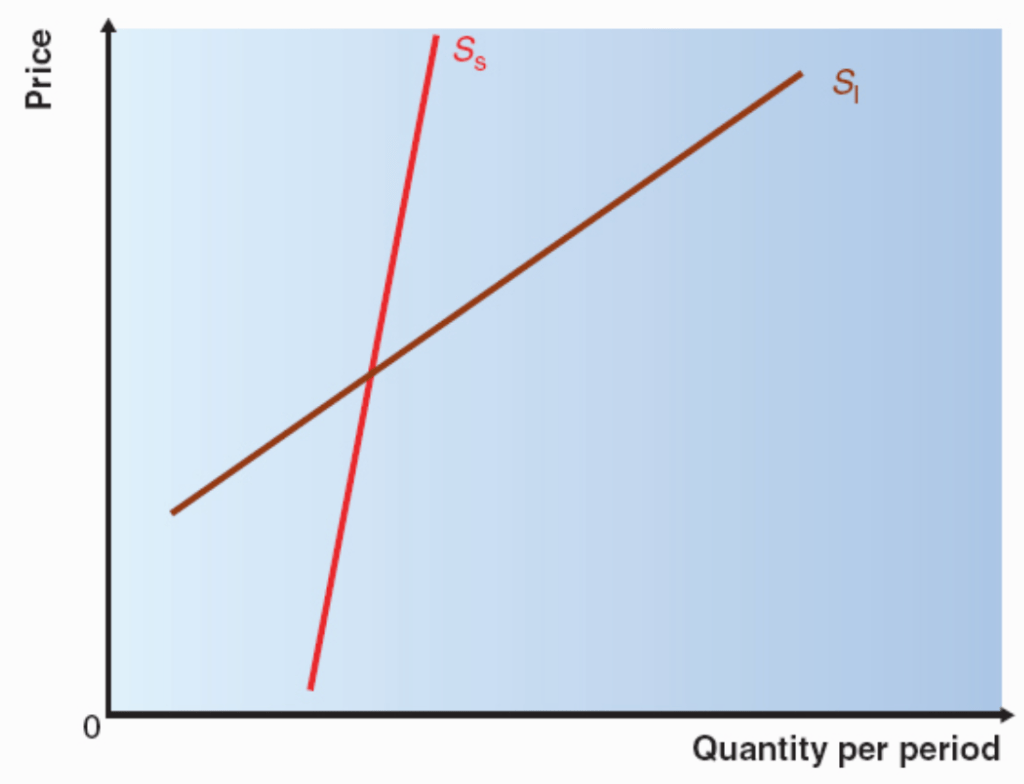
Price Elasticity of Supply is a measure of the sensitivity of quantity supplied of a good or service to a change in the price of that good or service, calculated as (change in quantity supplied) ÷ (change in price)
Over the long term supply tends to become more elastic (as factories can be built etc.), as illustrated below:
Factors affecting PES:
- Time;
- Availability and nature of resources;
- Extent of spare capacity in firm;
- Availability of stocks;
- Number of firms in the market;
- Possibility of switching factors of production between alternative uses.
Task – Calculating Price Elasticity of Supply and Considering Context

Task – Considering Price Elasticity of Supply and Demand

Supply elasticity typically has limits. For instance, no matter how much the price increases there is a limit to how much fish a fisherman will be able to supply. Similarly if storage facilities are not available for the fish and they will not be consumable the next day, the supply is perfectly inelastic, as they will be prepared to supply the fish regardless of how low the price drops.

Group Task – Assessing Situation considering Various Elasticities
Imagine that you are considering a pricing strategy for a bus company.
The economy is heading into recession and the company is running at a loss. Your local rail service provider has announced an increase in rail fares.
How (if at all) do you use the following information concerning the elasticity of bus travel with respect to various variables to inform your decision on price? Do you raise or lower the price?
| Price elasticity of demand | -1.58 |
| Income elasticity of demand | -2.43 |
| Cross-price elasticity of demand with respect to rail fares | +2.21 |
| Your price elasticity of supply | +1.15 |
 Maths with David