Binomial Expansion
(a+b)n is called a binomial because it has two terms.
Consider the expansions (a+b)1, (a+b)2, (a+b)3, (a+b)4 (yes, let’s fully expand them and inspect the result). If you look at the coefficients of these do you notice any pattern?
Worked Examples
- Use Pascal’s triangle to find the expansions of:
- (x+2y)3 and
- (2x-5)4
- The coefficient of x2 in the expansion of (2-cx)3 is 294. Find the possible value(s) of the constant c.
Exercise 1
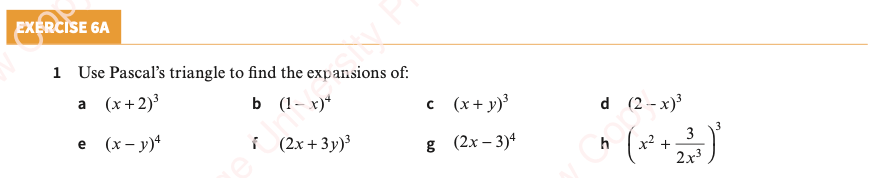
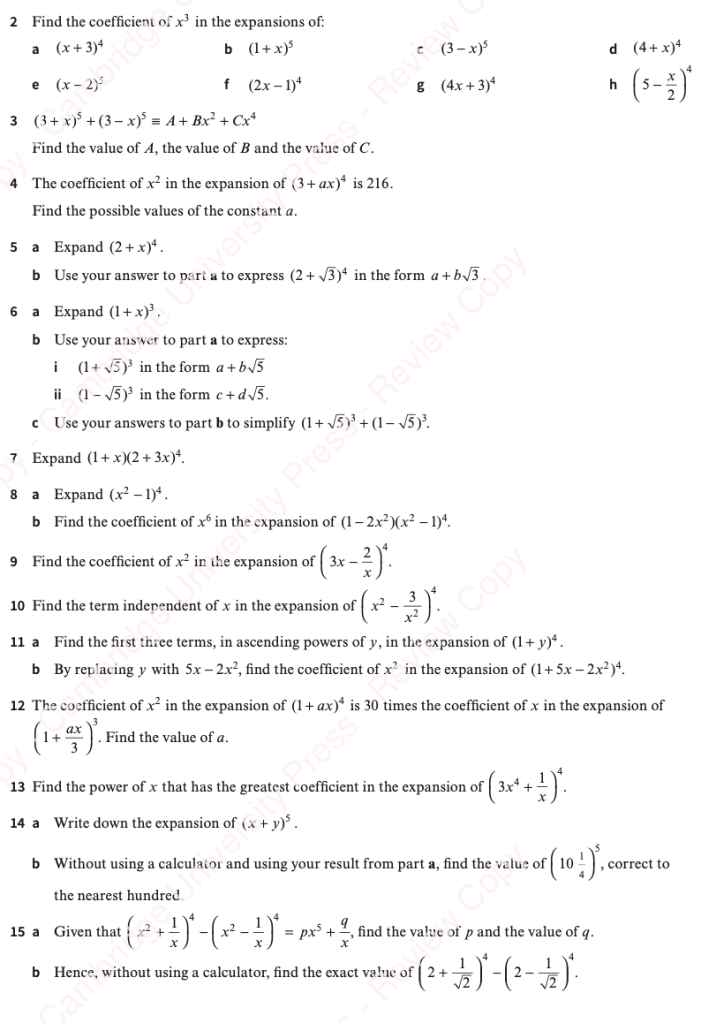
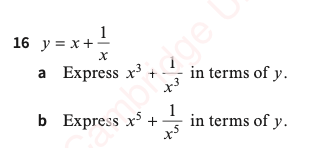
Answers


Binomial coefficients
The numbers in Pascal’s triangle are actually the binomial coefficients 
We can calculate these manually, or using the calculator’s buttons ‘
In general, for all natural numbers n:

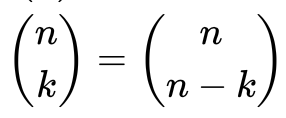
It is worth noticing that for all n, 


Worked Examples


Exercise 2

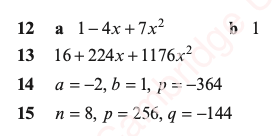
Answers

Arithmetic progression
- We use the following notation:
- a or a1 refers to the first term;
- d refers to the common difference;
- l referes to the last term.
Note that the common difference may be zero or a negative number.
The nth term is a + (n-1)d.
We use a method developed by Gauss to derive the formula for the sum of the first n terms in an arithmetic sequence. (Let’s do it!)
We should also be aware that the nth term in an arithmetic sequence is Sn-Sn-1
Worked Examples





Exercise 3


Answers

Geometric Progression
- We use the following notation:
- a or a1 refers to the first term;
- r refers to the common ratio;
The nth term is arn-1
We can multiply the whole sum by r and then subtract this to find the formula for the sum of n terms (Let’s do this!)
Worked Examples
1.) Find the seventh term in the geometric sequence: 8, 24, 72, 216, …
2.) How many terms are in the geometric sequence 4, 12, 36, …, 708588?
3.) Find the sum of 0.2 + 1 + 5 + … + 390625
Exercise 4

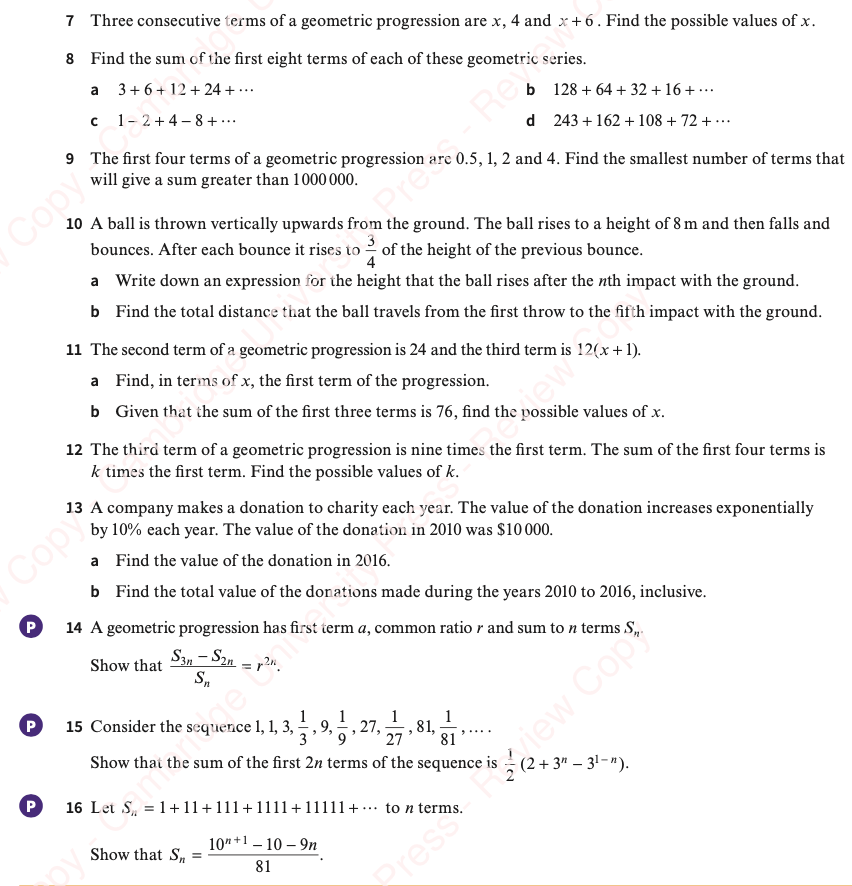
Answers
Infinite Geometric Progressions
If the absolute value of the common ratio is less than 1, then an infinite geometric series will converge.
S∞ =

Worked Examples
- Find the sum of the terms of the infinite progression 0.2, 0.02, 0.002, …
- The first three terms of an infinite geometric progression are 16, 12 and 9.
- Write down the common ratio.
- Find the sum of the terms of the progression.
Exercise 5

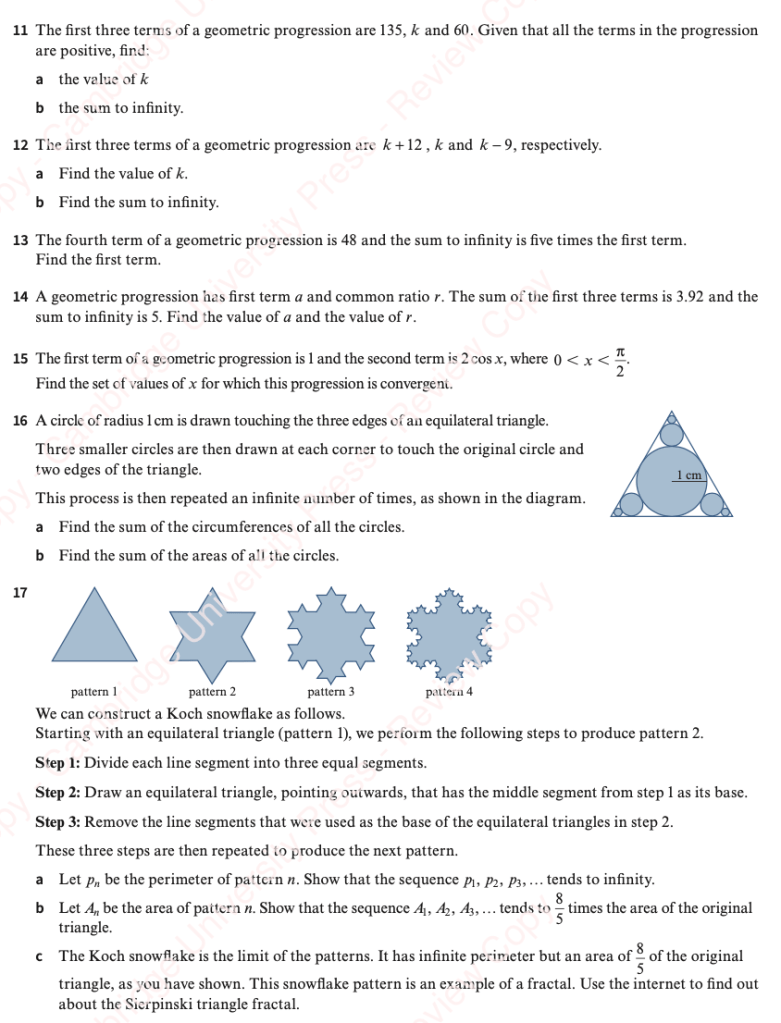
Answers

Combining Arithmetic Series and Geometric Series in a Question
Worked Example
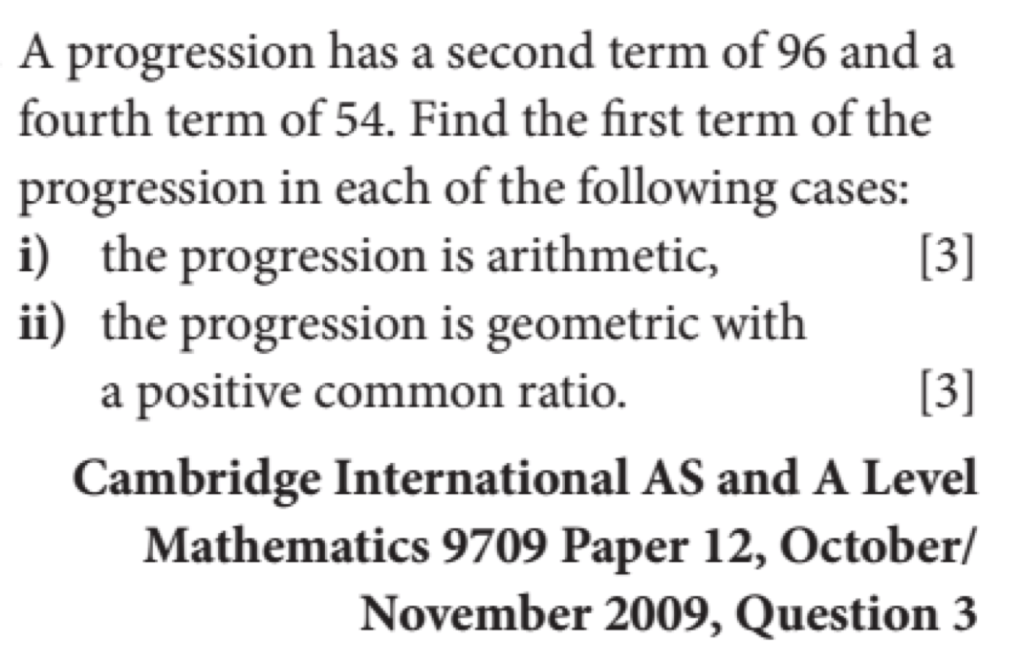
Below is an extract from the formula book “MF19” that shows all the relevant formulae to this topic that you will be given in the exam:

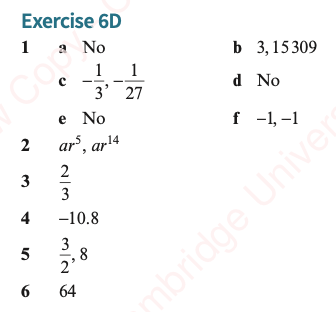
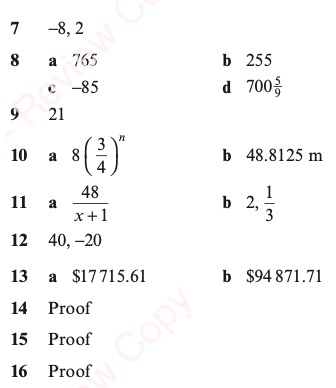
Exercise 6 & Mixed Exercises
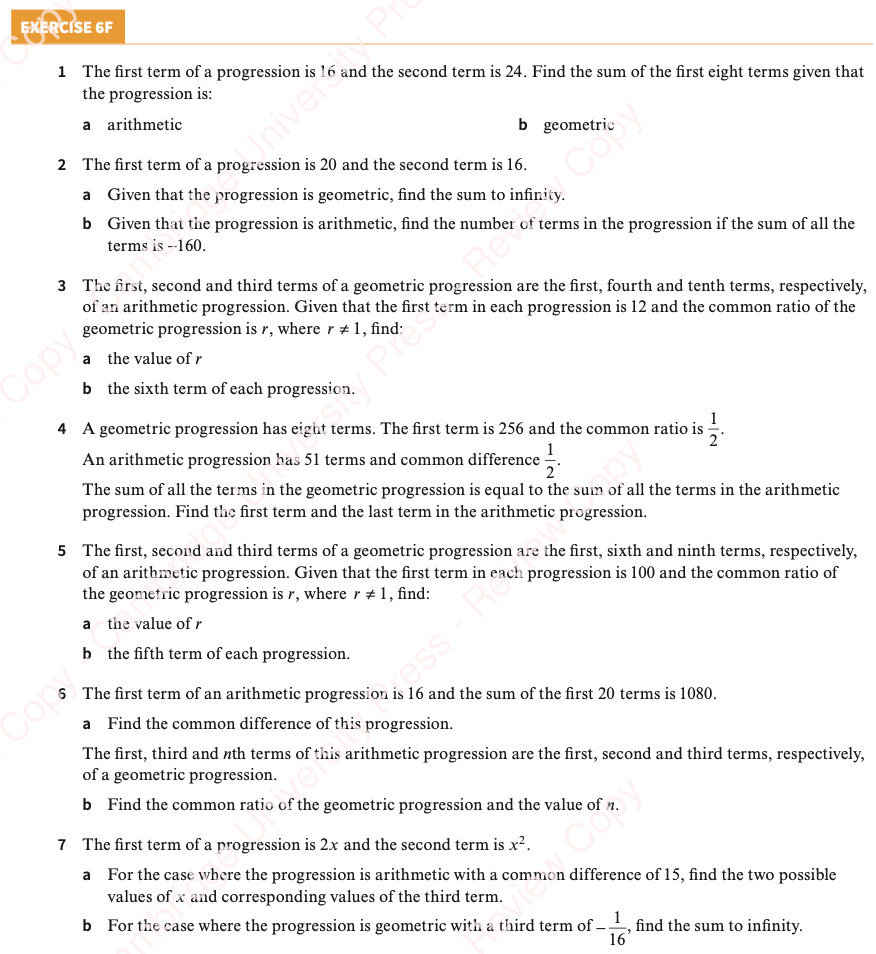
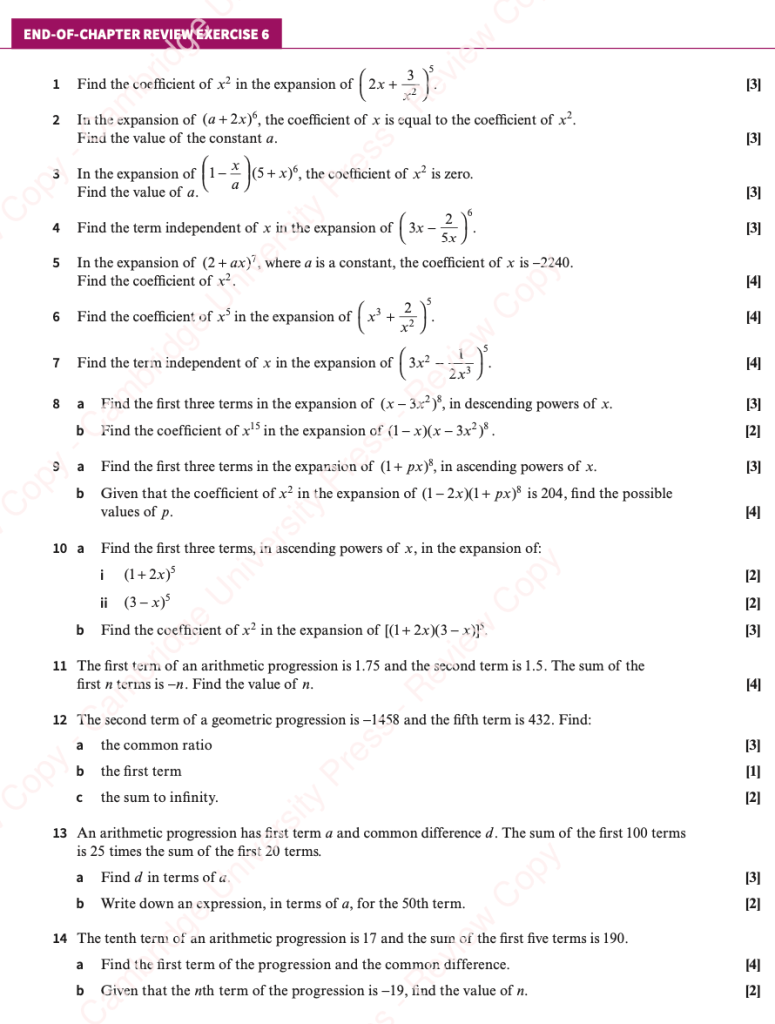

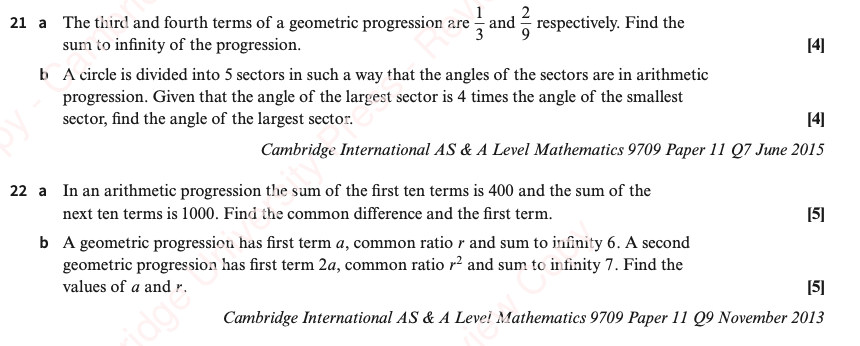
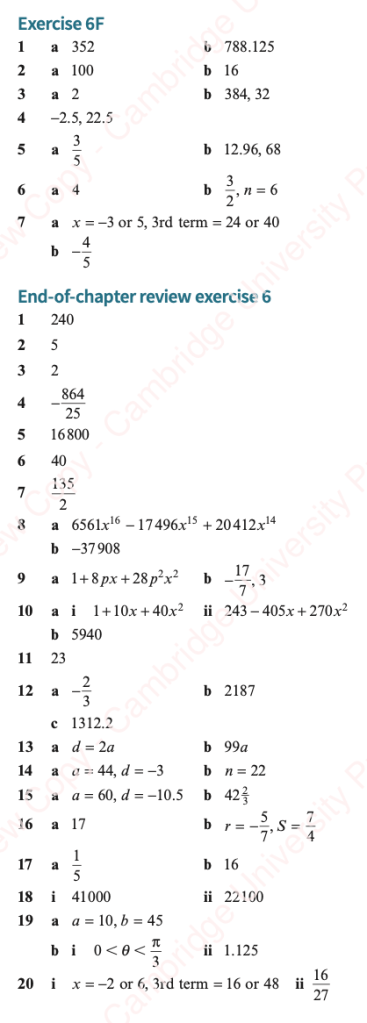
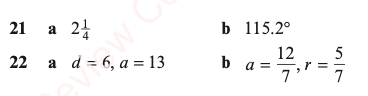
Answers
 Maths with David