Just like division is the inverse of multiplication (and typically a little more difficult), so if we want to find 72÷3 we can recognise that 3×24=72, so 72÷3 is 24. So, with integration, if we want to integrate f(x) we can think about what function we would differentiate to get f(x).
Integrating exponential functions
As we know that 

Worked Examples
1.) Find the following integrals:
;
.
2.) The diagram below shows the graph of y=ex. The point A has coordinates (ln5,0), B has coordinates (ln5,5) and C has coordinates (0,5):
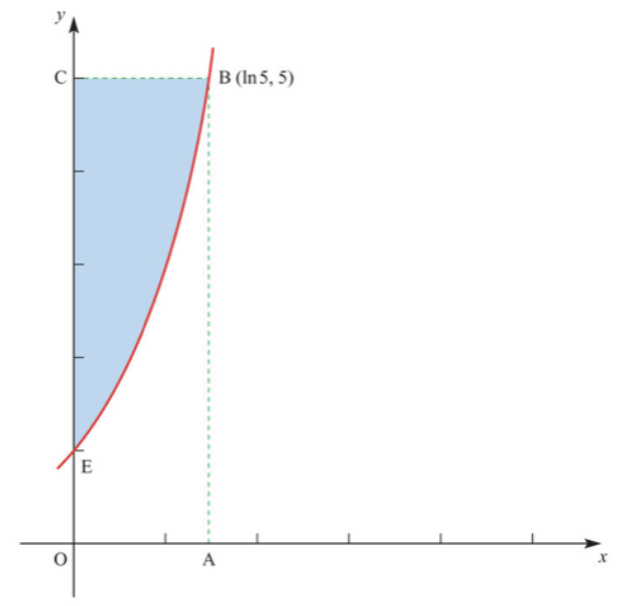
- Find the area of the region OABE enclosed by the curve y=ex, the x-axis, the y-axis and the line AB. Hence find the area of the shaded region EBC;
- The graph of y=ex is transformed into the graph of y = lnx. Describe this transformation geometrically.
3.) A curve is such that 
- Find the equation of the curve
- The curve has one stationary point. Find the x coordinate of this point and determine whether it is a maximum or a minimum point.
Exercise 1

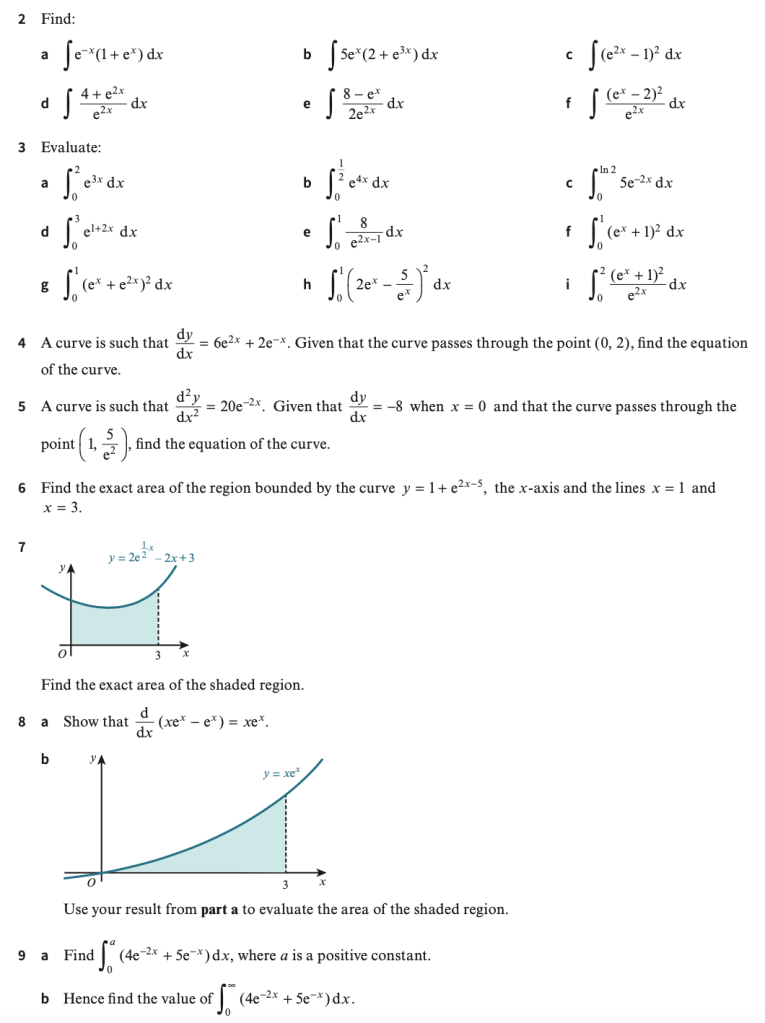

Answers
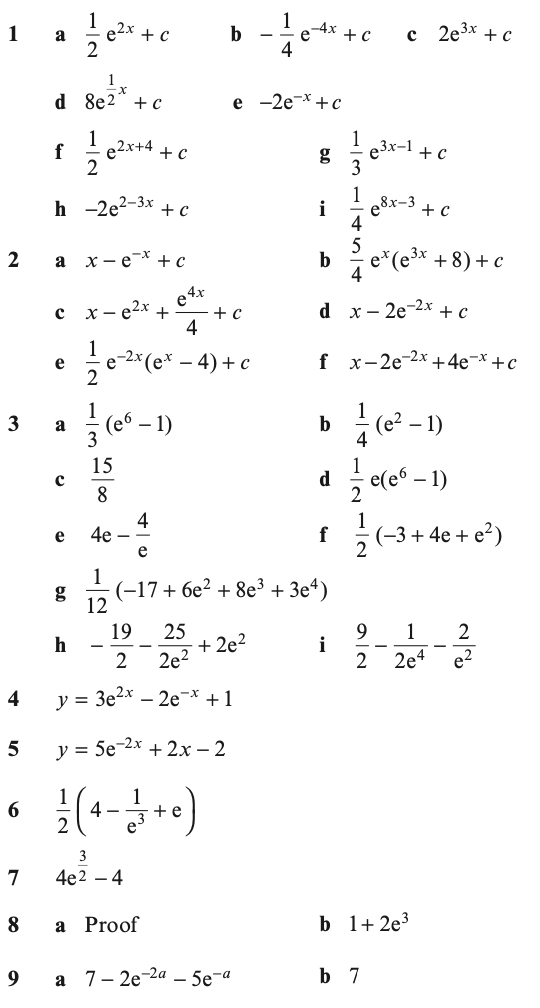

Integrating Linear Reciprocal Functions


N.B. Textbooks often do not write the modulus sign when doing indefinite integration. It is better to always write it.
Worked Examples
1.) Given that a is a positive constant and 
2.) Integrate the following functions:
.


3.) Given 
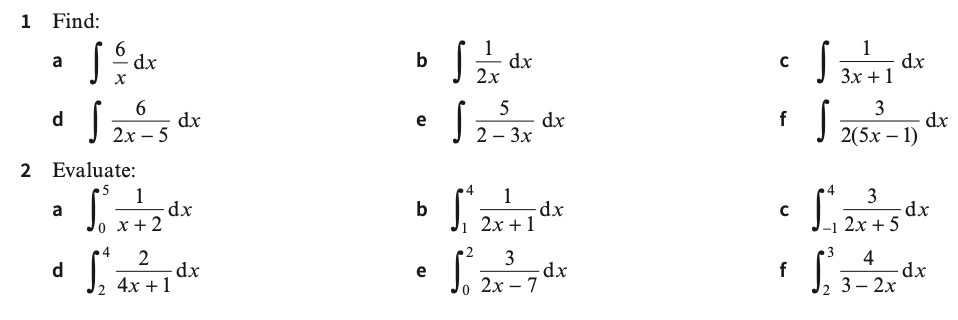
Exercise 2

Answers
Integrating Trigonometric Functions
Theory


Worked Examples
1.) Find the following integrals:
;


Exercise 3


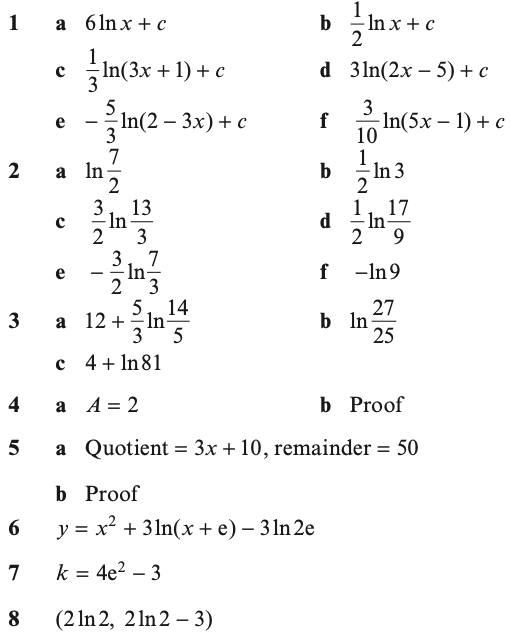
Answers

Integrating using trigonometric identities
We can use the double angle formulae to help us integrate sin2x or cos2x.
Pythagoras’ theorem is also useful.
Cos 2A = cos2A-sin2A = 2cos2A – 1 = 1-2sin2A
1+tan2x=sec2x
1+cot2x=cosec2x
Worked Examples
1.) Find

2.) Show that

3.) Find

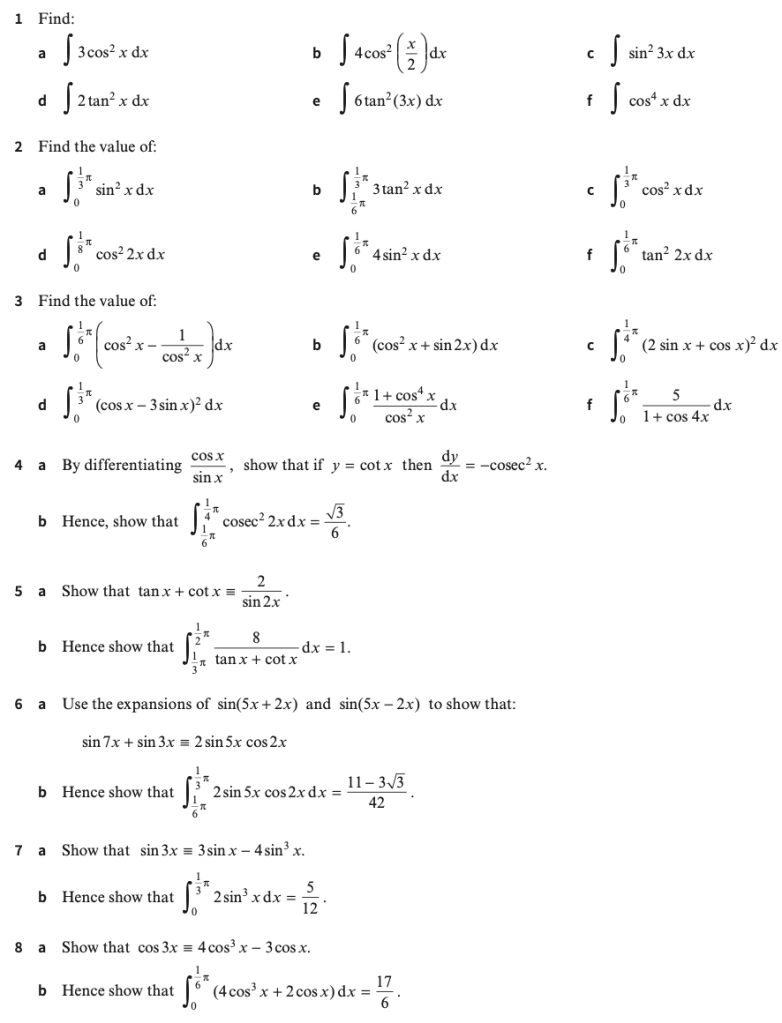
Exercise 4
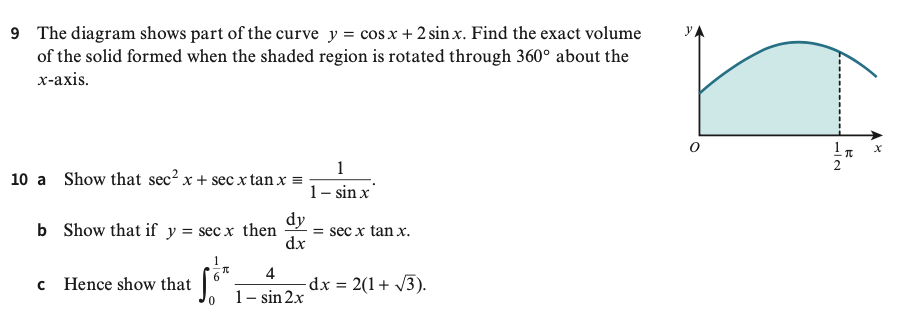
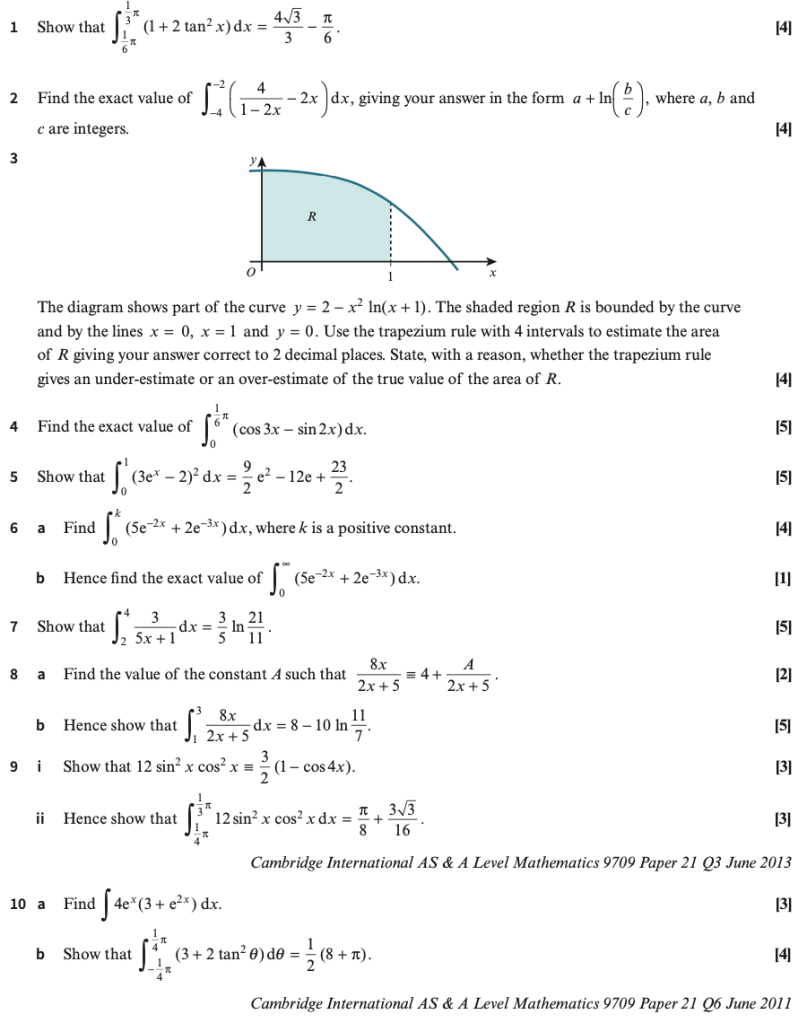
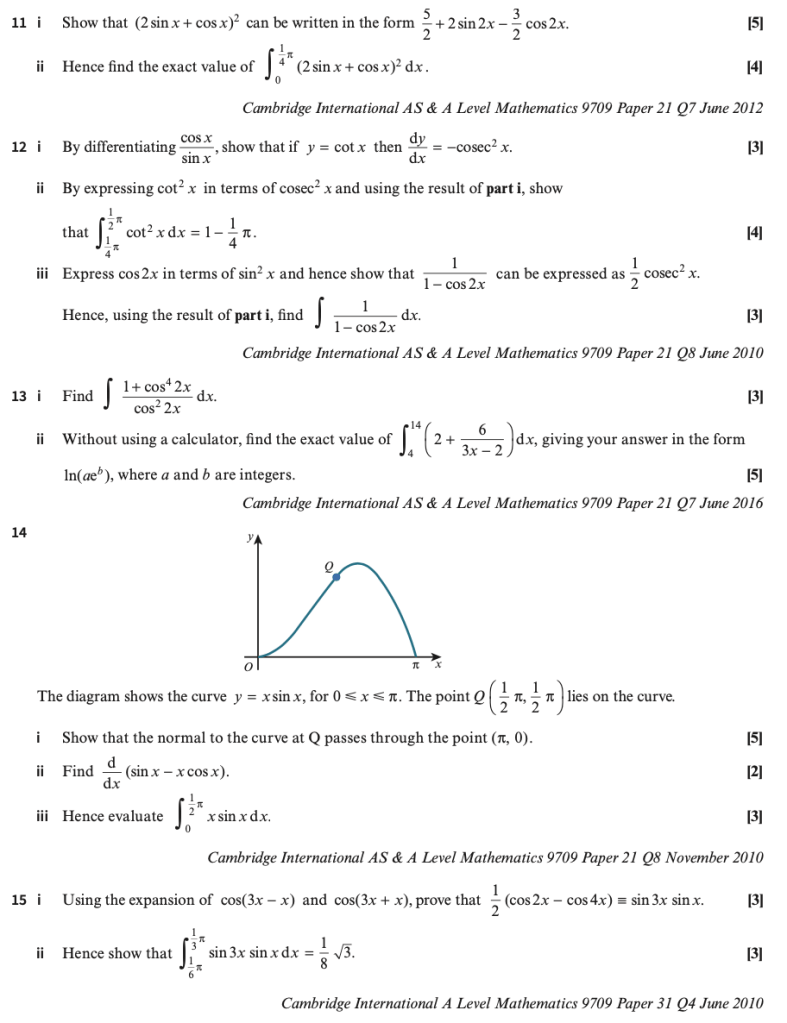
Mixed Exercise
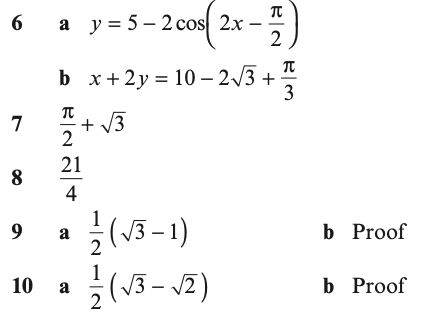
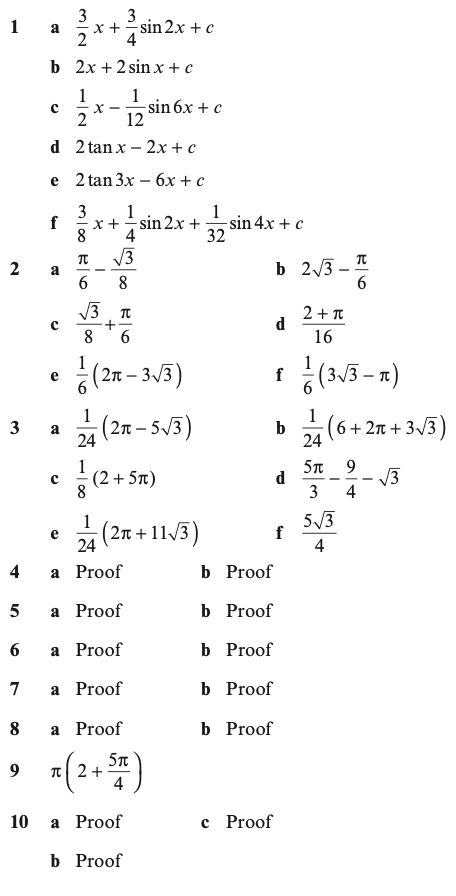
Exercise 4 Answers
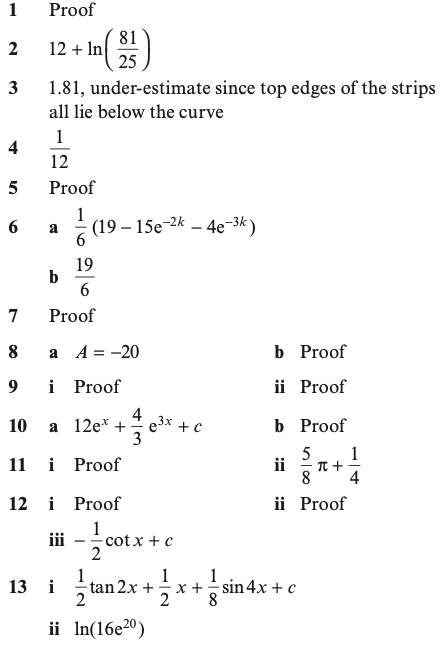
Mixed Exercise Answers

 Maths with David