1. The diagram shows a firm’s marginal and average cost curves.
The firm enters a collusive agreement with other firms in the industry. It is agreed that each firm
will charge a common price, OP, and will restrict the level of its output to a production quota set
by the industry cartel.
The firm is allocated a production quota, Oq.

The firm decides to cheat in order to maximise its profits.
What is its short-run increase in profits?
A PGKL
B PHJL
C PHJL minus PGNM
D PGKL minus LKNM
2. The diagram shows a notice on a motorway near Cambridge.
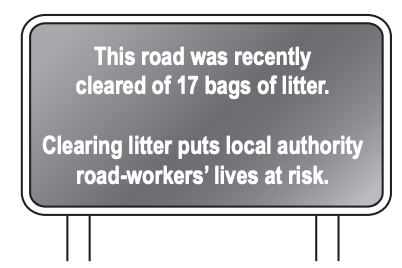
What is this an example of?
A government regulation
B merit good
C nudge theory
D public good
3. A reason for government intervention in the workings of the economy is to attempt to correct for
market failure. Sometimes, though, government failure may occur.
What is not a possible reason for government failure?
A Governments may have to make decisions on the basis of out-of-date information.
B Governments may make decisions that reduce negative externalities.
C The extent of the market failure may be difficult to judge.
D When circumstances change a government may be unable to respond quickly.
4. Which policy combination will reduce income inequalities in a country?
A impose a fixed amount tax on all people and reduce unemployment benefits
B increase social welfare payments and impose a higher marginal income tax rate
C increase transfer payments and impose higher indirect taxation
D reduce rates of tax on higher incomes and increase welfare payments
5. The diagram shows an economy’s Lorenz curve (VW).

How is the Gini coefficient for the economy calculated?
A 


 Maths with David