Modulus Functions and Graphs
The modulus or absolute value of a number is its positive size, regardless of whether it is positive or negative. So |2| = 2 and also |-2| = 2.
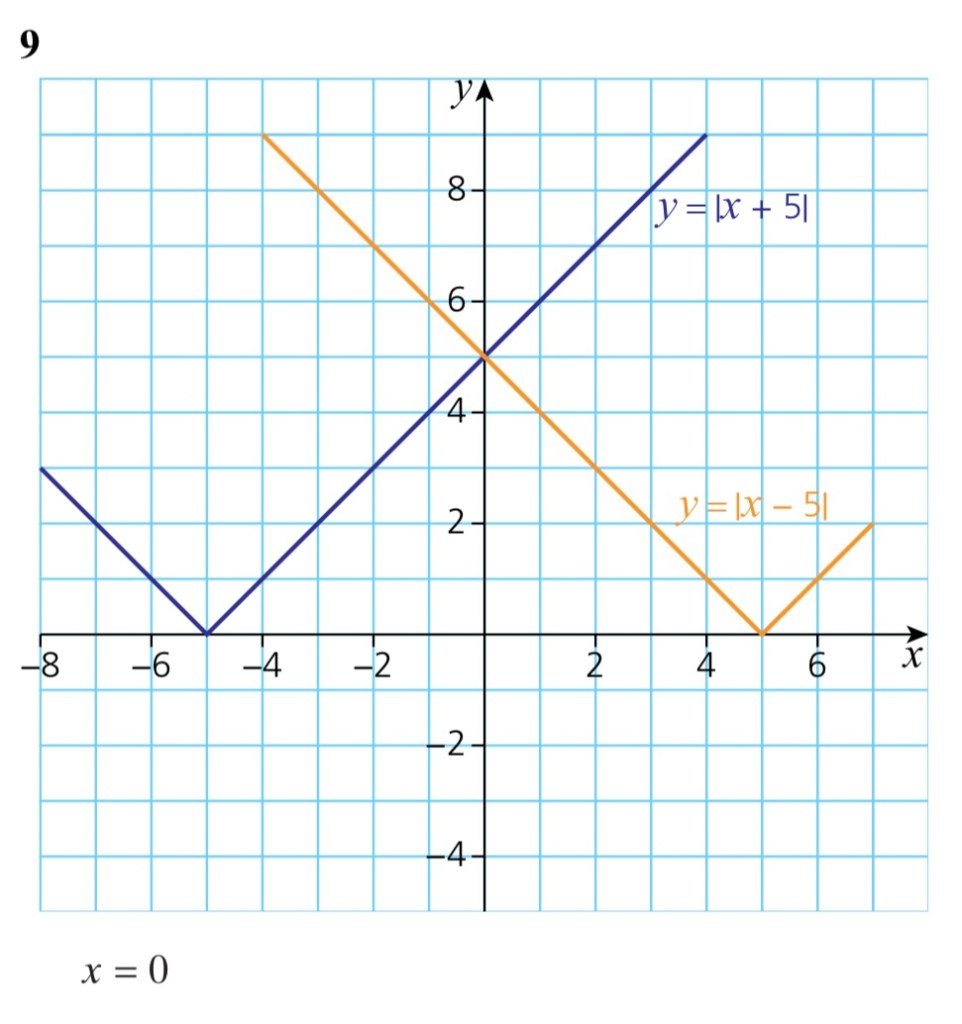
| Worked Example 1 a.) Set up a table for the graphs y = x+2 and y = |x+2| for -6≤x≤2. b.) Draw both graphs on the same axes. |
| Worked Example 2 Solve the equation |2x+3| = 5 a.) Graphically; b.) Algebraically. |
| Worked Example 3 Solve the equation |2x+5| = |x-4| |
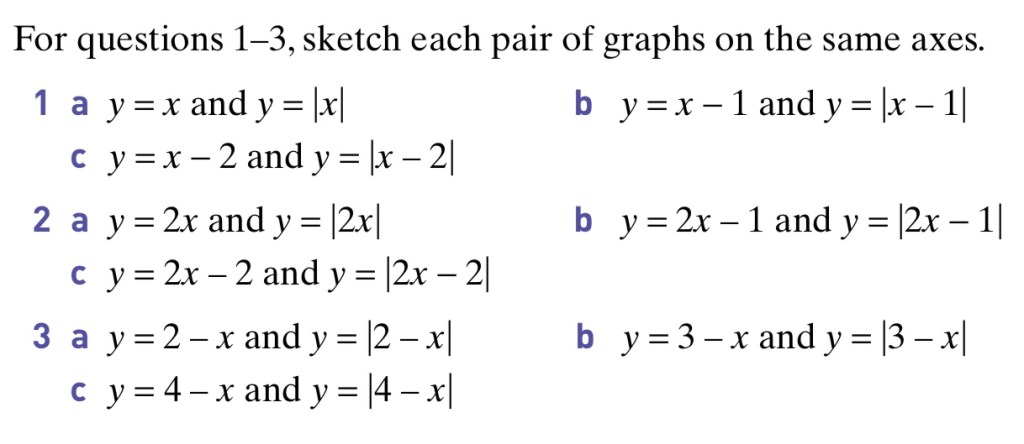
Exercise 1

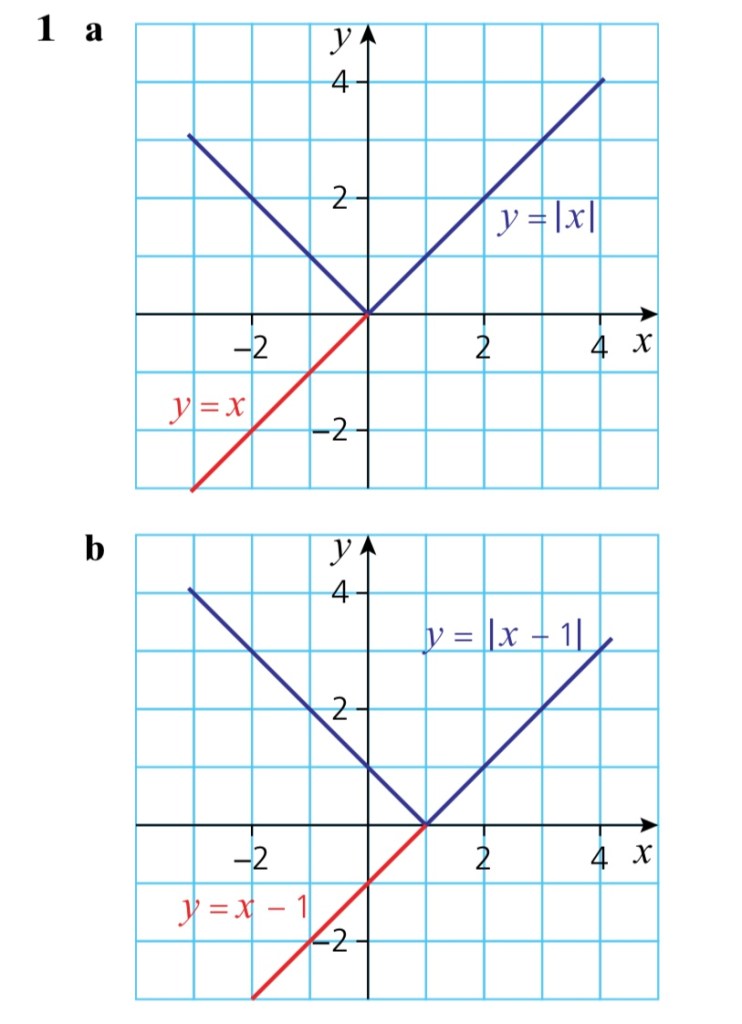
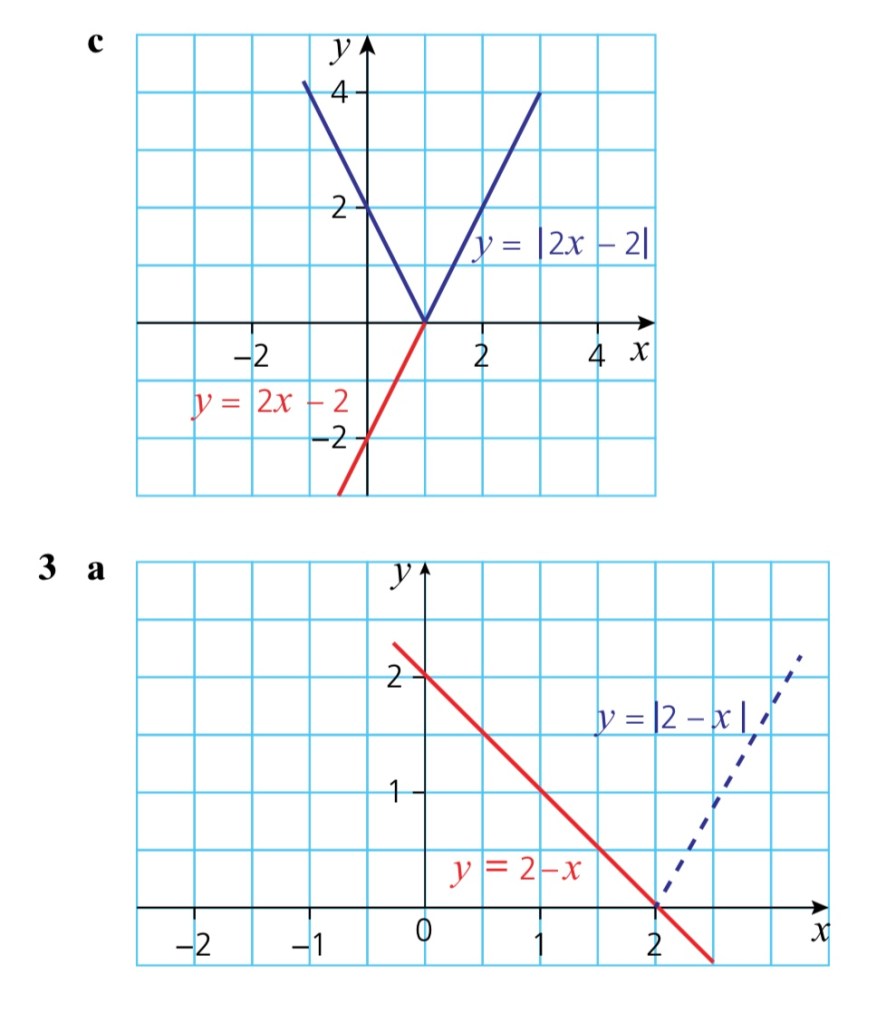
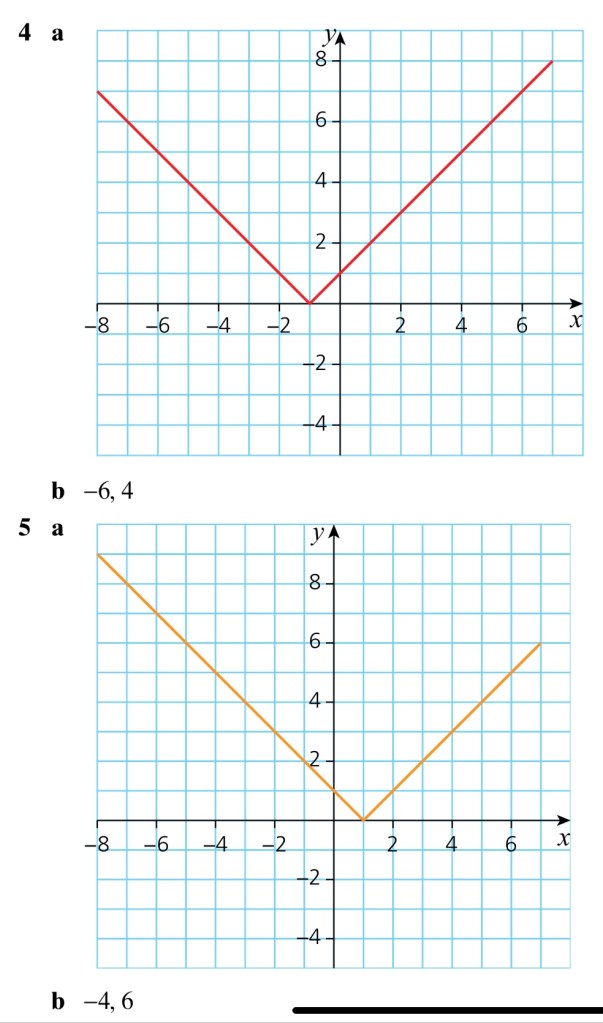
Answers to Exercise 1





Solving Modulus Inequalities
With inequalities in one variable, we can use number lines to represent their solutions, following the appropriate strict vs. non-strict conventions.
| Worked Example 4 a.) Solve algebraically the inequality |x-3|>2; b.) Illustrate the solution on a number line. |
| Worked Example 5 Write the inequality -3 ≤ x ≤ 9 in the form |x-a| ≤ b and show a and b on a number line. |
| Worked Example 6 Solve the inequality |3x+2| ≤ |2x-3| |
| Worked Example 7 Solve the inequality |x+7| < |4x| |
In 2-dimensions we use regions instead of lines to represent inequalities. We also have a solid vs dotted line convention for non-strict vs strict inequalities.
| Worked Example 8 Illustrate the inequality 3y – 2x ≥ 0 on a graph. |
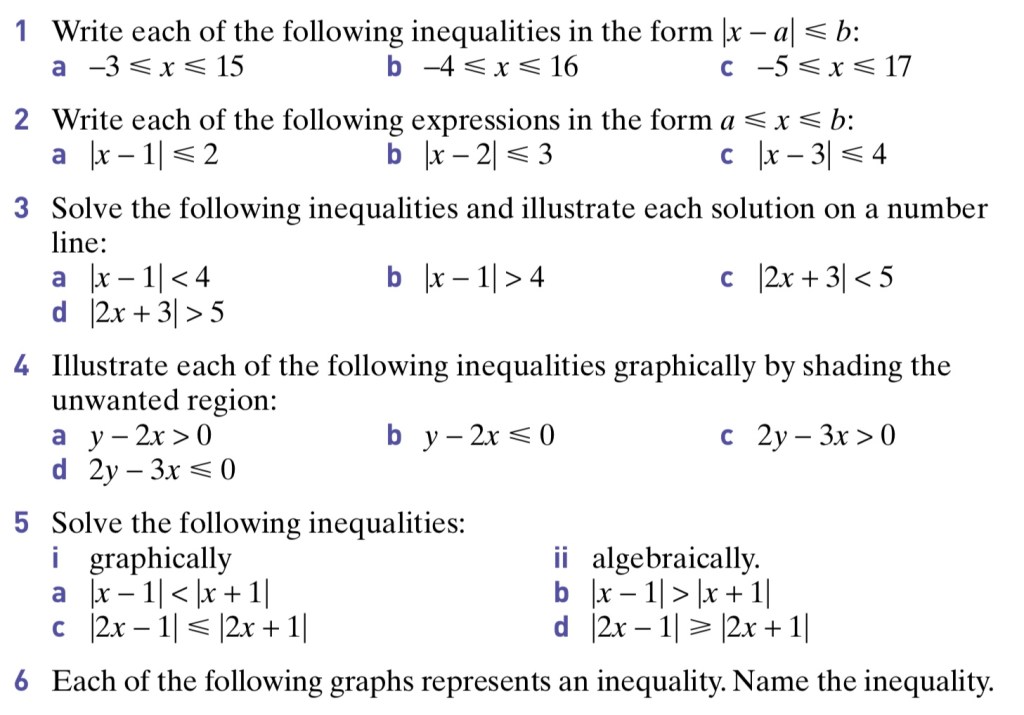
Exercise 2

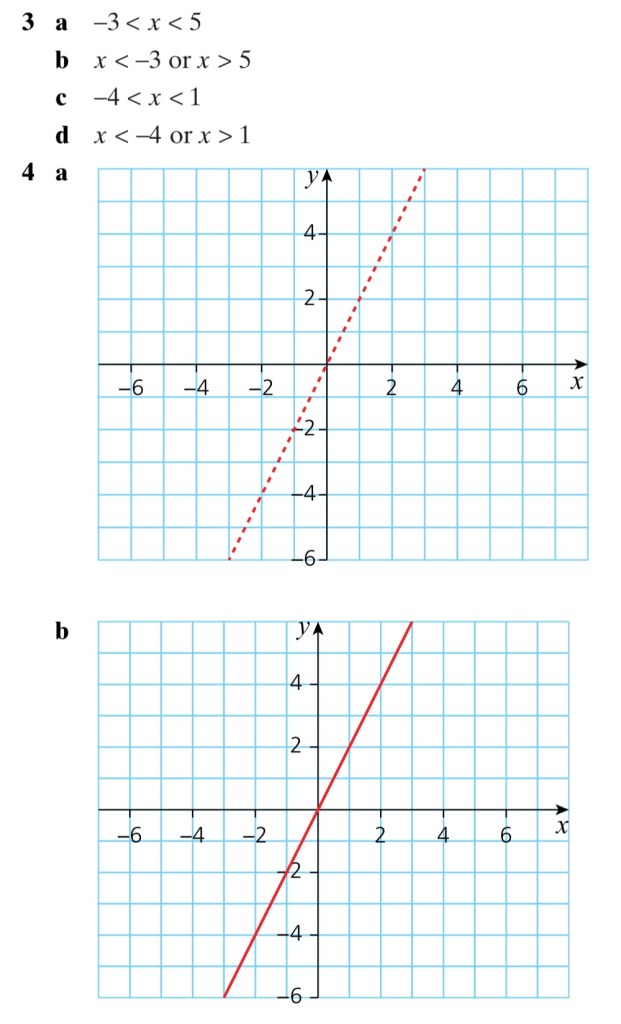
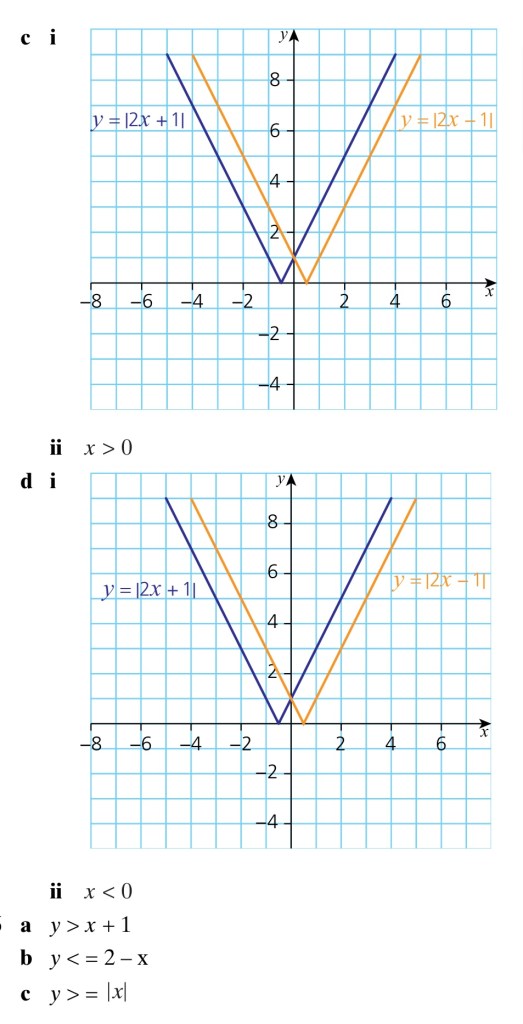
Exercise 2 Answers



Solving quadratic equations using substitution
We can treat equations with a variable and the square root of a variable as “hidden” quadratic equations.
| Worked Example 9 Use the substitution x = u2 to solve the equation  |
We should always check solutions, as some solutions may not be valid (why do you think this is?)
| Worked Example 10 Solve the equation  |
Using graphs to solve cubic inequalities
We should already be familiar with the basic shape of a cubic equation
| Worked Example 11 a.) Sketch the graph of y = 3(x+2)(x-1)(x-7). Identify the points where the curve cuts the axes; b.) Sketch the graph of y = |3(x+2)(x-1)(x-7)|. |
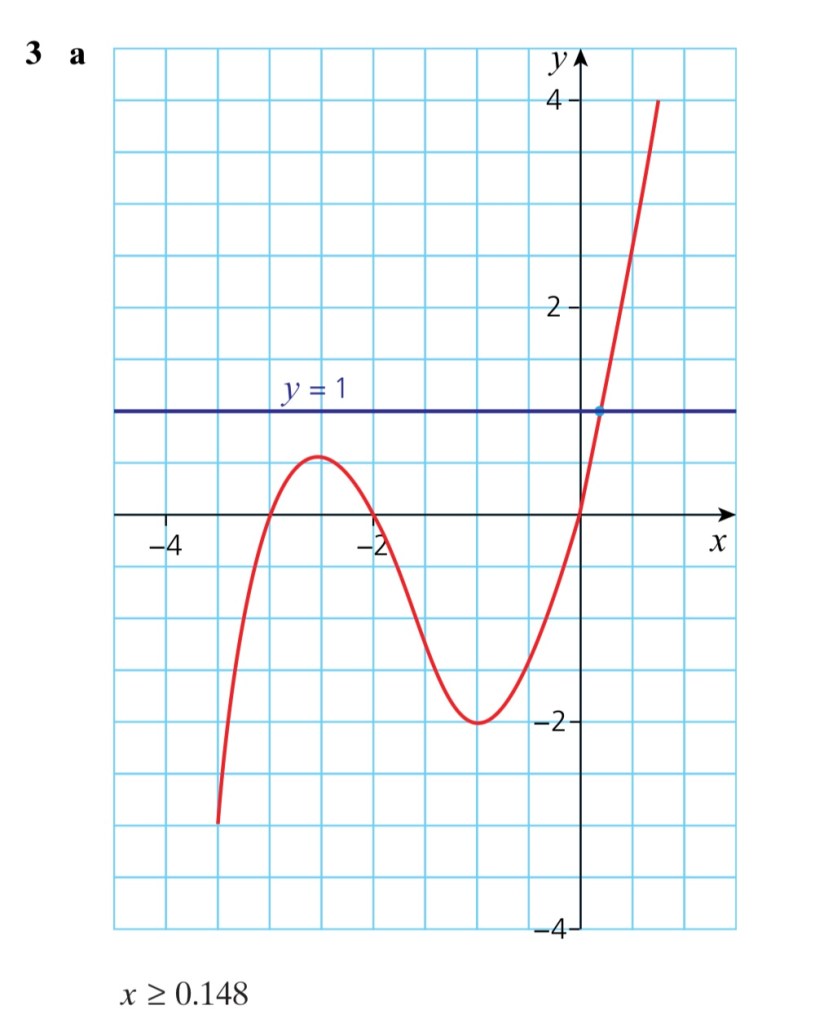
| Worked Example 12 Solve the inequality 3(x+2)(x-1)(x-7) ≤ -100 graphically. |
Exercise 3
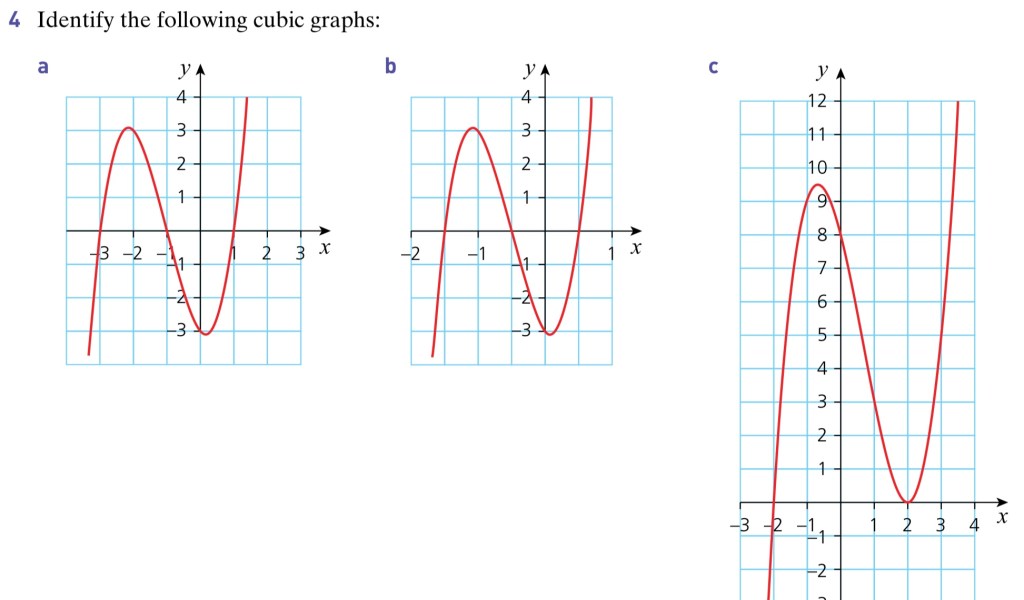

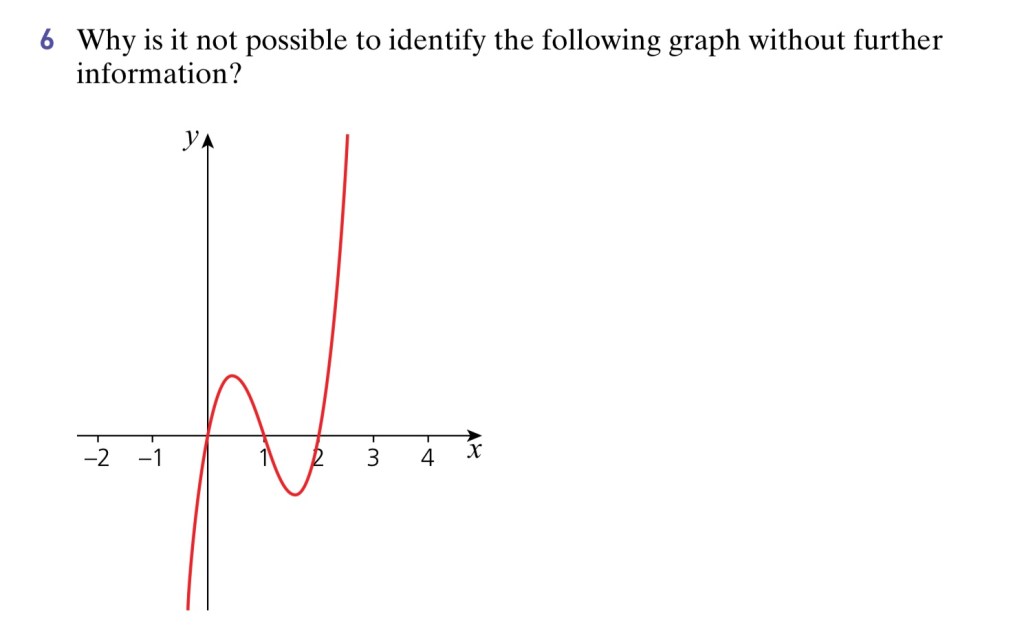
Answers




 Maths with David